

Table of Contents
Key Takeaways
Verdict: Prioritize quality over quantity. A simple starter kit of three brushes is better than a cheap variety pack. The "Perfect Brush" feels like an extension of your hand, balancing water capacity with the ability to snap back to its original shape.
- Hair Type: Natural (Sable/Squirrel) holds the most water but is softer; Synthetic is durable and offers better control (snap) for beginners. A Blend is a great middle ground.
- Essential Shapes: The Round Brush is the versatile workhorse. Add a Flat/Mop for washes and a small Round for details.
- Starter Kit Recommendation: Start with a Size 6 or 8 Round (General use), a Size 2 or 3 Round (Details), and a large Flat or Mop (Backgrounds).
Selecting the right brush is one of the most important—and often most confusing—steps for new watercolor painters. Brushes are the artist's primary tools for shaping color, creating texture, and bringing a painting to life. The right brush feels like an extension of your hand: it responds easily to pressure, holds the right amount of water, and allows for both delicate details and broad washes. But with so many materials, shapes, and sizes available, it can be difficult to know where to start.
In this article, I'll explain the essentials of watercolor brush selection—helping you understand how different materials, shapes, and sizes work, and how to choose the best combination for your personal painting style and skill level. Whether you're just starting your watercolor journey or refining your technique, finding the right brush will make your watercolor journey smoother and far more enjoyable.
Below is a friendly, practical primer on materials, shapes, sizes, handle types, and care so you can start painting right away.
Why the Right Brush Matters
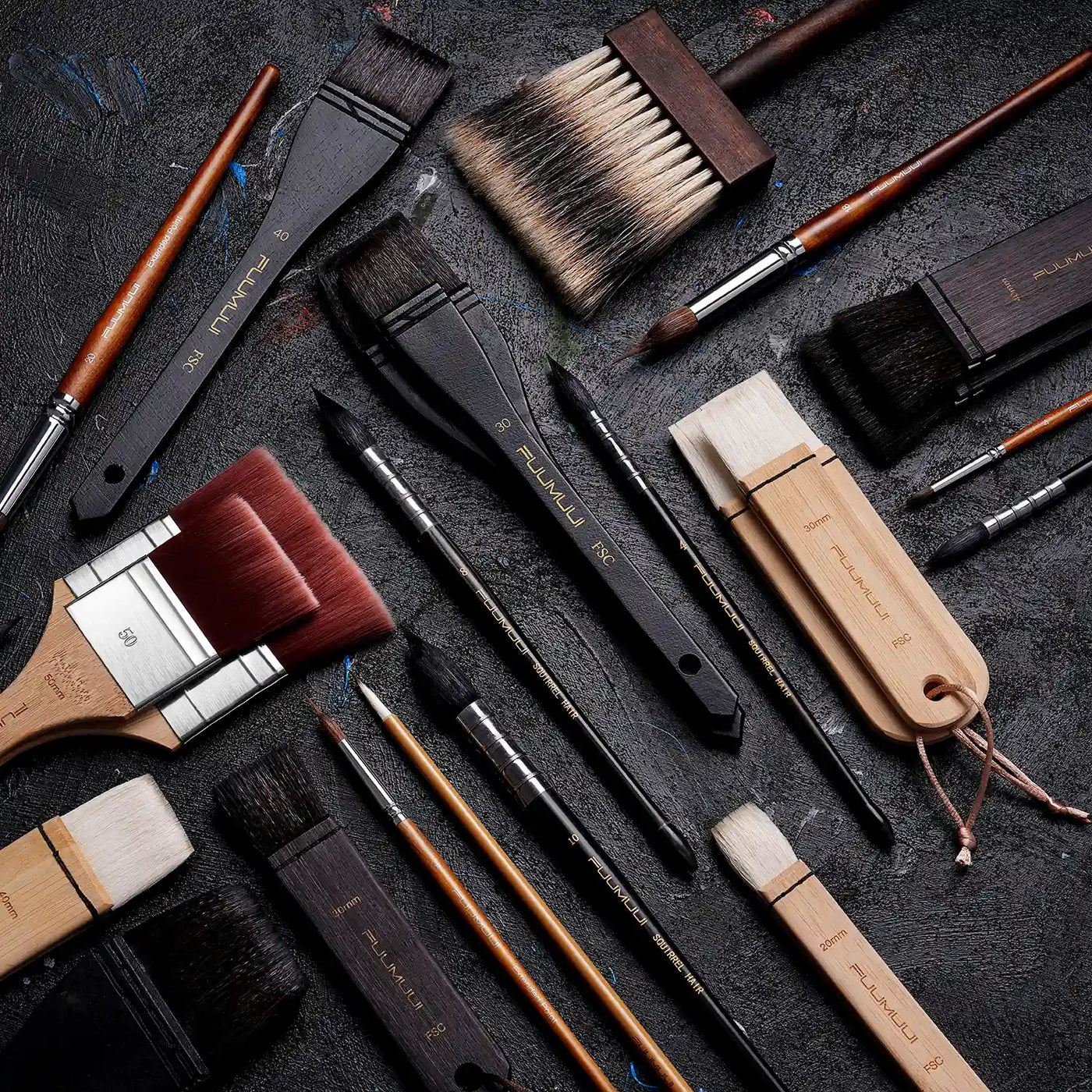
Watercolor brushes differ not only in their shapes -- such as rounds, flats, and mops -- but also in their materials, including natural hair, synthetic fibers, or a blend of both. Each type has distinct qualities that affect how paint flows and how the brush handles on paper. Size is another key factor: smaller brushes are ideal for fine lines and details, while larger ones are better suited to broad backgrounds and fluid washes. Other aspects, such as the brush's spring (its ability to return to shape), water-holding capacity, and even the handle length, also influence how comfortable and effective a brush feels in your hand.
Anatomy of a Brush: Understanding the Key Parts
To truly understand why one brush performs differently from another, it helps to know the basic structure. A watercolor brush is fundamentally composed of four key parts, each serving a critical function in how the brush holds water, maintains its shape, and transfers paint to paper.

- Hair/Bristles: The quality and material of the hair determines the brush's water and pigment retention and its spring (how quickly it snaps back to its original shape). For rounds, the hairs must gather into a fine, sharp point, and for flats, they must form a neat chisel edge.
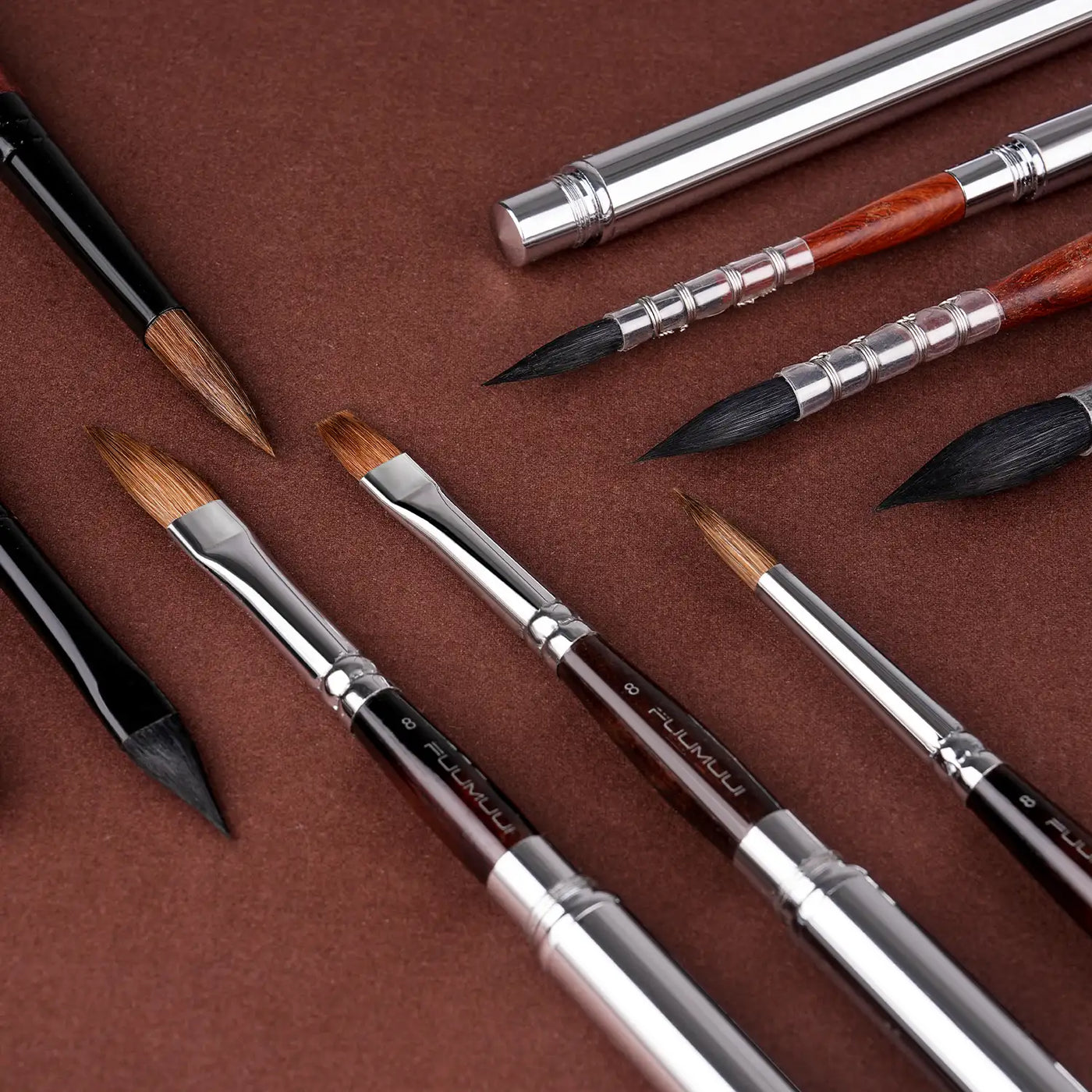
- Ferrule: The ferrule is the metal component, usually nickel-plated brass or aluminum, that tightly binds the hair to the handle. Its primary job is to hold the hairs securely and maintain the brush's intended shape. A loose or damaged ferrule can cause the hairs to splay or fall out.
- Crimp: The crimp is the small indentation at the base of the ferrule. This critical, often overlooked part holds the ferrule securely in place. If this joint is weak, the handle will wobble or even detach from the ferrule.
- Handle: Usually made of wood, plastic, or bamboo, the handle is your primary connection to the brush. The finish and length influence comfort and balance during extended painting sessions.
Synthetic vs. Natural Hair, Or Blends

The history of brush-making is rich, with brush materials evolving significantly over centuries. The common types of hair (bristles) of watercolor brushes include:
Synthetic Hair
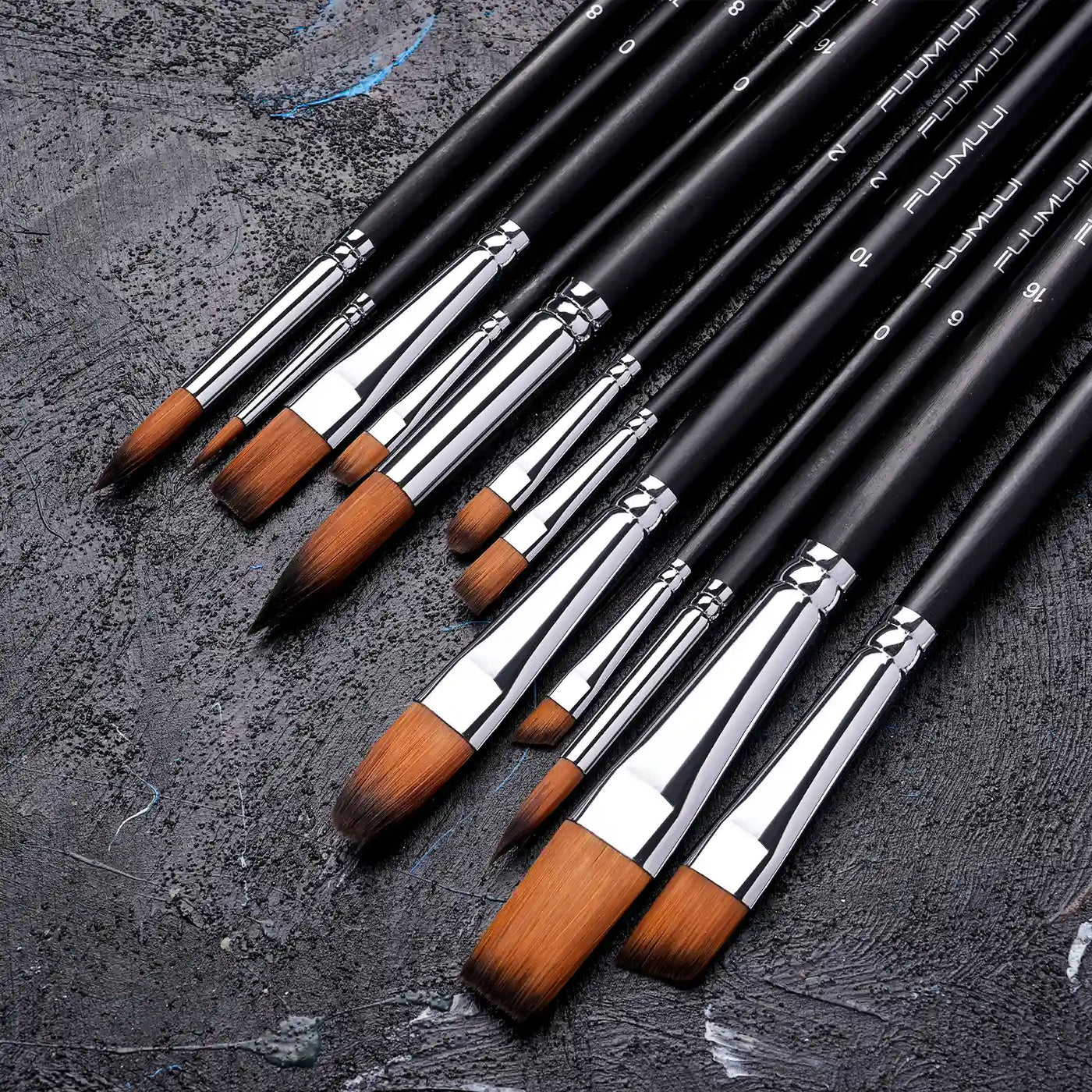
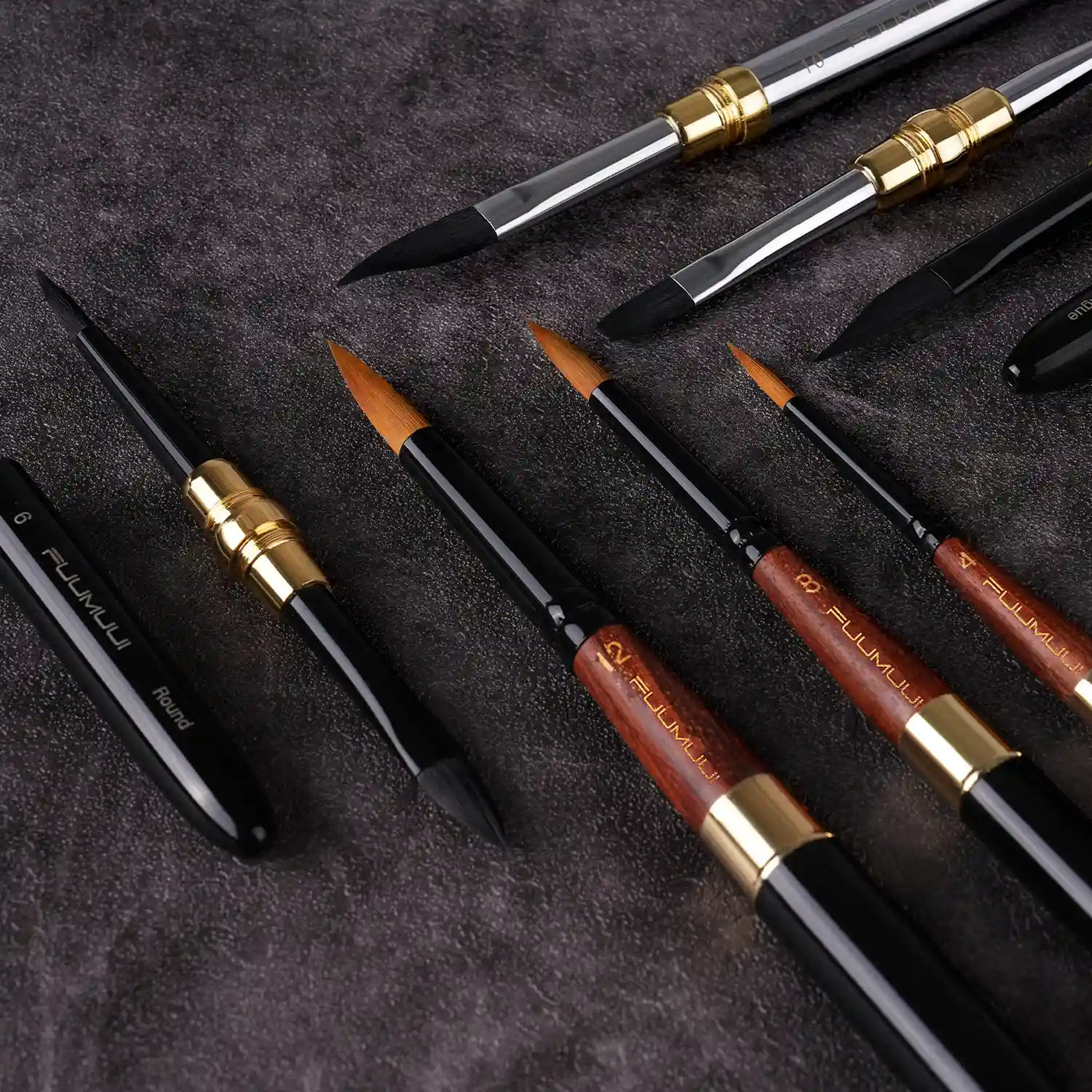
Synthetic (Taklon, nylon): Affordable, durable, and great for beginners. Modern synthetics hold pigment surprisingly well, keep their point, and clean easily.
Natural Hair
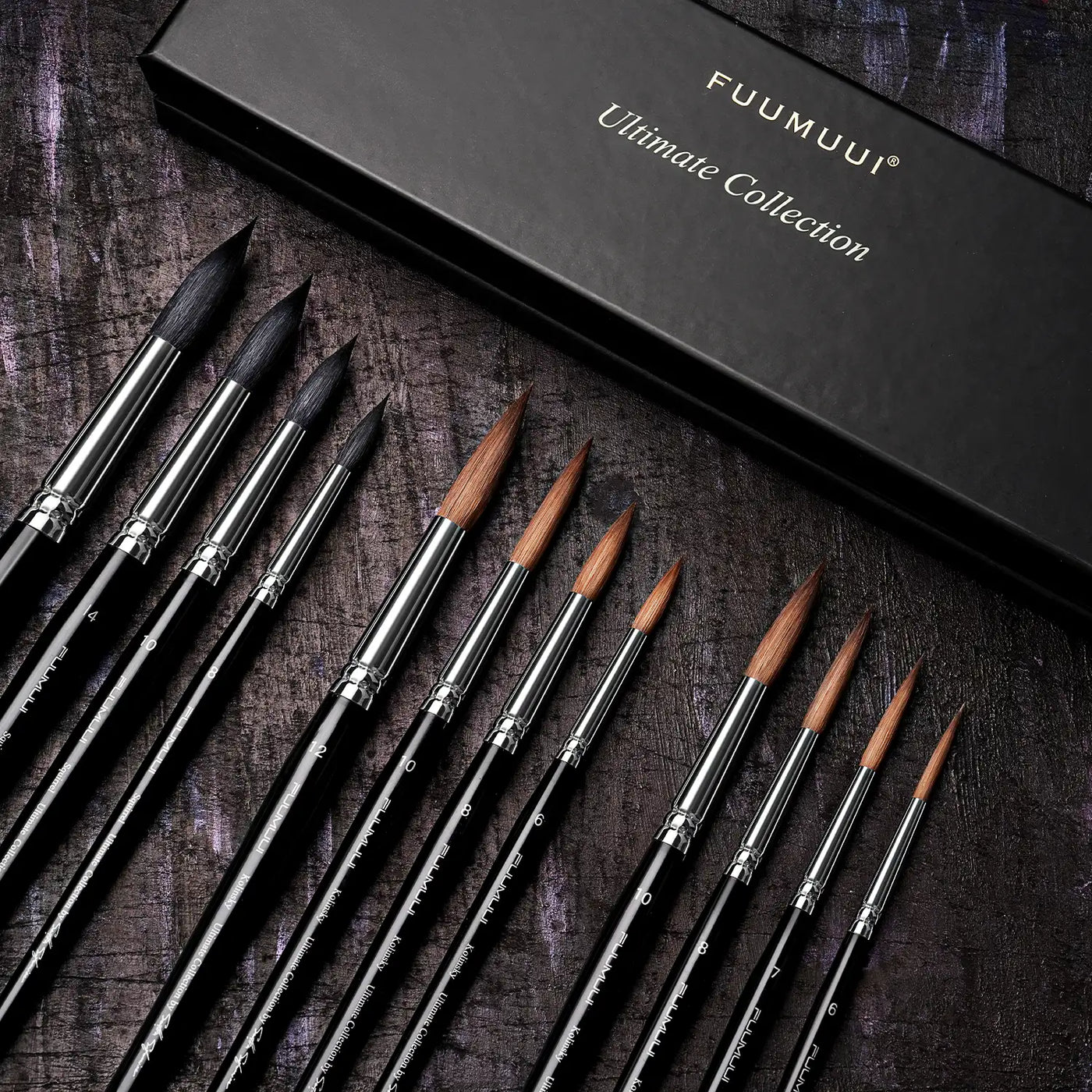
Kolinsky (Sable): The premium choice — excellent water and pigment retention, superb spring and a fine point. Expensive and needs careful care.
Squirrel (quills, mops): Very soft brushes with no spring. These hold the most fluid but harder to control and tend to require more practice and skill to use.
Blends
Blends (synthetic + natural hairs): A nice middle ground: better water-holding than straight synthetic, cheaper than pure natural hair brushes.
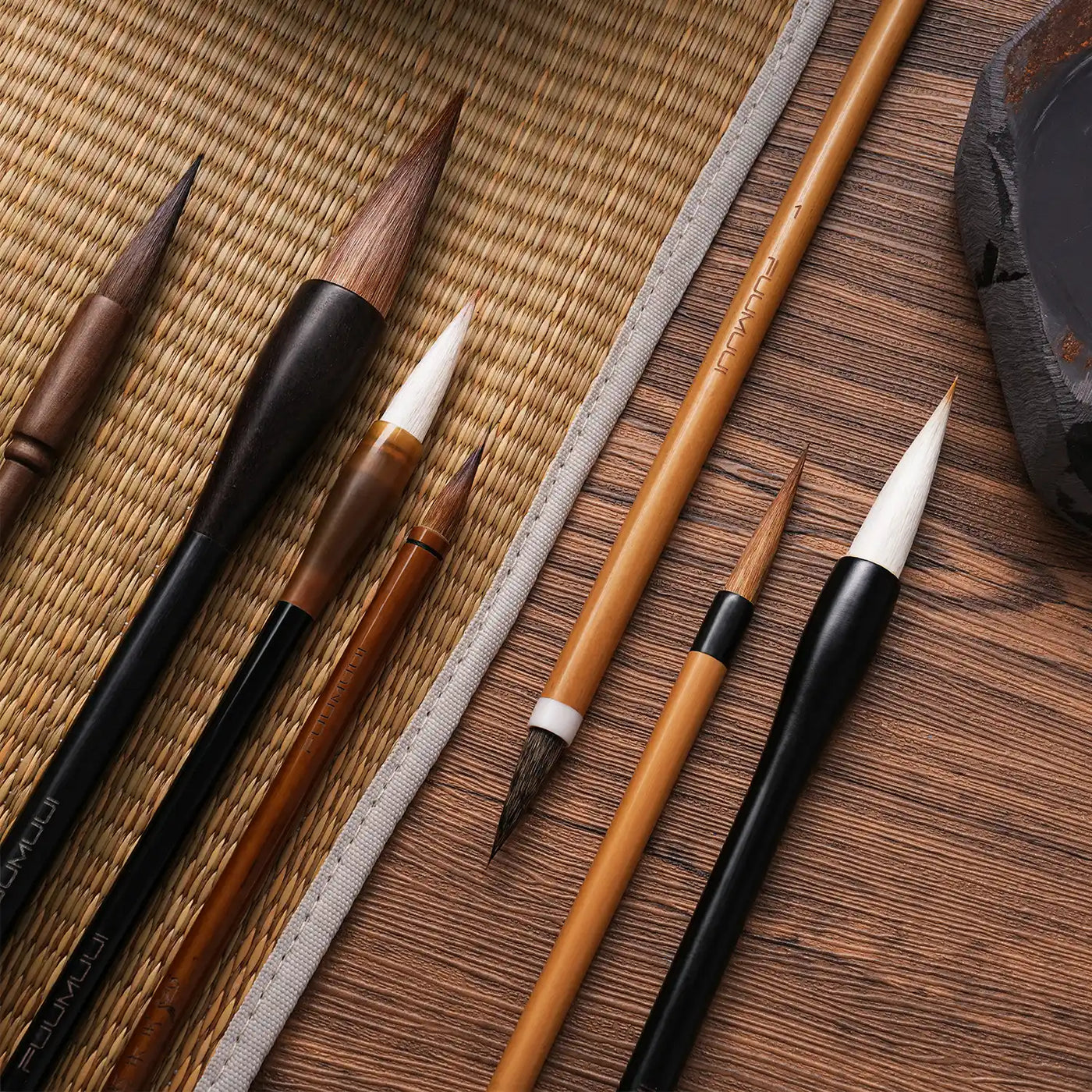
Natural alternatives (wolf, goat, squirrel, m etc.): Some hold a lot of water (good for big washes) but often lack the spring and point of sable, like wolf hair calligraphy brush.
Common Brush Shape

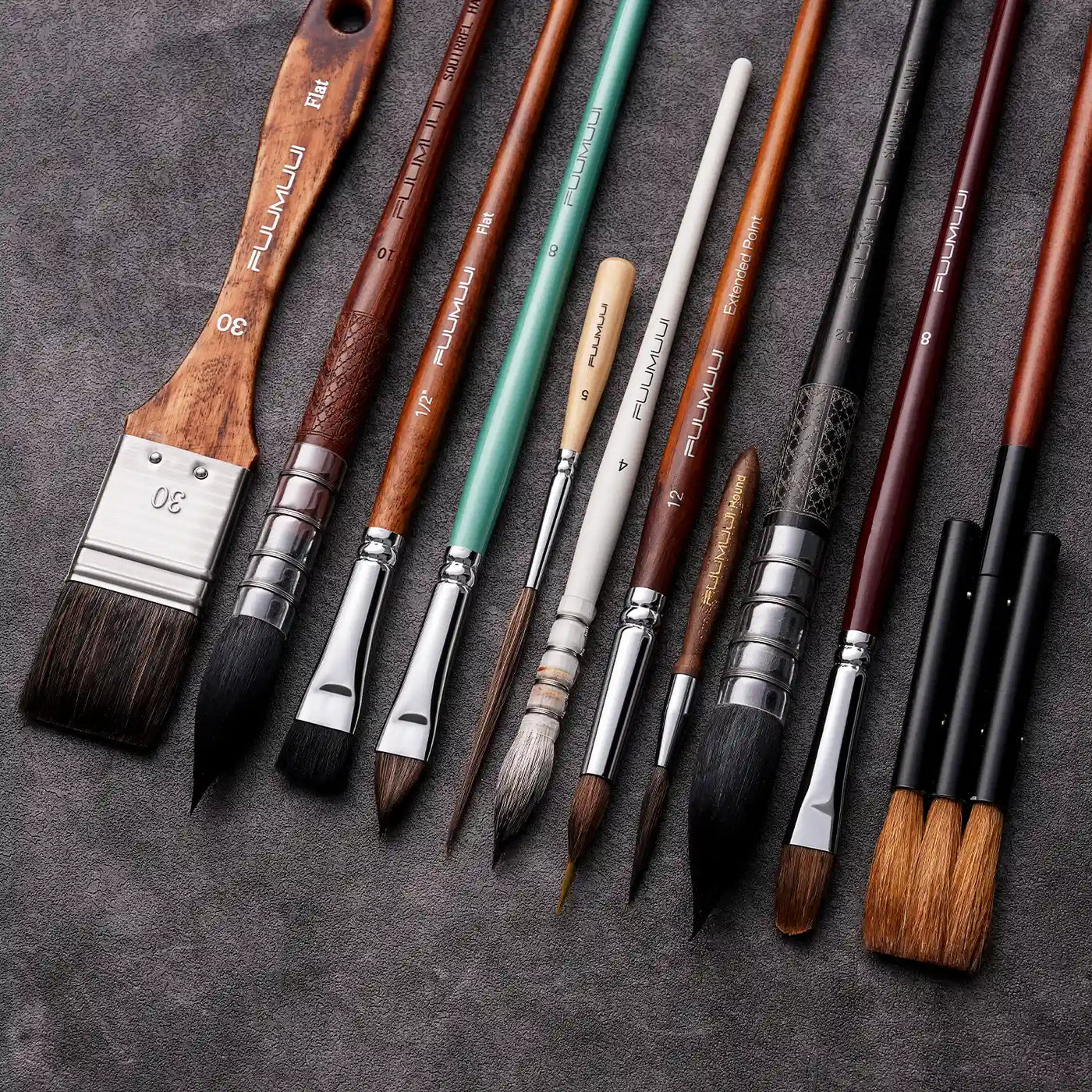
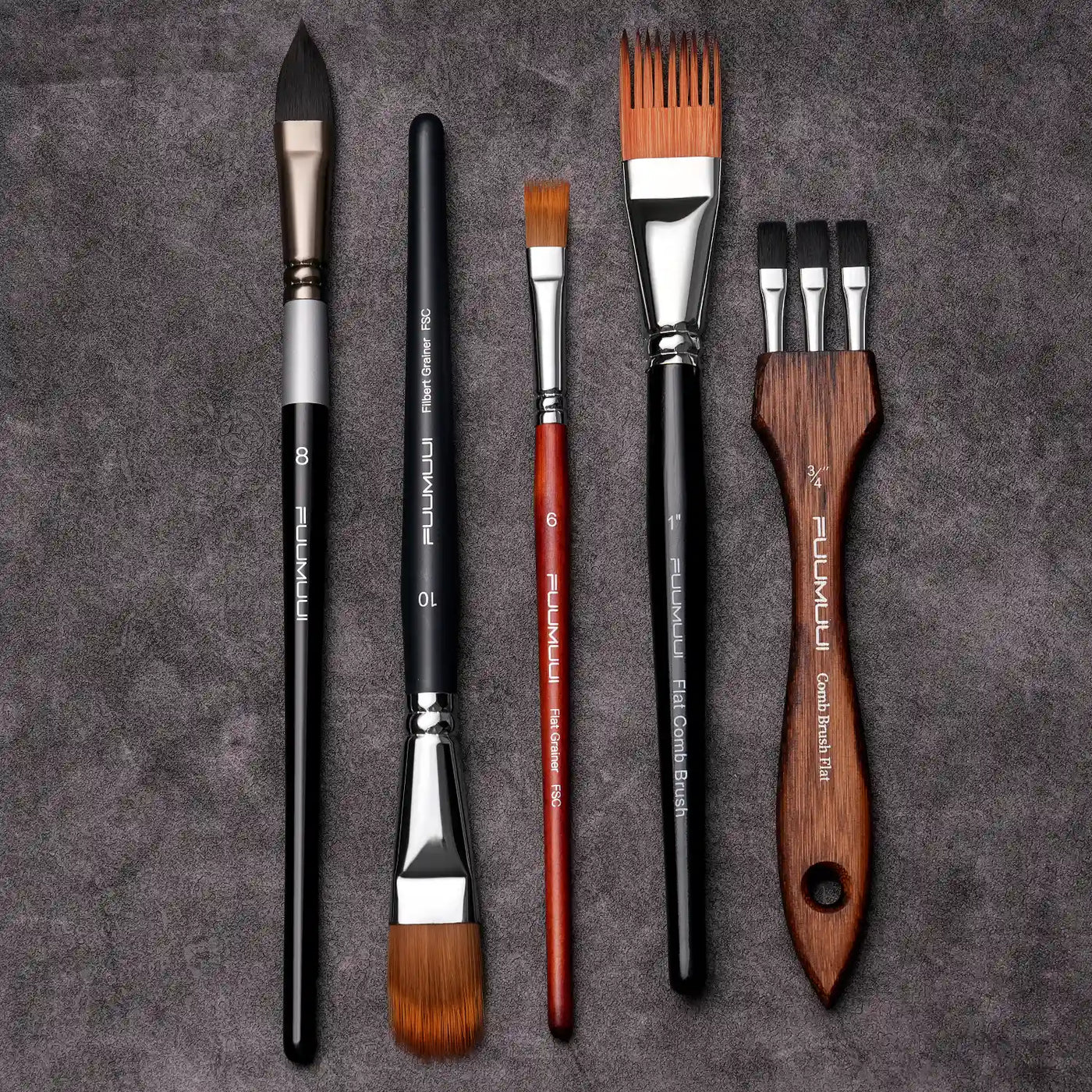
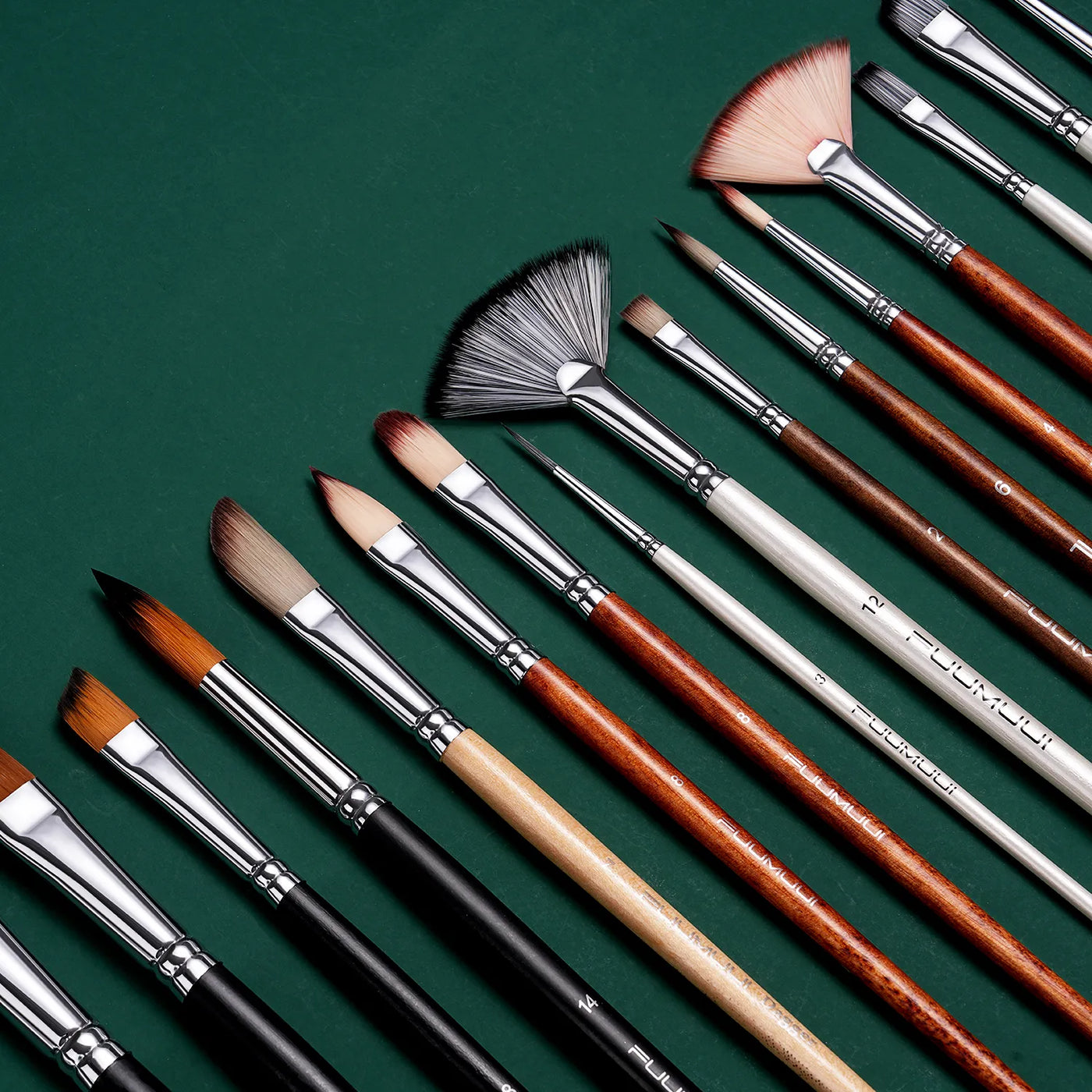
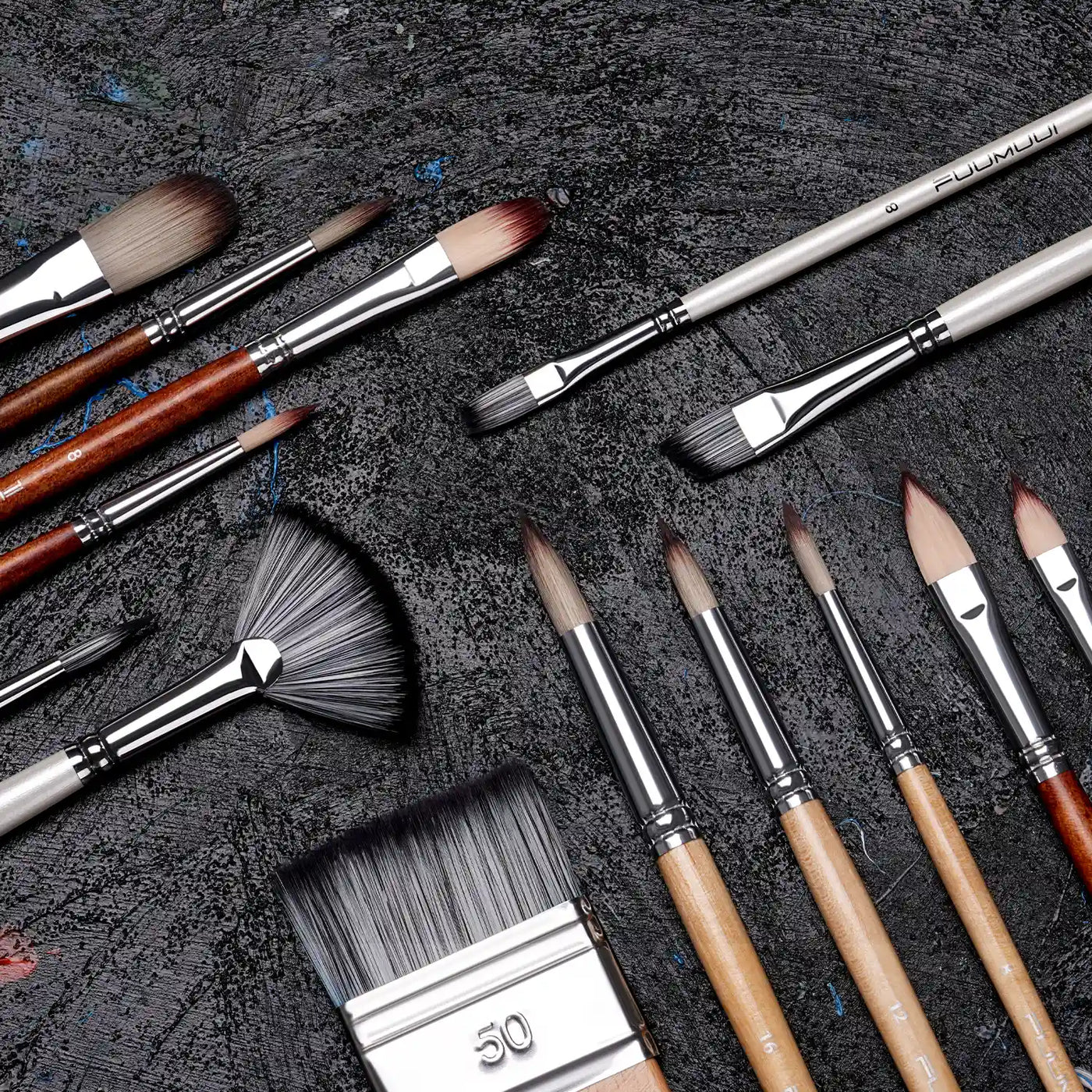
Brushes come in a plethora of different types of shapes, including a wide variety of specialty shapes that have unique or limited uses. The most commonly used shapes are:
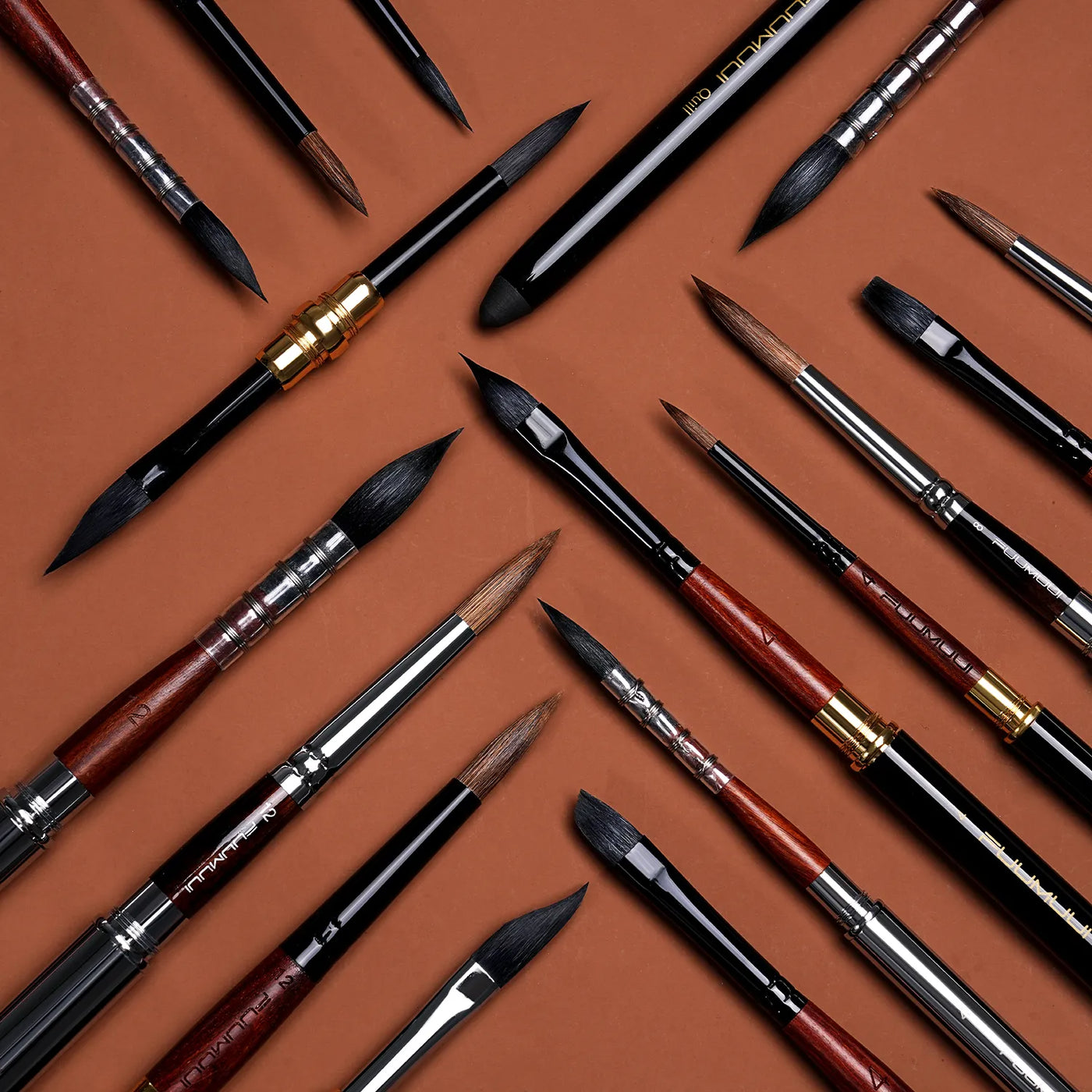
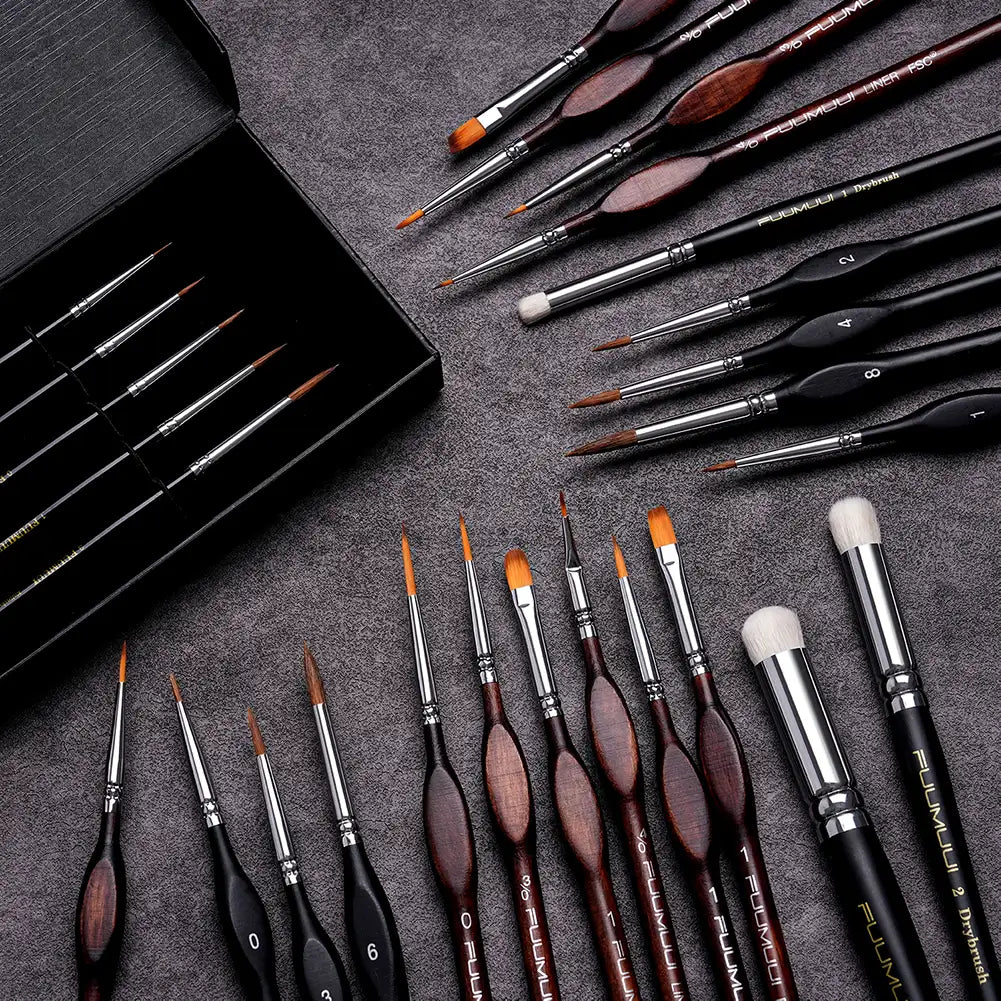
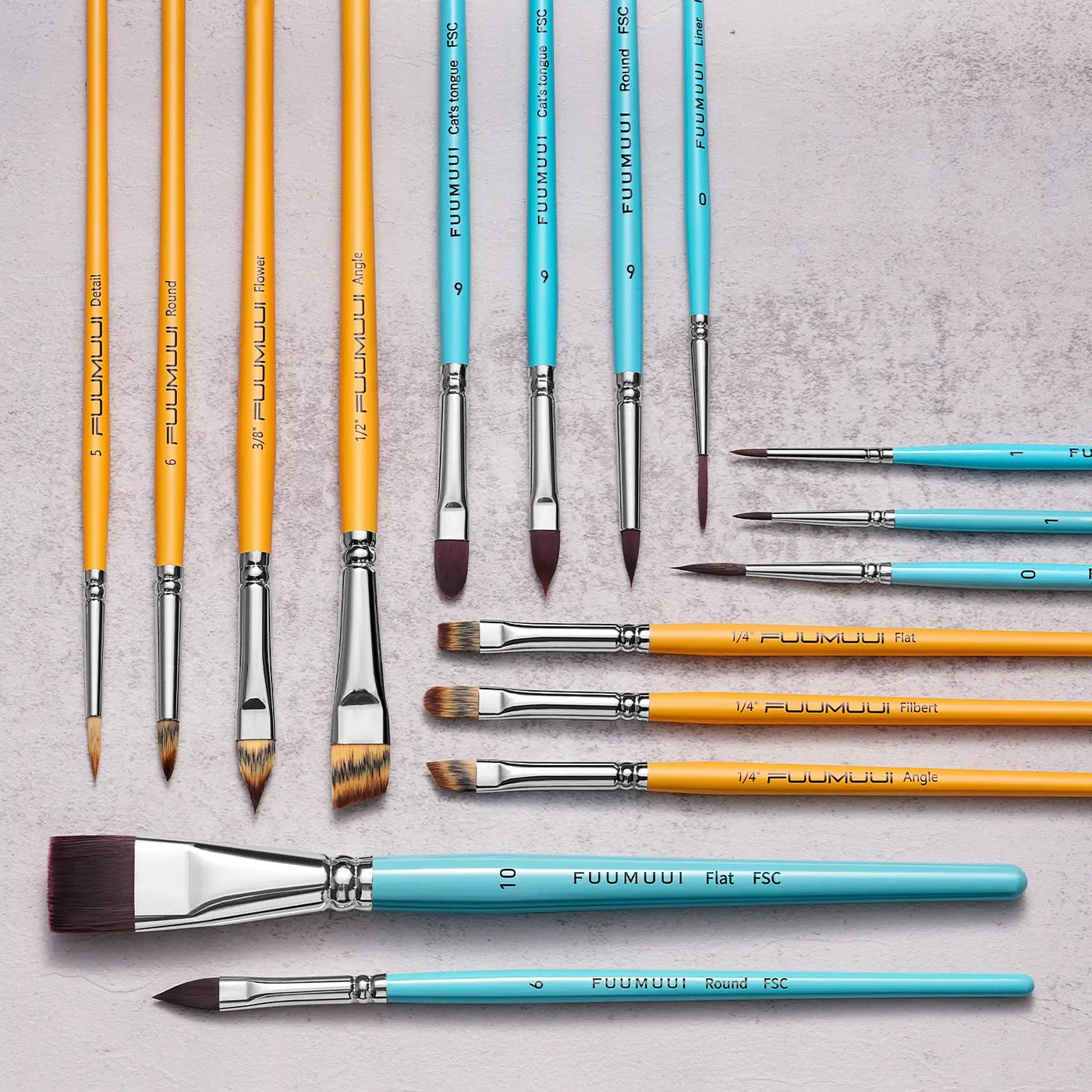
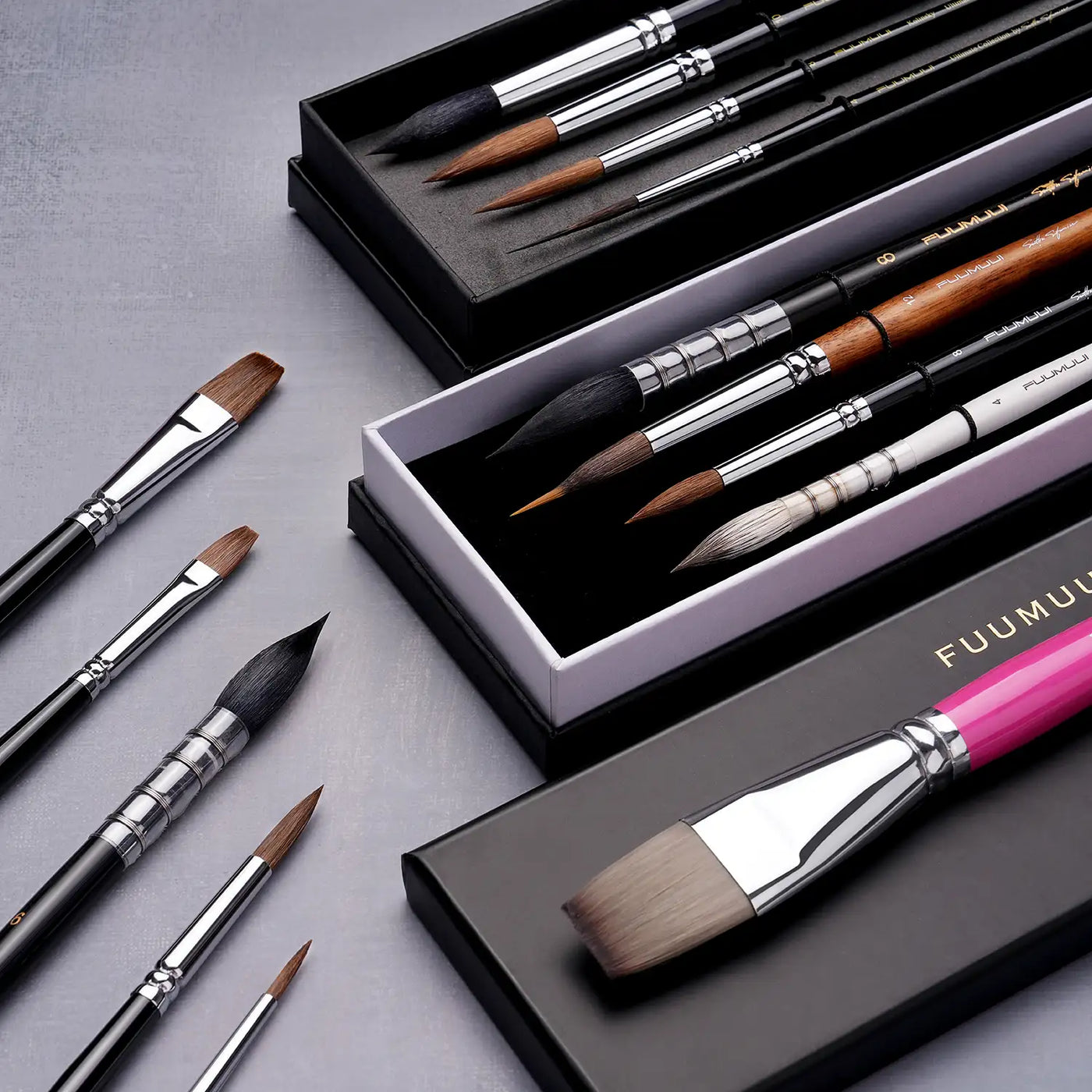
- Round: The workhorse of the brush inventory. Fine point for lines and details, belly for washes. Most versatile in any artist's collection.
- Mop (Large round quill): Big, soft, and excellent for laying large washes and soft backgrounds. Holds a lot of fluid.
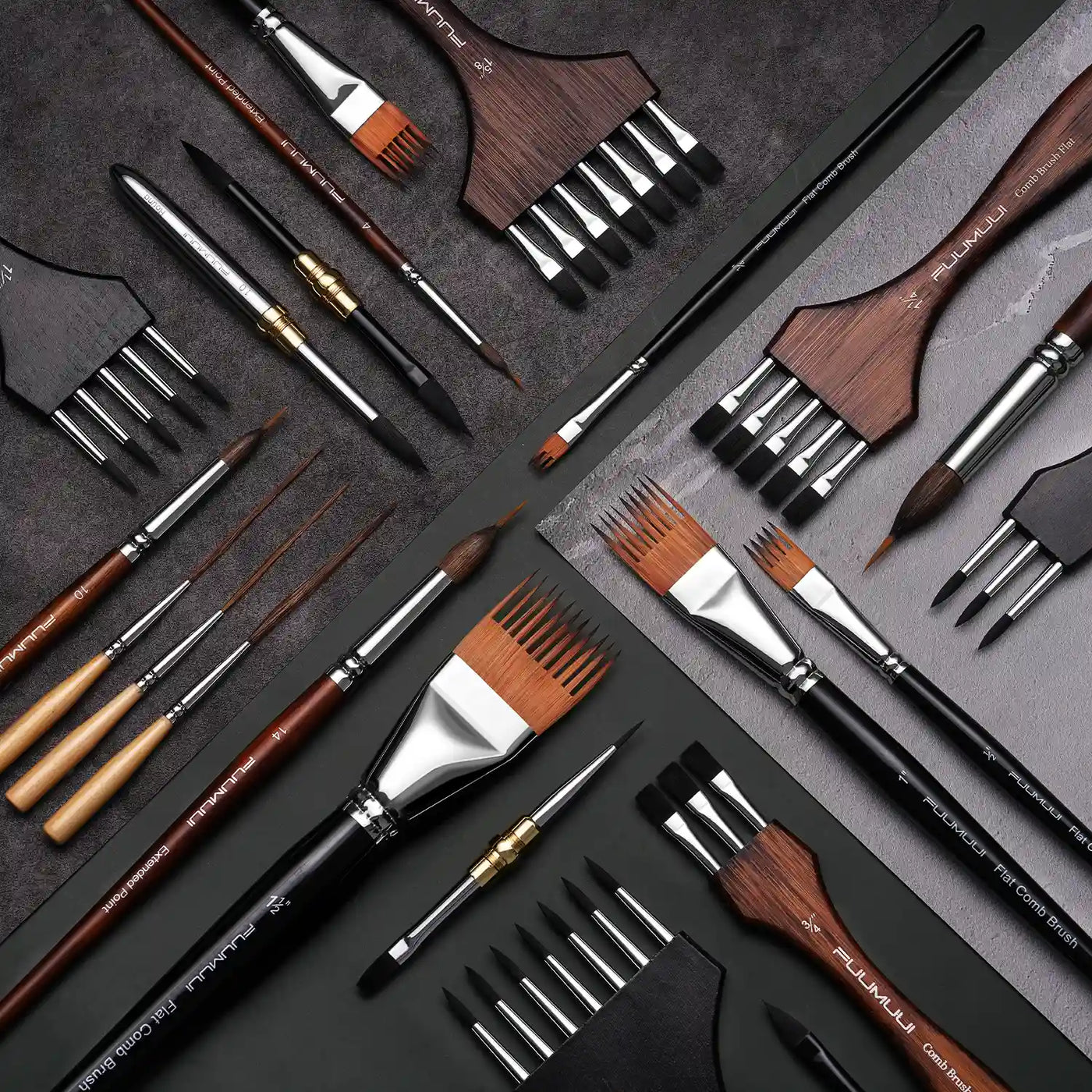
- Flat: Good for even, broad washes, edges, and lifting. Wider flats (1” and up, and Hake brushes) make large even washes.
- Rigger / Liner: Long, thin point for fine lines, grasses, lettering, and branches.
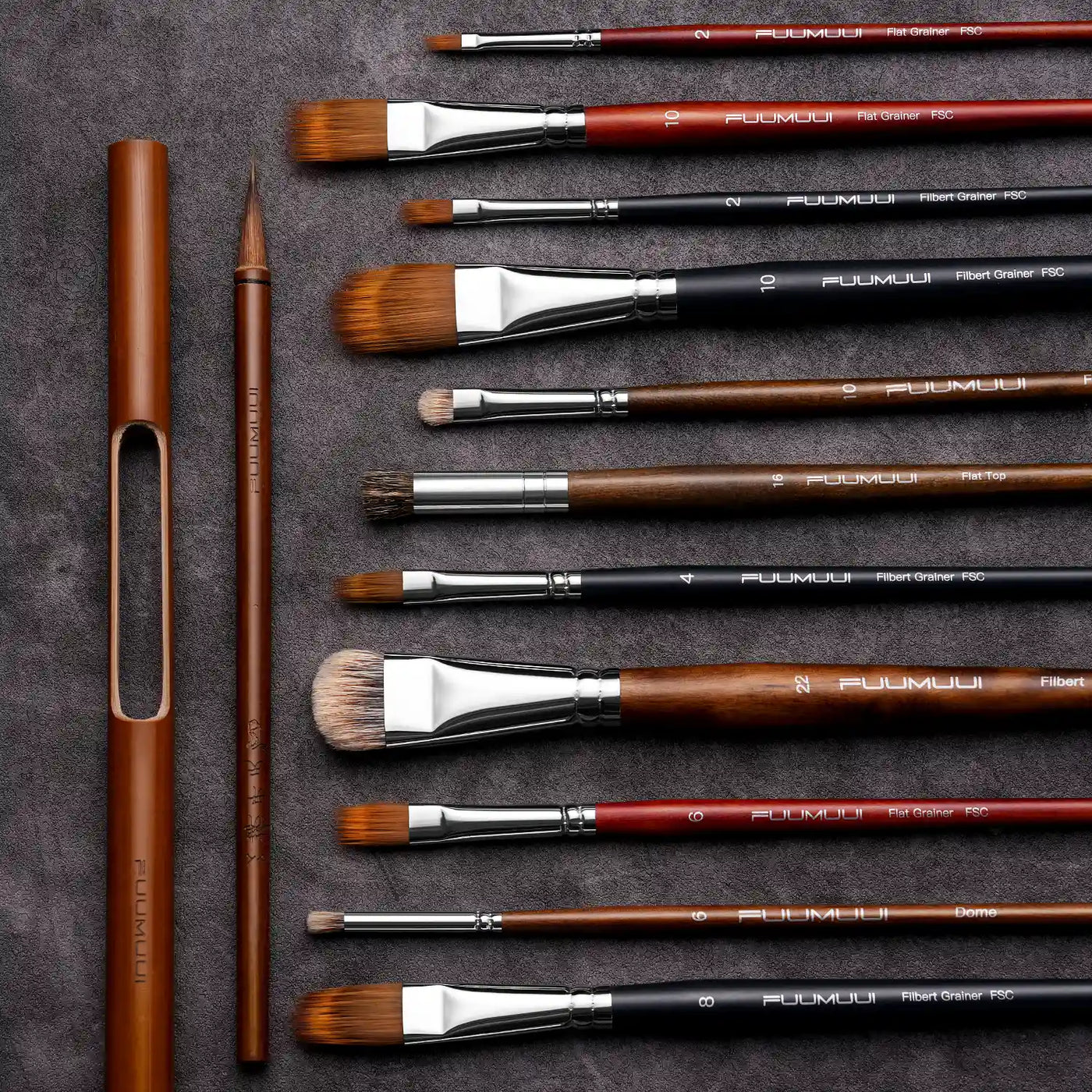
- Filbert / Oval: A hybrid between round and flat — useful if you want softer edges and brushing strokes that blend.
- Fan: Rare in watercolor but handy for dry texture, lifting, or special effects.
Consider The Length of Your Brush Handle
Brush handles (barrels) come in a variety of lengths, and the length you choose depends on your personal preferences for your use.
Short Handle
Short handles are typical for watercolor and close-up work. Short handled brushes are usually held like pen or a pencil, with the hand close to the ferrule for maximum control.
Long Handle
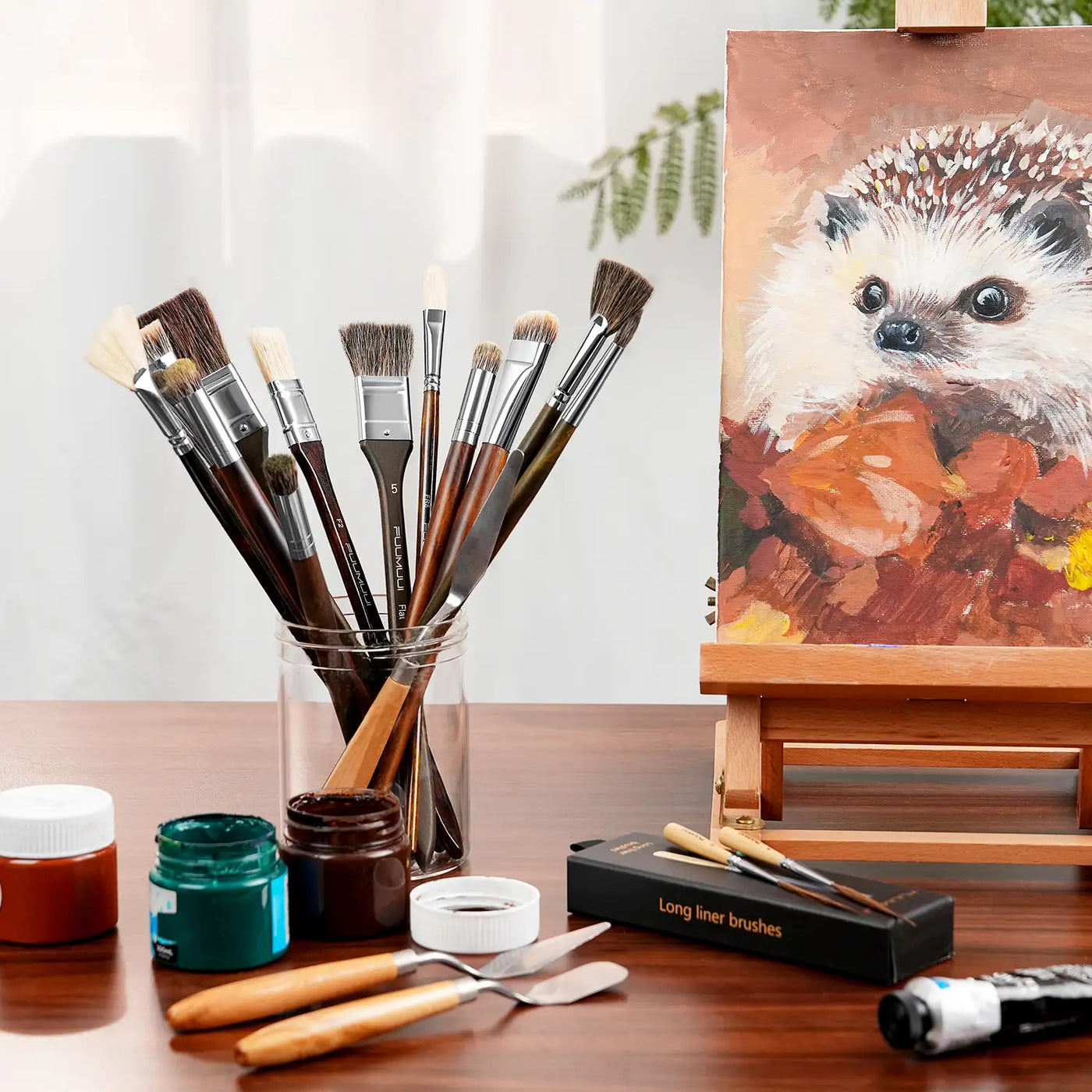
Long handle brushes are mostly used for oil and acrylic painting, although they are sometimes used for watercolor if an artist is working while standing up. The purpose of long handled brushes is to allow an artist to stand further back away from their work while painting, thus being able to see their entire work from a distance.
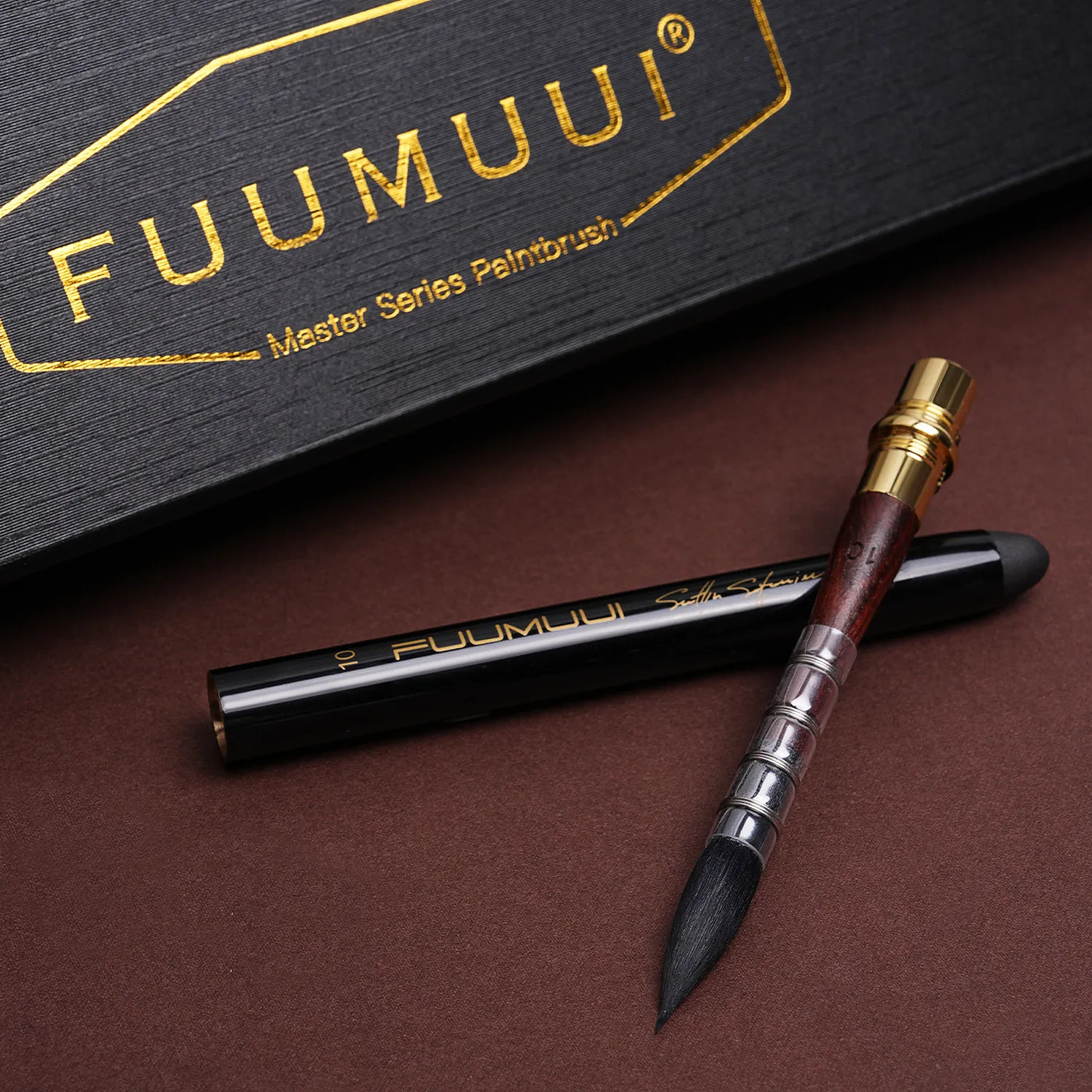
Travel Brush
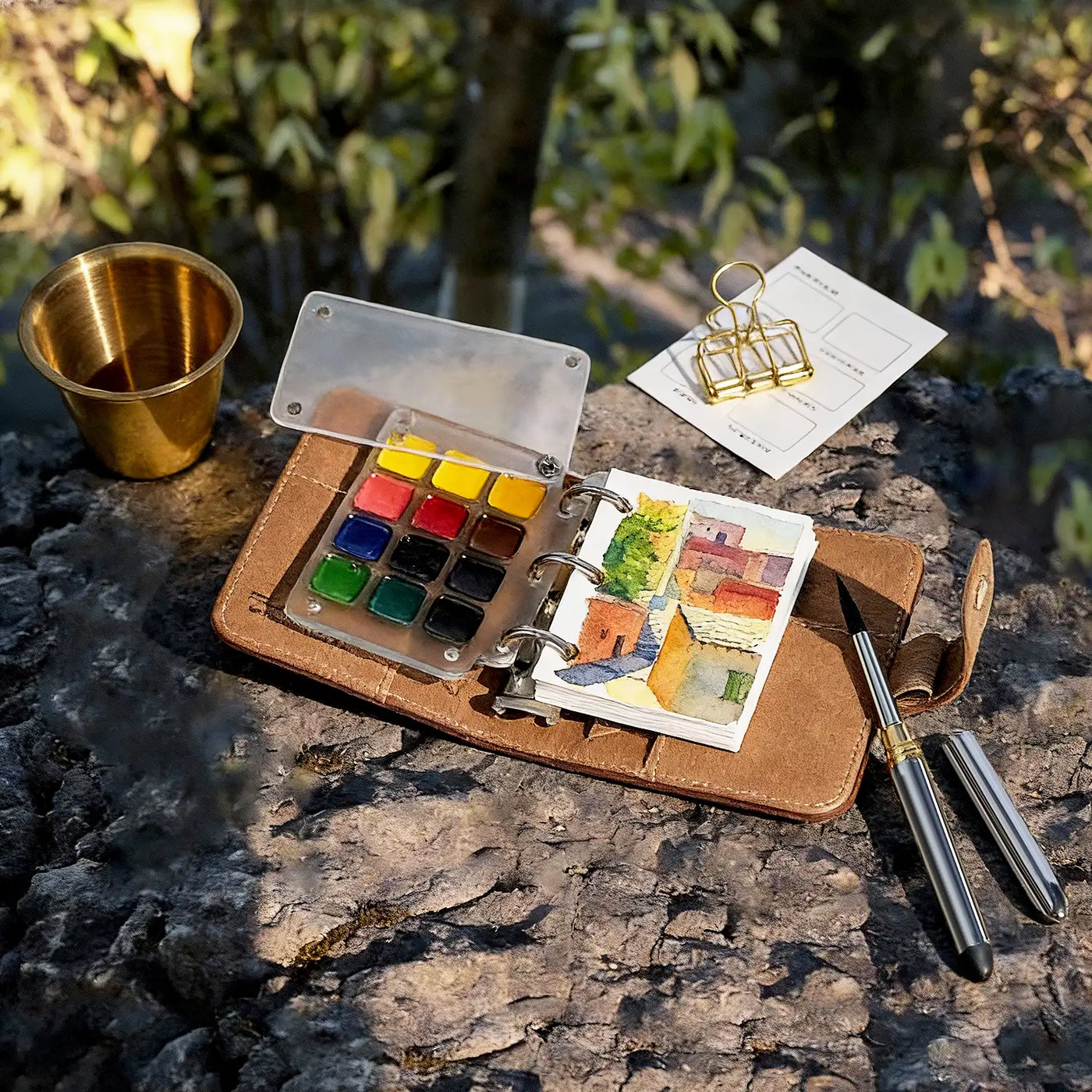
Pocket brushes (travel brushes) have a unique handle design, in that the handle is a removeable hollow tube that doubles as a sort of protective storage container for the brush. This protects the brush when it is not is use and makes it easier to pack and travel with it. The short length, light weight, and protective self-storing characteristic is especially well suited for plein air painters.
Understanding Brush Sizes
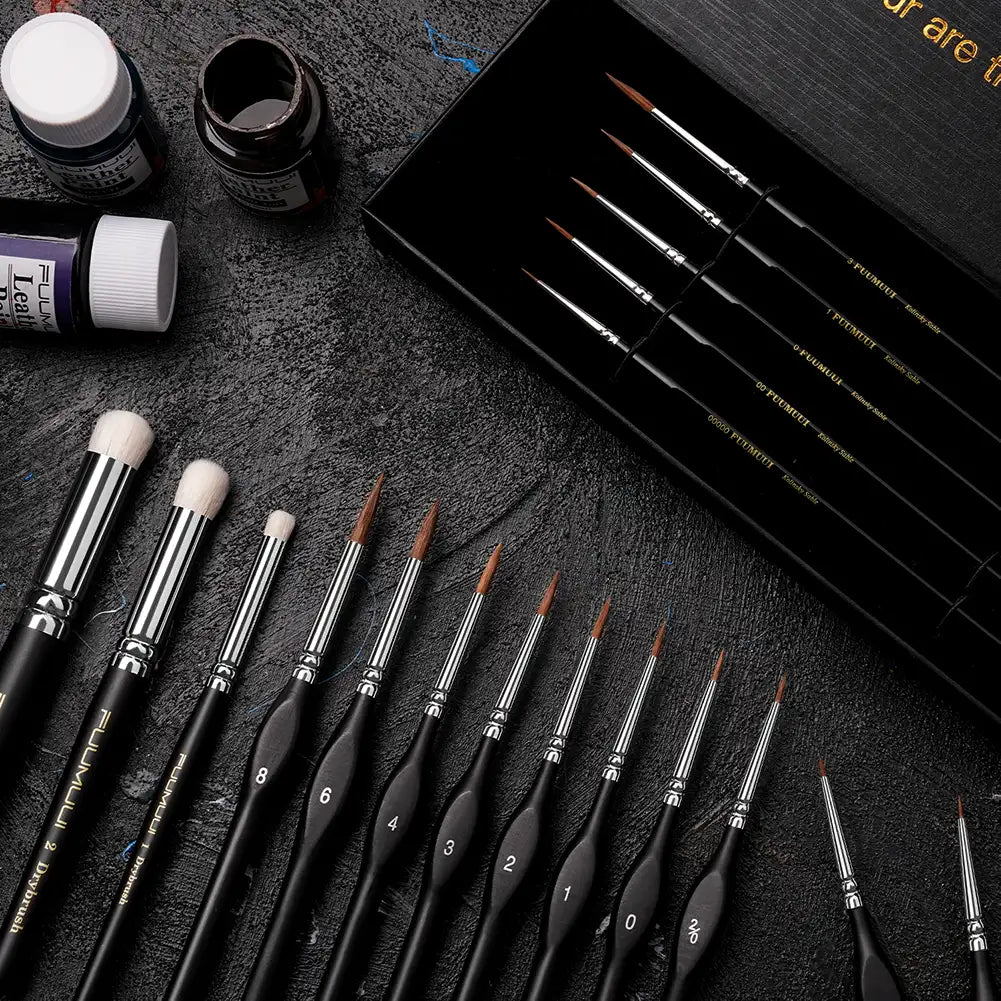
Brush sizes are indicated by numbers on the handle, typically ranging from tiny (000) to very large (24+). Generally, the lower the number, the smaller the brush head; the higher the number, the larger the brush.
For flat brushes, the system is slightly different. Instead of a number, they are usually measured by the width of the metal ferrule in inches or millimeters (e.g., 1/4", 1/2", or 1").

General Size Categories To simplify things, you can group round brushes into three main categories:
- Small (Size 0 – 4): These are your detail specialists. Use them for intricate work like painting eyes, thin branches, blades of grass, or signing your name.
- Medium (Size 5 – 8): The versatile middle ground. A size #8 Round is often considered the "Goldilocks" brush—it is large enough to hold a good amount of wash, but usually has a fine enough point for detail work.
- Large (Size 10 and up): These hold a massive amount of water and pigment, making them perfect for painting skies, backgrounds, and covering large areas of paper quickly.
How to Pick The Right Watercolor Brushes For Beginner
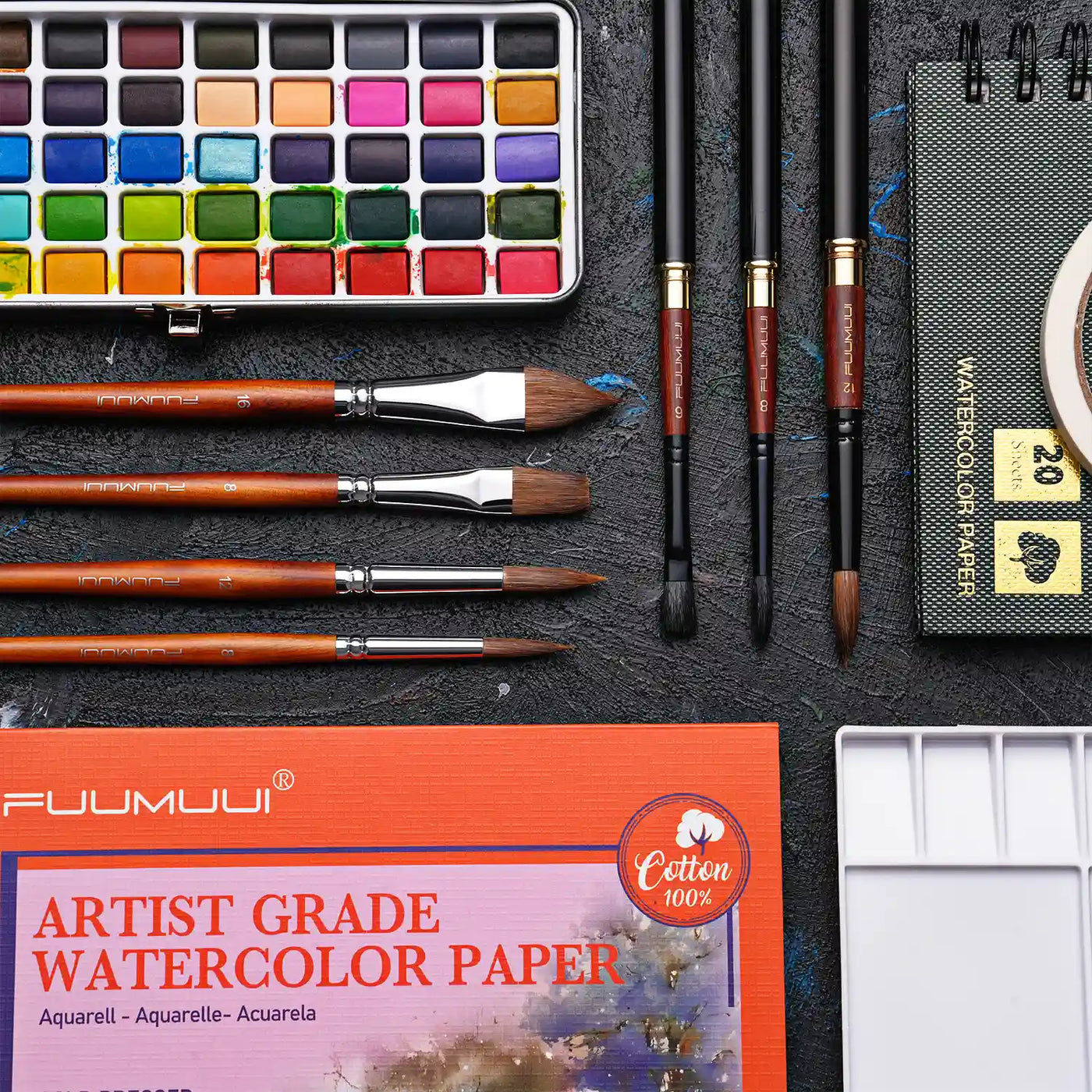
I recommend choosing quality over quantity when it comes to buying brushes. For most beginning painters, I recommend a simple starter kit of a small round in sizes 2 - 3 for painting details, a medium round in sizes 6 or 8 for versatility, and a large flat or mop brush for washes and glazes. This three-brush combo covers most beginner needs and keeps your kit light.
Brush Care 101: Extending the Life of Your Brushes
Care basics (to make them last):
- Rinse thoroughly after each session; never leave brushes standing in water.
- Never store wet or damp brushes upright – always lay them to dry on paper towels or on a sponge with the handle end elevated, so that water doesn't soak up into the ferrule.
- Don't scrub on rough surfaces — that ruins the hairs and shortens the life of the brush.
If you take good care of your watercolor brushes, they can last you a long time.

FAQs About Watercolor Brushes
Q1: Should Beginners Choose Animal Hair (Natural Hair) or Synthetic Hair Watercolor Brush?
A: Although natural hair brushes cost considerably more than synthetic, I highly recommend them. Beginners should buy at least one natural hair brush to start with, and they can gradually increase their inventory later, after they determine the sizes and shapes that they want to use most often.
Q2: Do Watercolor Brushes Have Different Barrel Lengths? Which Should I Choose?
A: Most watercolor brushes have short handles, with long handles being more common for oil and acrylic painting brushes. However, pocket brushes are designed for traveling, and have a compact size of just 3 or 4 inches when they are closed and they extend to a traditional full-length brush when opened. These brushes cost a little more but their versatility make them an excellent choice for traveling artists.
Q3: Is There a Uniform Standard for the Size of Watercolor Brushes?
A: Unfortunately, there is not a uniform standard for brushes. Flat brushes generally have the width of the brush printed on the handle, measure in inches. Round brushes also have a size number printed on the handle. Sizes are not standardized across brands, but generally are close. For instance, round bushes generally correspond to the following sizes: Small (0–4) for detail work; Medium (5–8) for everyday painting; and Large (10–20+) for big washes and backgrounds.
Q4: What Shapes of Paintbrushes Should Beginners Buy?
A: Round brushes are the most versatile and the most used brushes in any artist's inventory, and large flat and a mop would complete the basic set. A liner brush wouldn't be used quite so often, but it's still a good brush to have on hand for many types of painting techniques.
Find Your Perfect Match
Choosing a watercolor brush is a personal journey. While understanding the anatomy and materials is crucial, the right brush is ultimately the one that feels like an extension of your hand. Whether you need the thirsty belly of a natural squirrel mop or the precision snap of a synthetic round, your tools should empower your creativity, not hinder it.
Browse our watercolor brush collection and choose the brush set that's right for you.

Ready to create? View our high-quality watercolor brushes and professional watercolor brush set. Whether you're a beginner or a professional,...


Your post has excellent information,
explanations, and visuals. You also have a good variety of product choice. Well done.