

Table of Contents
Key Takeaways
Verdict: Match the shape to your subject. The right watercolor brush shapes act as shortcuts—they manage water capacity and edge precision for you, so you don't have to fight the medium to get the desired effect.
- The Essentials: The Round Brush is your all-purpose tool for detail and color, while Flat/Wash brushes are non-negotiable for smooth, streak-free backgrounds.
- Organic Shapes: Use Filberts or Dagger brushes for leaves and petals. These specialized shapes create natural, tapering curves with a single stroke.
- Texture Shortcuts: Don't overwork your paper. Use Fan, Comb, or Stippler brushes to instantly "automate" complex textures like fur, grass, and trees.
- The Power Trio: A perfect starter kit consists of a Medium Round (General use), a Large Flat (Washes), and a Small Liner (Fine details).
Finding a brush that "just works" changes everything. It becomes an extension of your hand, holding water perfectly and snapping back after every stroke.
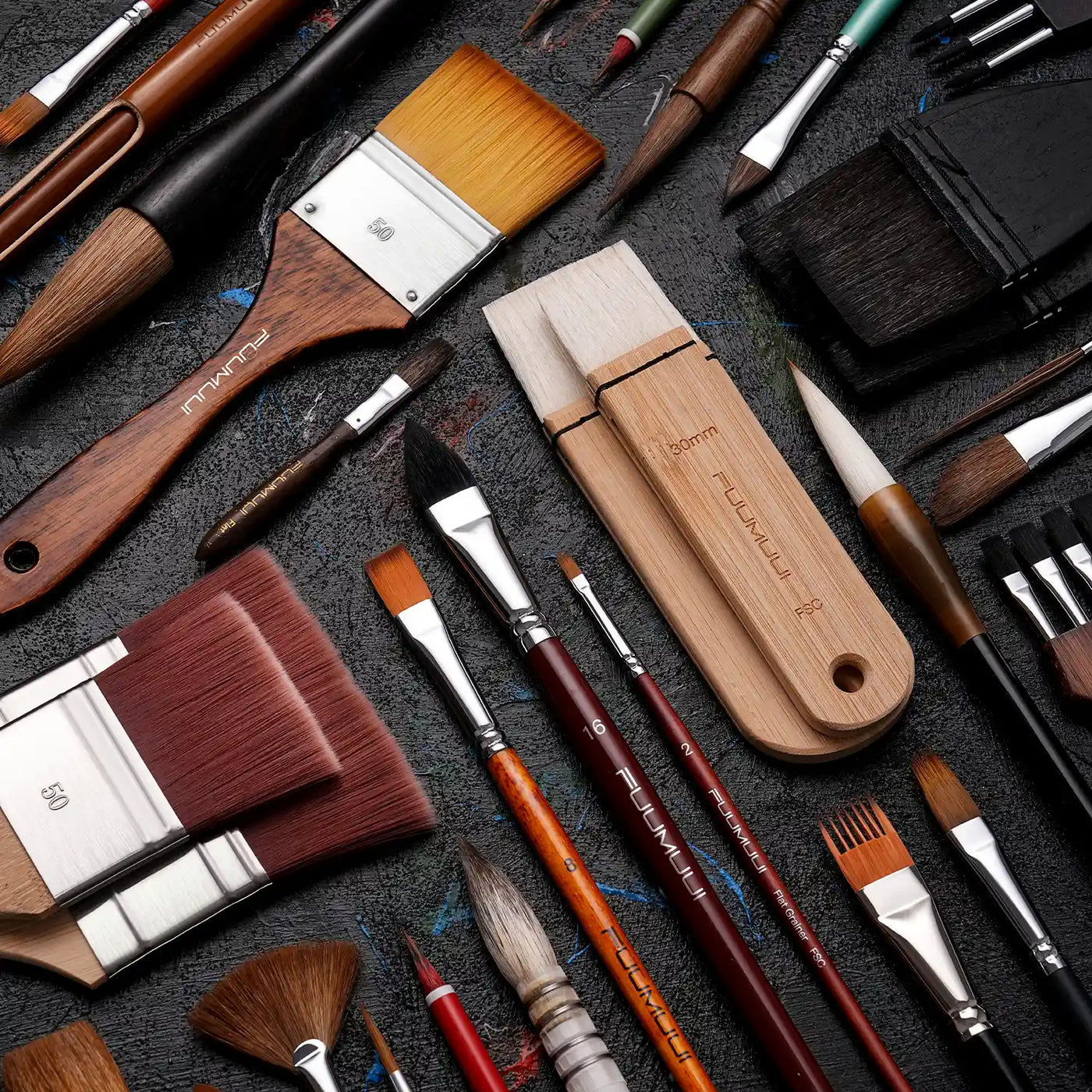
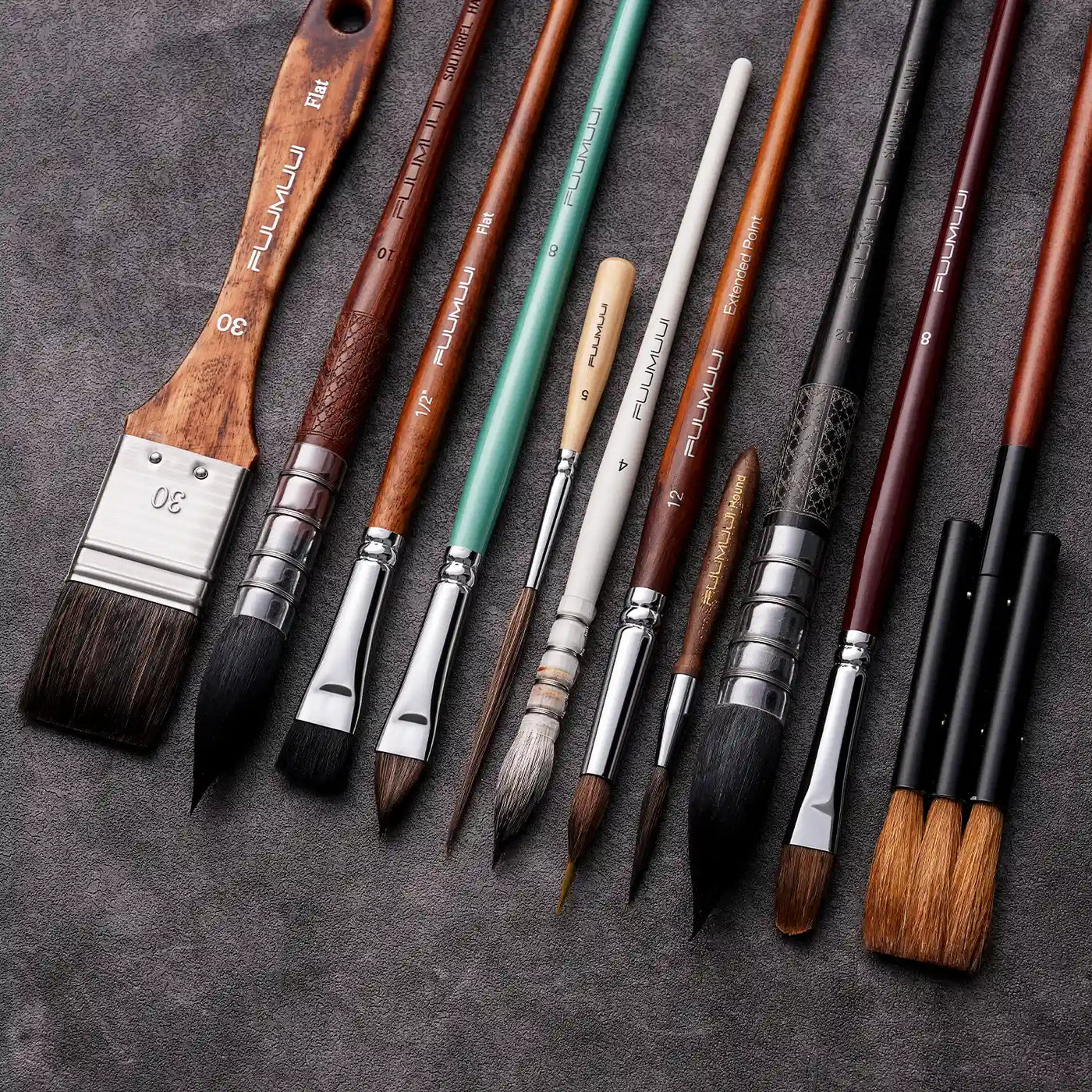
If the endless options at the art store feel overwhelming, this guide to watercolor brush shapes will help you pick the tools that actually fit your style. Understanding common watercolor brush uses makes choosing shapes much easier.
Watercolor Brush Anatomy: Understanding the Basics
Before exploring specific watercolor brush shapes, you need to look under the hood. A high-quality tool isn't just about the hair; it’s about how every part works together to manage water and pigment.
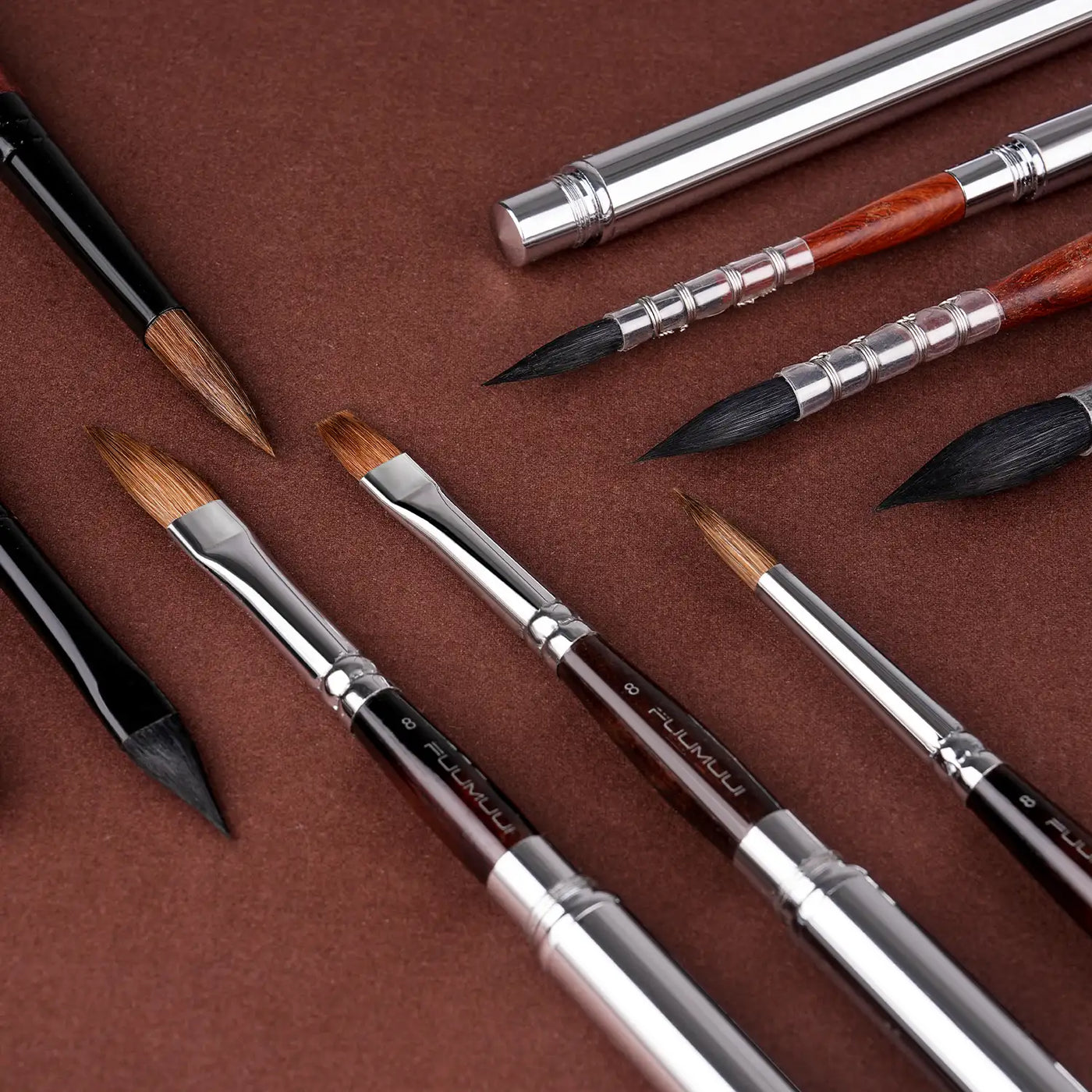
Understanding watercolor brush anatomy involves 3 key components:

- The Handle: Usually made of wood or acrylic, the handle provides balance. A longer handle allows you to paint from a distance with loose strokes, while a shorter one is preferred for close-up, intricate details.
- The Ferrule: This is the metal ring that connects the hair to the handle. A seamless, high-quality ferrule is essential to ensure the bristles don't wiggle or shed onto your paper mid-stroke.
- The Tuft / Bristles: This consists of the "belly" (the reservoir that holds water) and the "toe" (the tip used for detail). This part is why brush shape matters in watercolor—the tuft's shape dictates how much pigment you can carry and the marks you can make.
When exploring the different types of watercolor brushes for beginners, focus on how these 3 parts feel in your hand. A well-constructed anatomy of a paintbrush will feel balanced and responsive, making your watercolor painting much easier to put into practice.
Round Watercolor Brushes: Essential Types & Uses
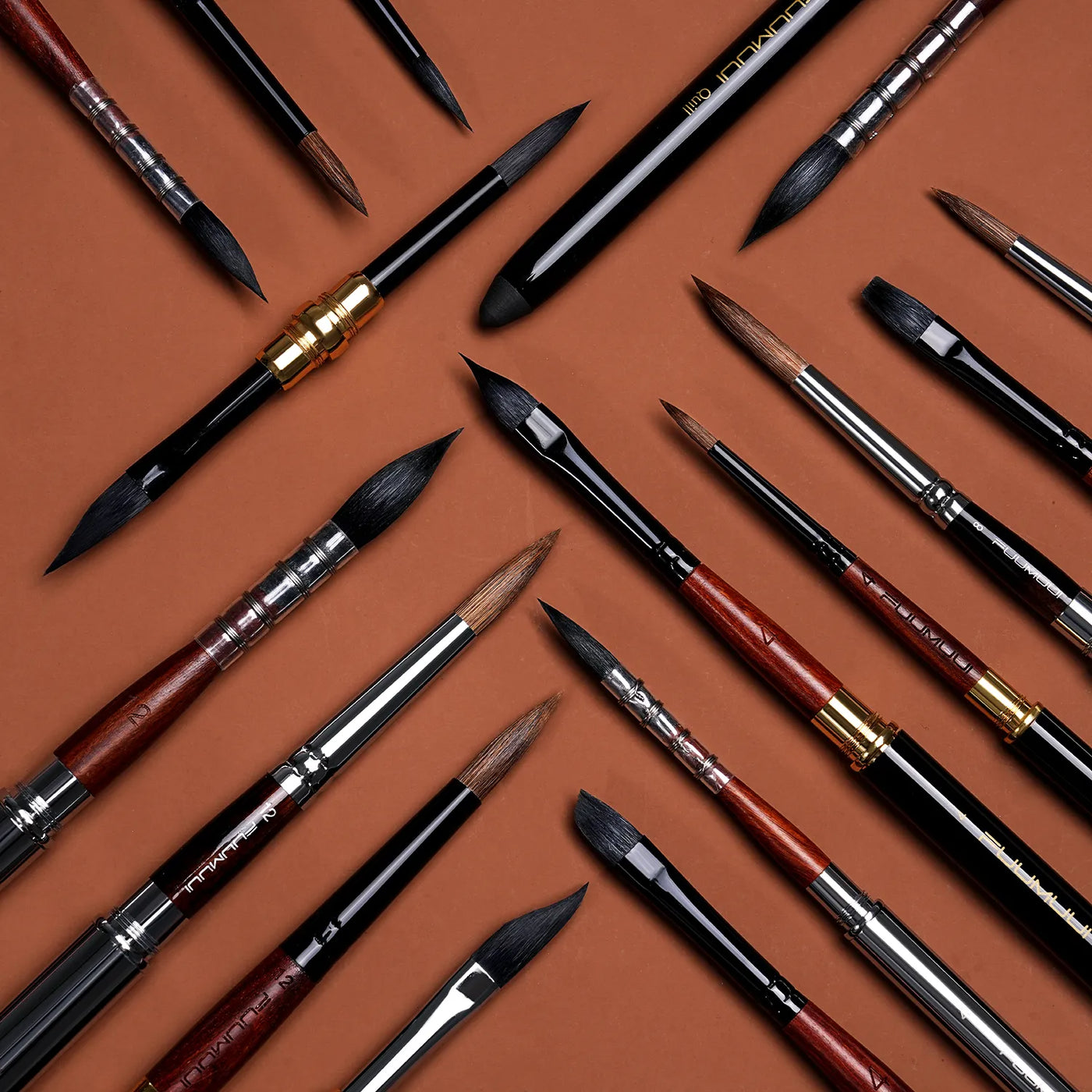
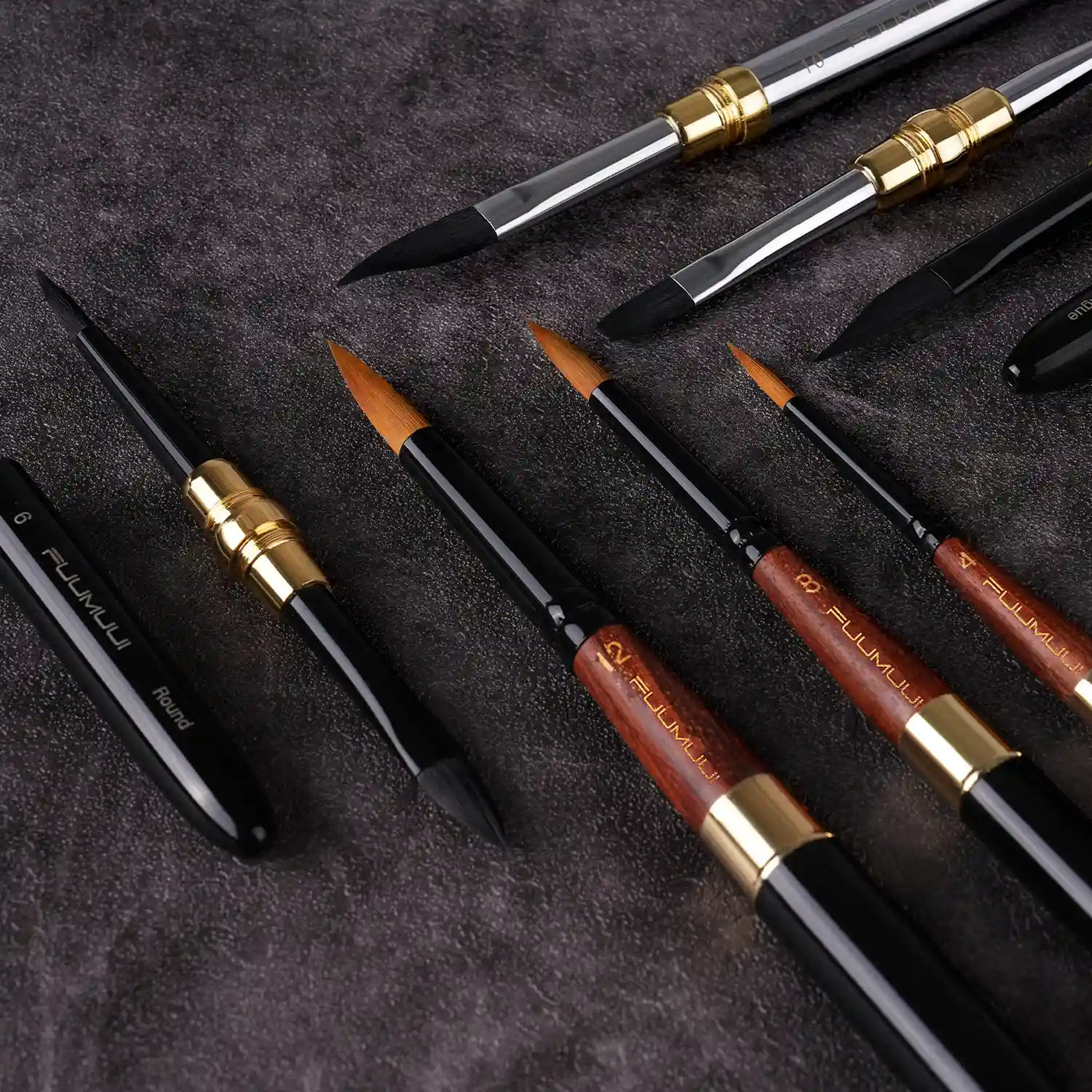
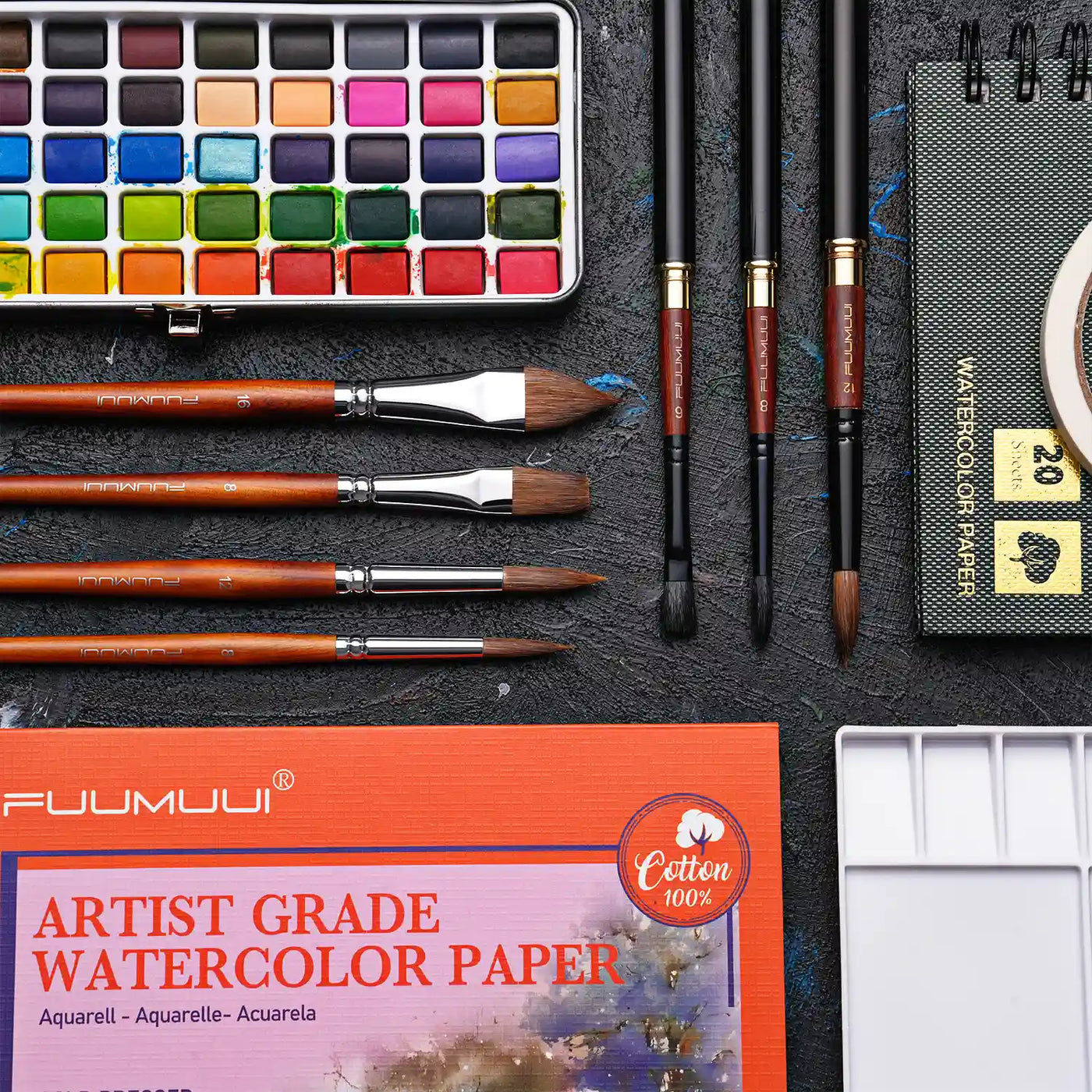
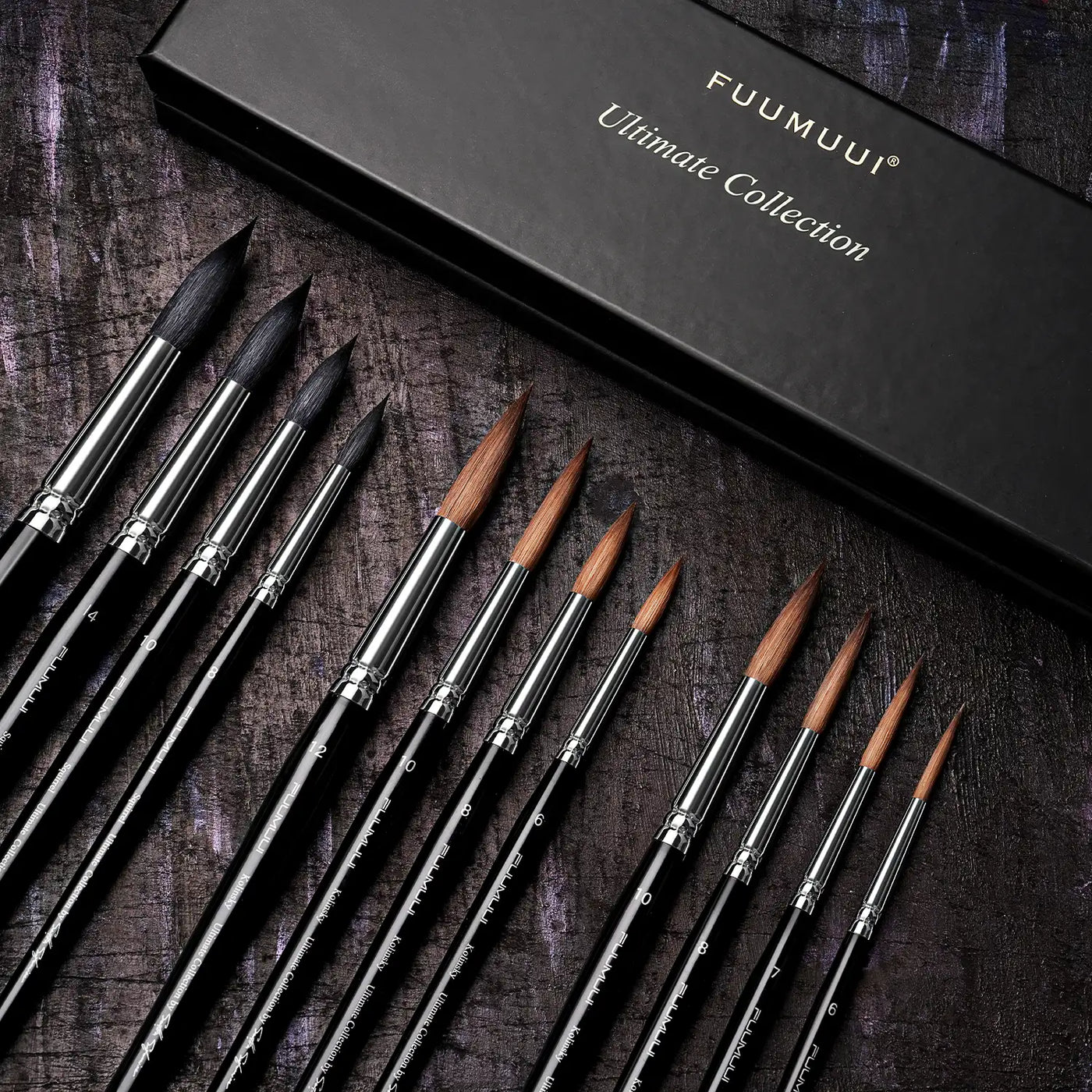
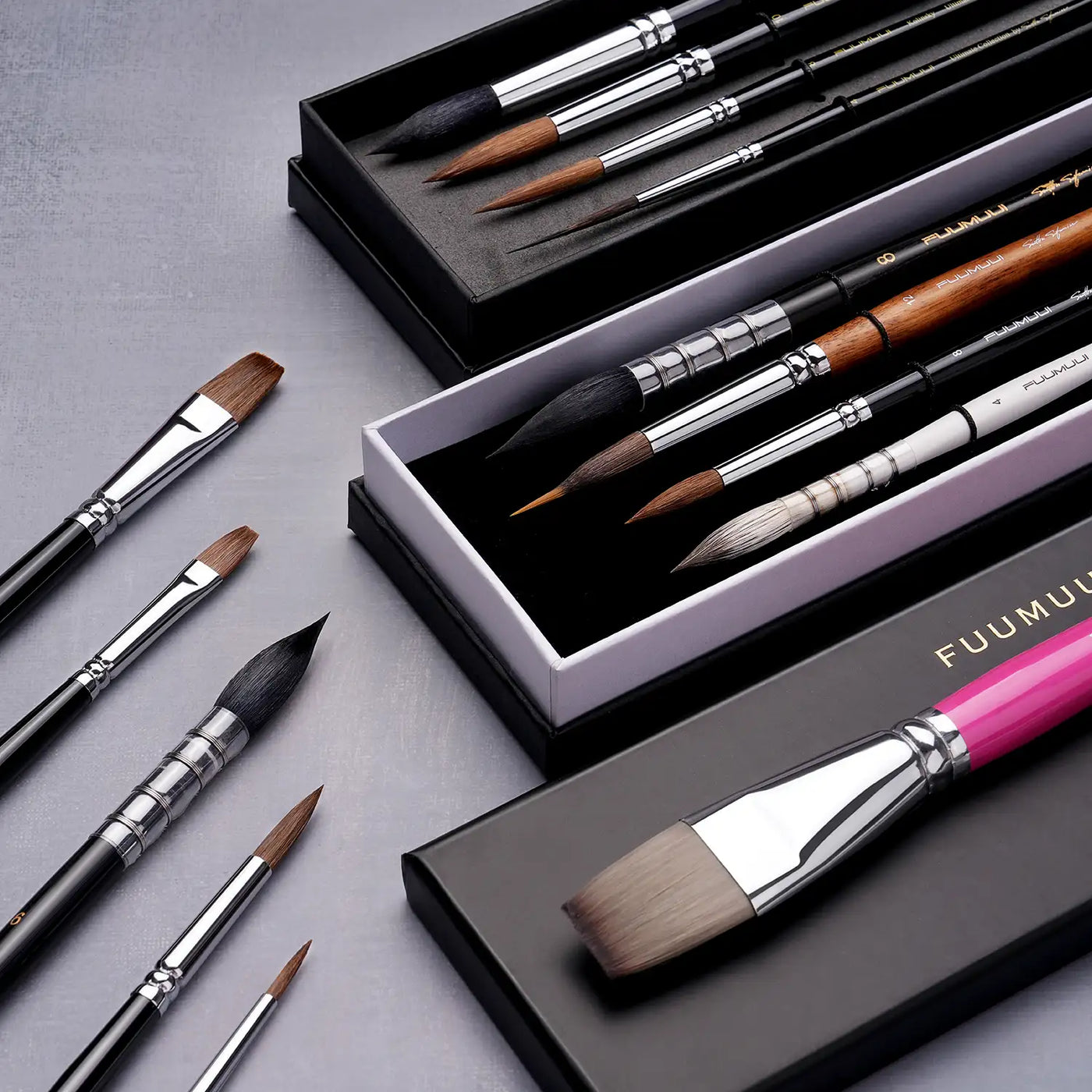
The best all-purpose watercolor brush is a round brush, thanks to its pointed tip for details and full belly for water control. Versatile and easy to use, it works for everything from broad washes to fine details.
Let's break down some common types of round brushes:
Standard Round
This is your "do-it-all" tool. A size 6 or 8 round can handle about 80% of most paintings. It’s perfect for filling in shapes, painting petals, or creating soft shadows.
Needle Point

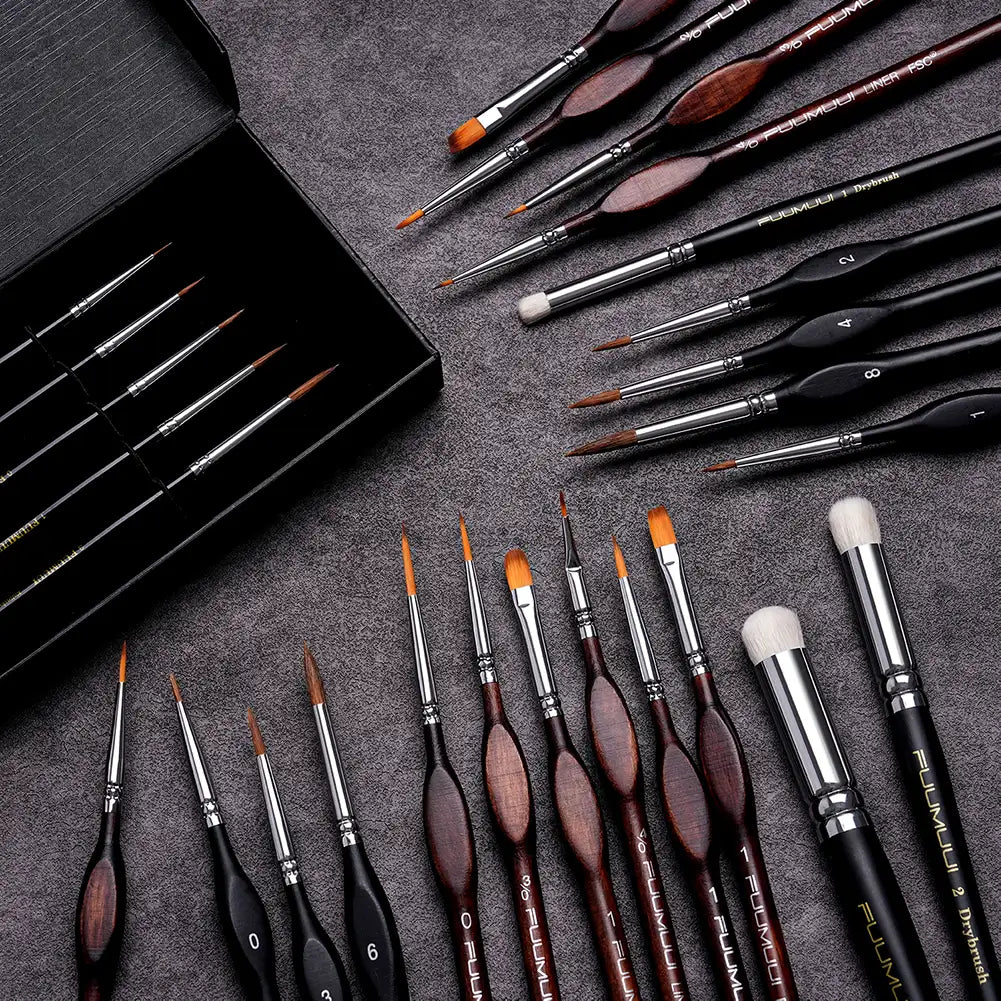
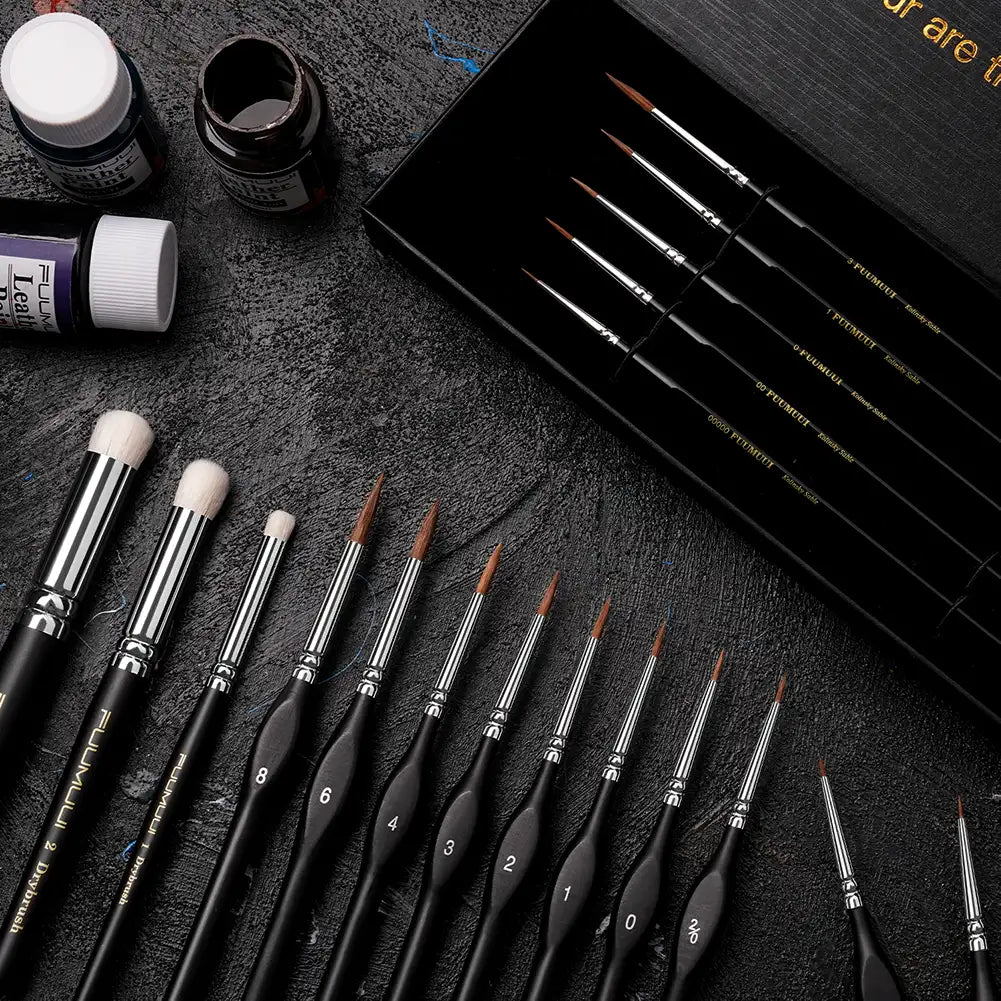
The needle point is a specialized version with an elongated tip. It has an impressive water-holding capacity, which is great for sketching with paint or drawing long lines and finishing those tiny details.
Spotter
A spotter is a dedicated detailing brush. The bristles are much shorter than a standard round, which prevents them from bending. This gives you maximum control for microscopic highlights or tiny textures.
Long Liner

The long liner, often called a rigger, is the king of fluid movement. Because the hairs are so long, they can hold a lot of thin paint, allowing for a pulling lines effect that is smooth and stutter-free.
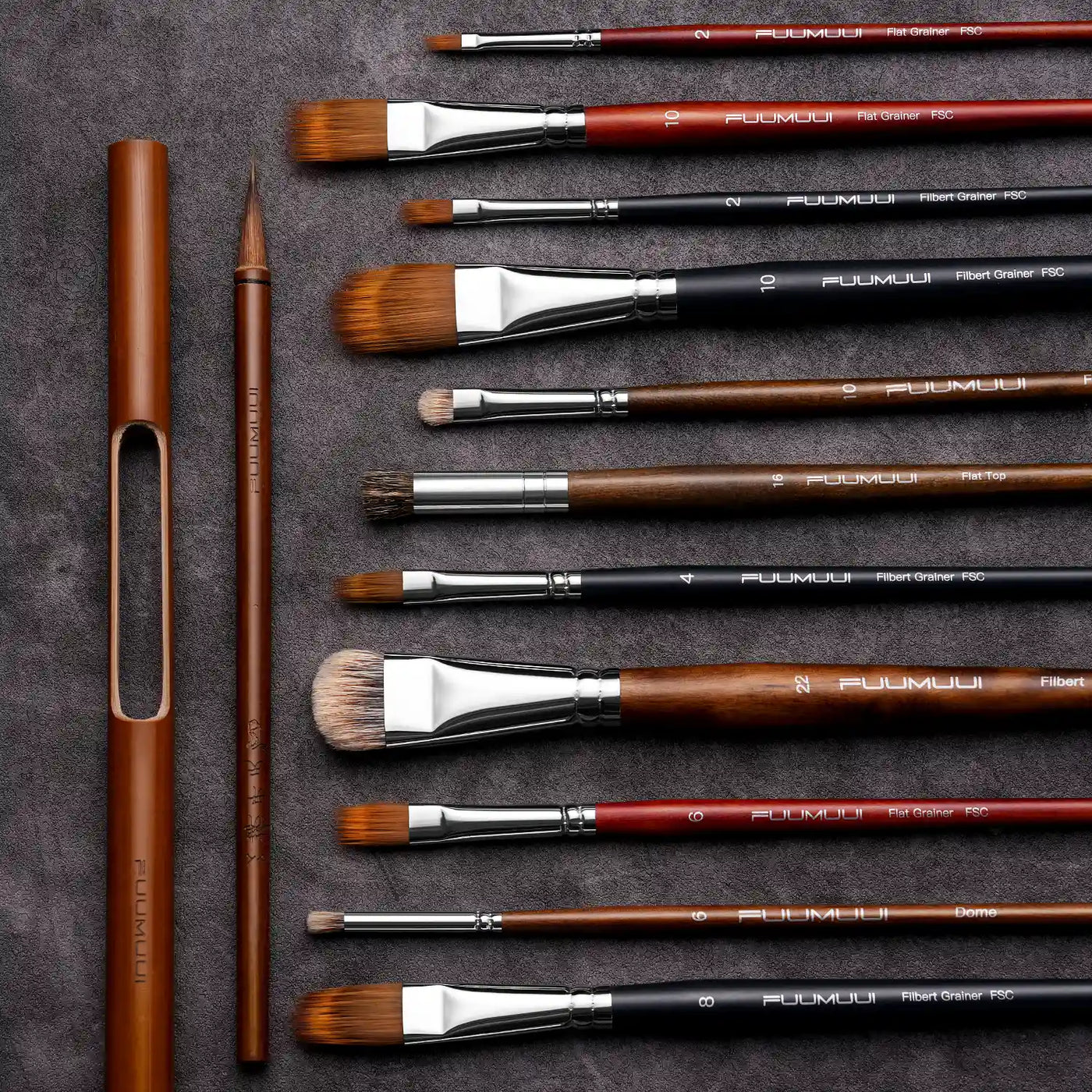
Dome Brush

Unlike the others, this has a rounded, blunt top instead of a sharp point. It’s designed for soft application and atmospheric effects. Perfect for "scumbling" in soft clouds or foliage.
Learning how to use round brushes for watercolor is all about mastering pressure control. The more you practice varying your touch, the more you'll realize why these are the best round brushes for fine details.
Flat Wash Brushes: Best Shapes for Large Backgrounds
When it’s time to tackle the sky or a large body of water, you need a flat watercolor brush. These brushes are designed to move a lot of water and pigment across the paper quickly and evenly.
The flat family is all about geometry. They have straight edges that are perfect for architectural structures, windows, or any scene that requires a hard, clean edge.
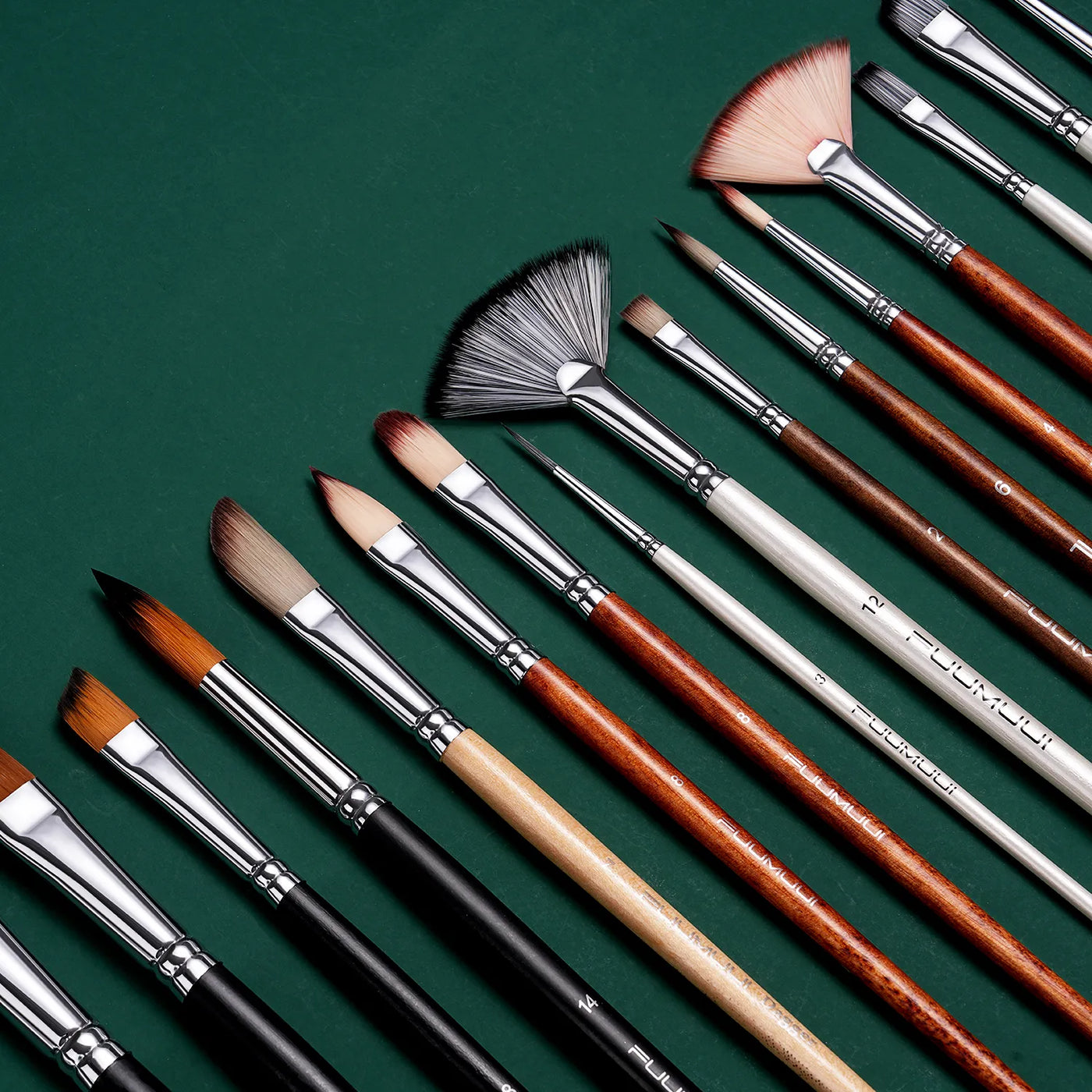
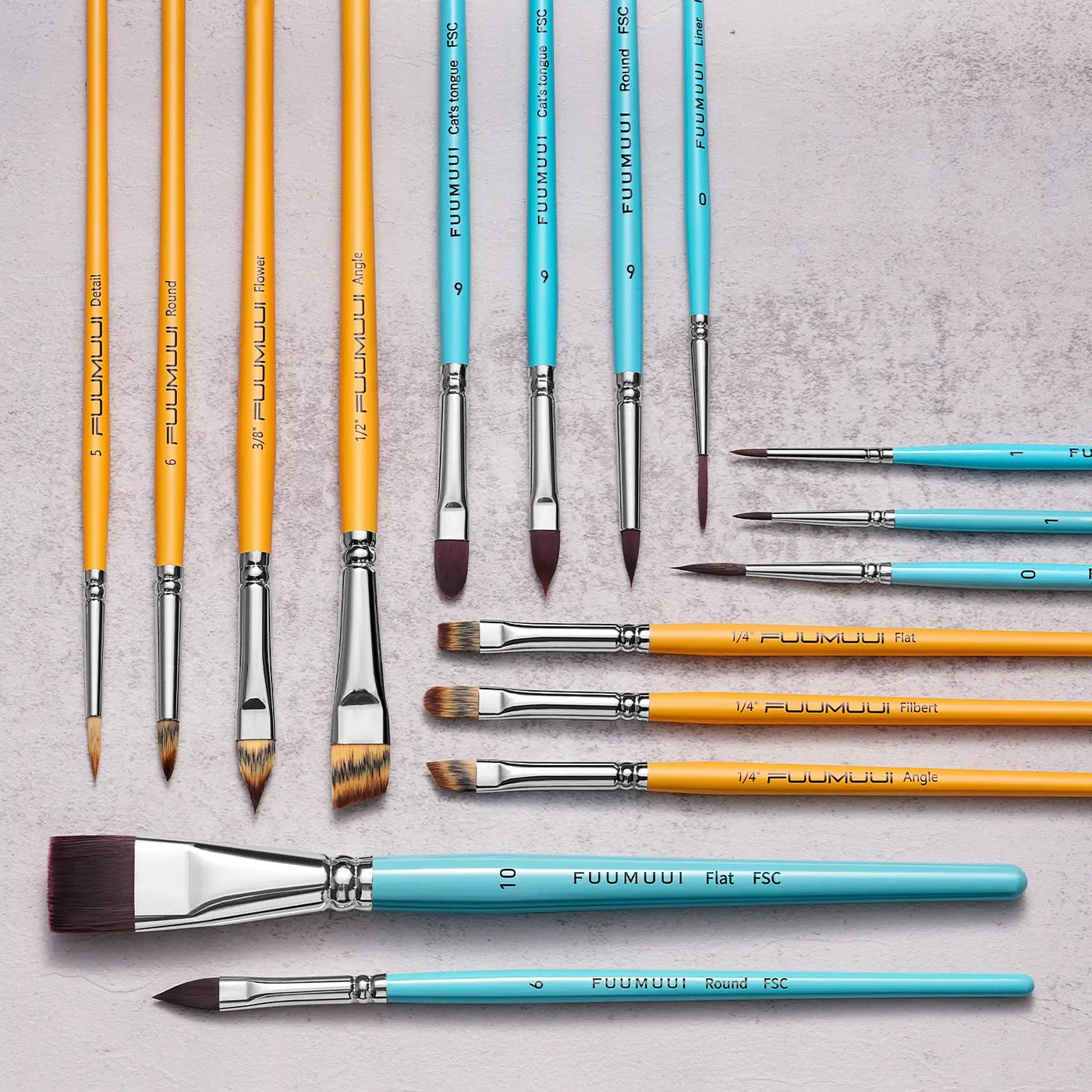
Flat Watercolor Brush Types

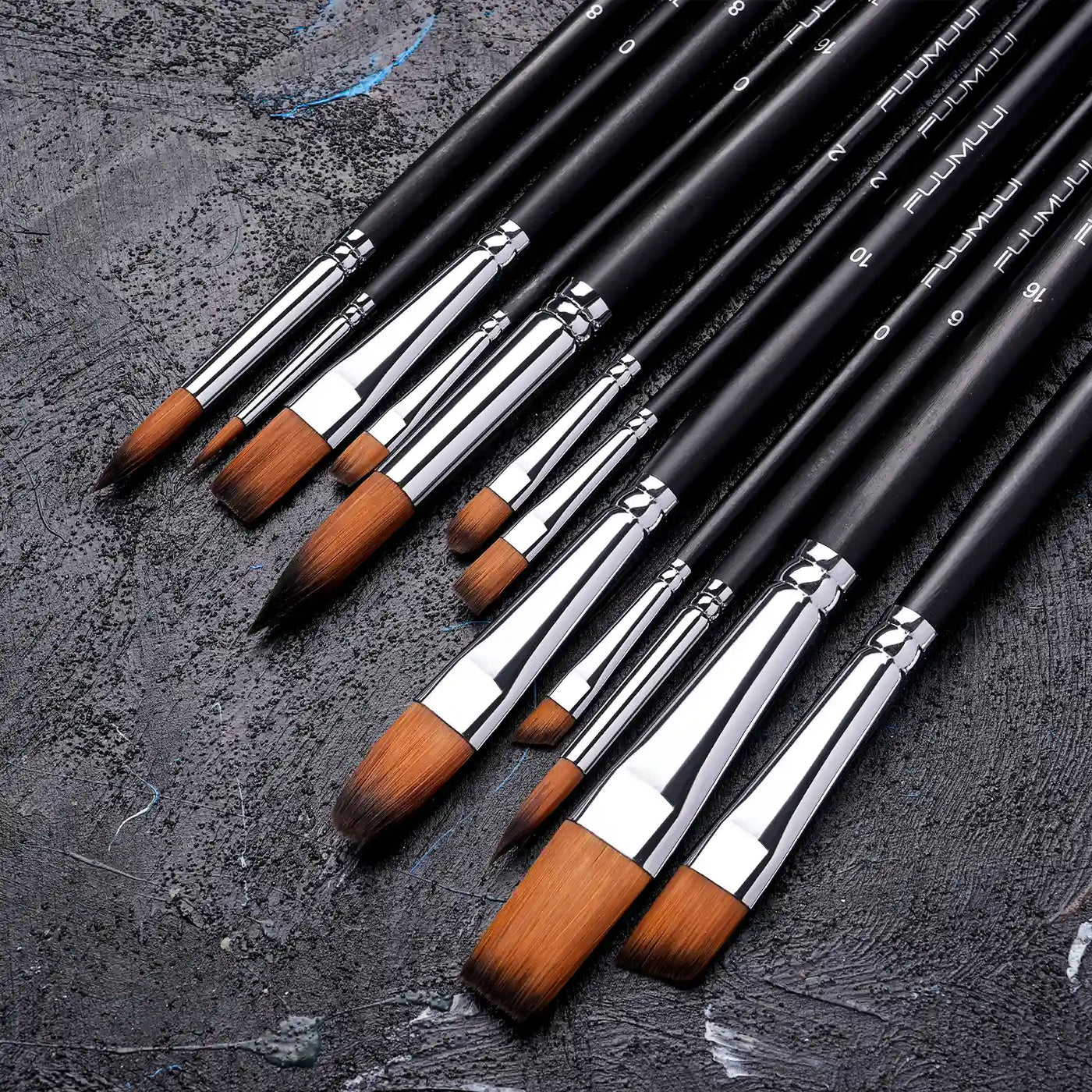
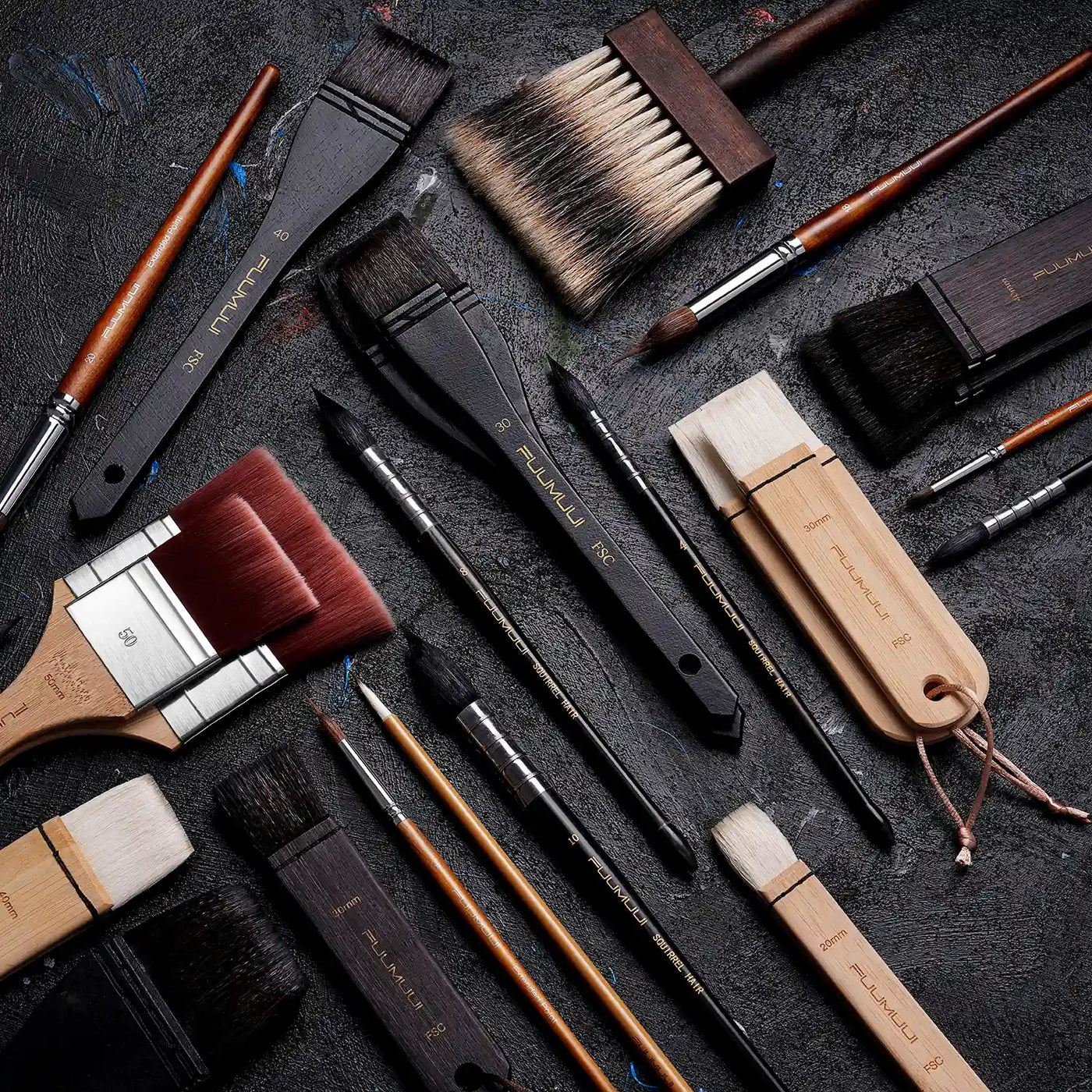
- Flat Shader: A shorter, more controlled flat brush used for precise blocks of color and blending in tight spaces.
- Bright: Even shorter than a shader, this brush is stiff and excellent for "lifting" dry paint off the paper.
- Angular: The slanted tip makes it easy to cut into corners or create varying line widths with a simple twist of the wrist.
- Dagger: One of my favorites. The dagger allows you to paint leaves in one stroke, while the sharp tip can still handle delicate details.
Wash Brush Types for Watercolor

- Mottler: These are massive, flat brushes with very short handles. They are designed for wetting large sheets of paper or applying huge, sweeping washes.
- Hake: A traditional Japanese brush made of soft goat hair. It’s the ultimate tool for a soft, streaky sky or a misty background.
Hybrid Watercolor Brush Shapes
Sometimes you want the coverage of a flat but the organic feel of a round. That’s where these hybrid shapes come in.

- Filbert: A flat brush with a rounded tip. It’s amazing for blending and creating soft, petal-like shapes without harsh corners.
- Cat’s Tongue: A unique shape that is wide at the base but tapers to a sharp point. It’s incredibly versatile for both large washes and sharp edges.
Tips for Painting Smooth Watercolor Washes
- Painting flat washes in watercolor is much easier when your brush is wide enough to cover the area in just a few passes. This prevents the paint from drying unevenly and creating "tide marks."
- If you struggle with using flat brushes for straight edges, try holding the brush more vertically. This allows the sharp corner of the bristles to act like a pen nib.
- Finding the best watercolor wash brushes for large paper often means looking for natural hair or high-end synthetics that won't lose their shape when they're soaking wet.
Mastering how to paint a smooth watercolor wash with a flat brush is a rite of passage for every artist. It’s all about maintaining a "bead" of water at the bottom of each stroke.
Specialty Shapes for Unique Textures and Effects
Once you have your rounds and flats, you can start having some real fun with specialty watercolor brushes. These are the "special effects" team of your brush roll.
These brushes aren't meant for general painting. Instead, they are designed to solve specific problems—like how to paint a thousand blades of grass without losing your mind.

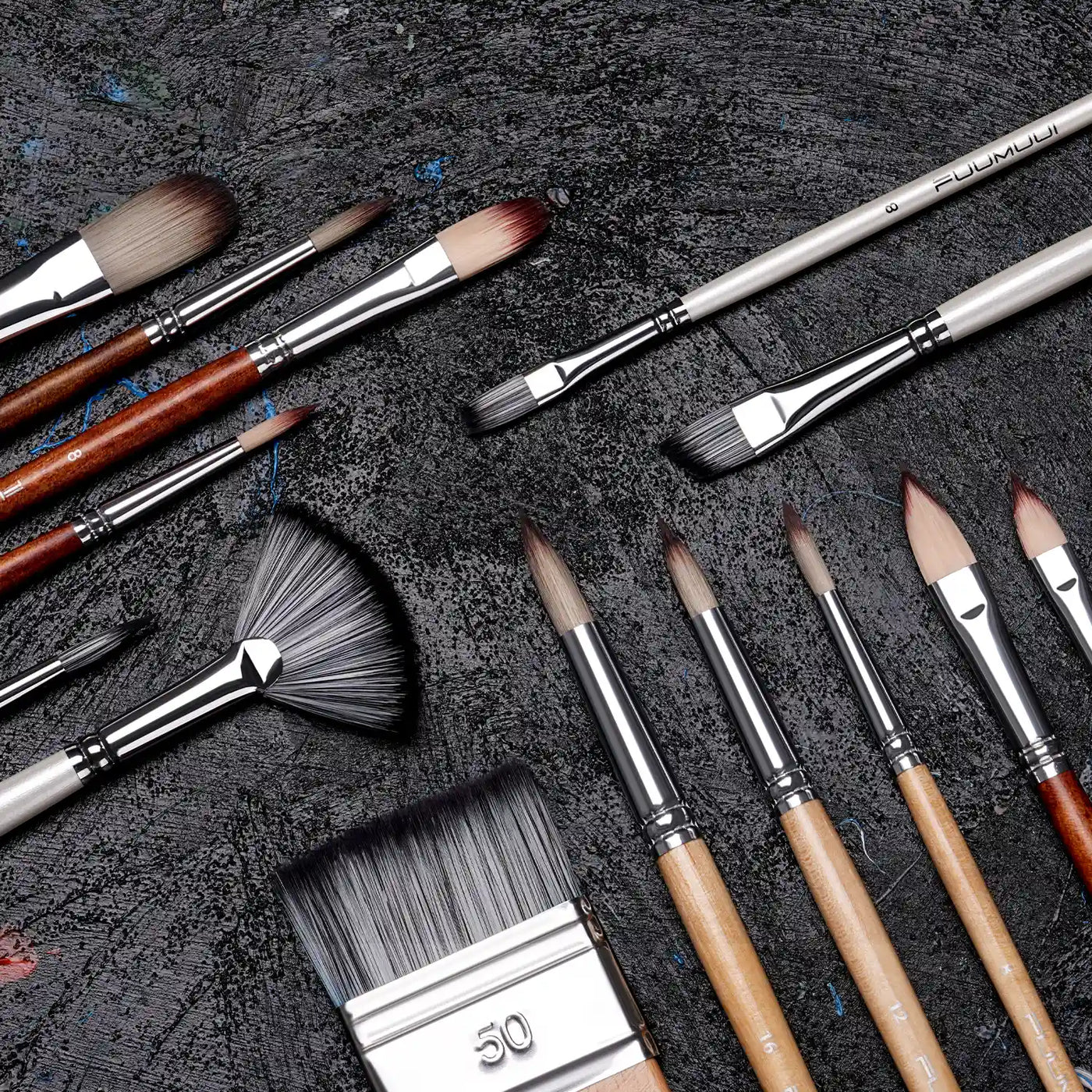
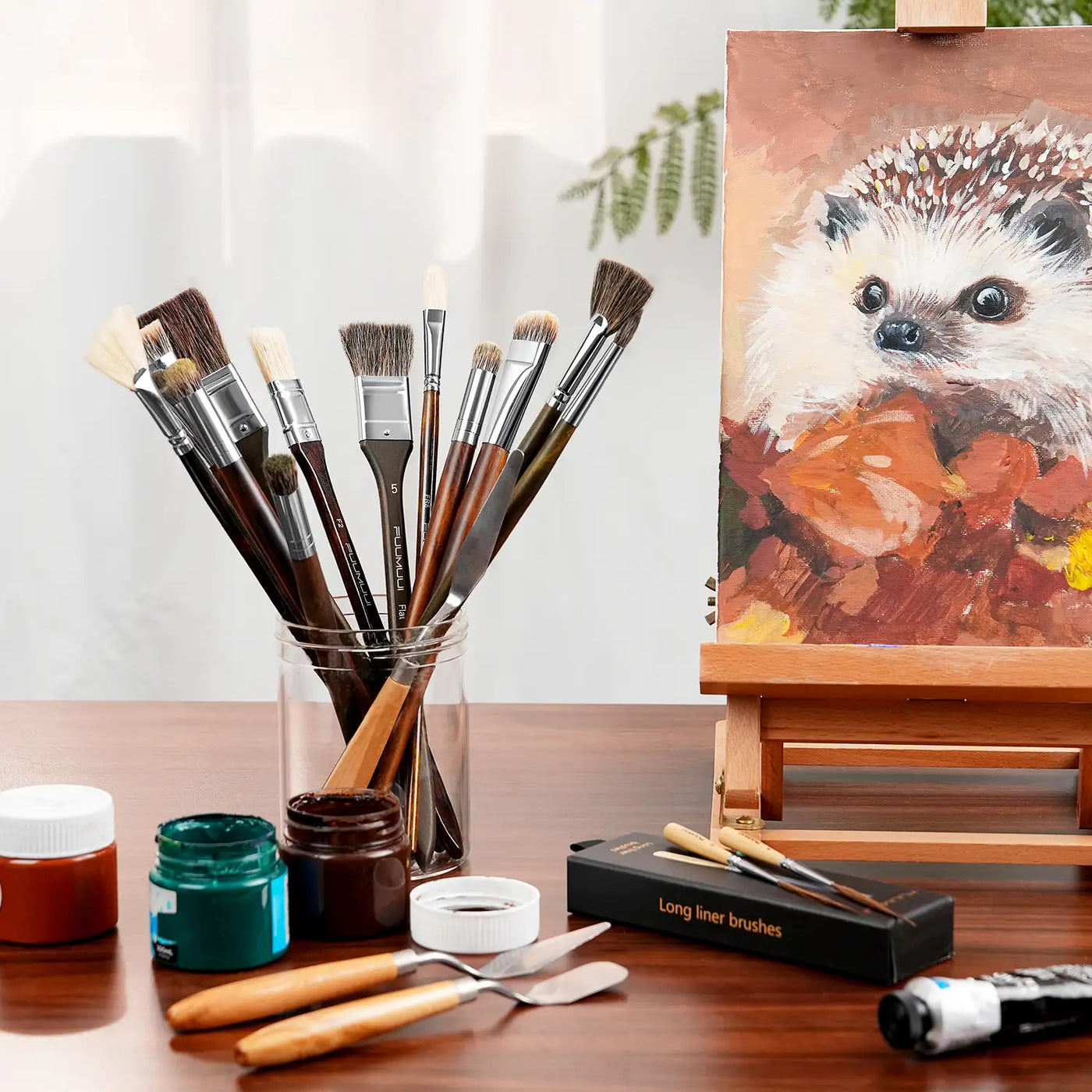
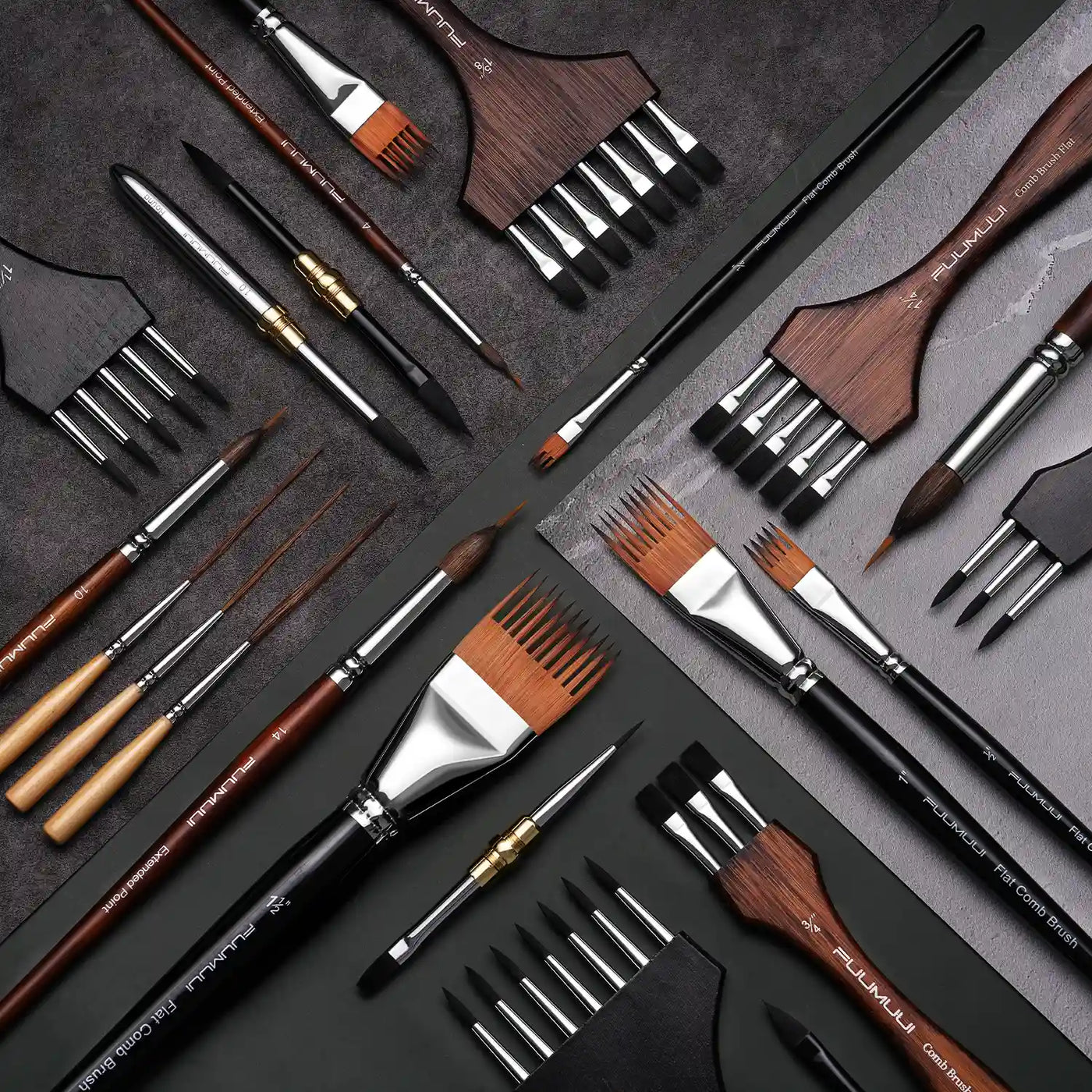
- Fan Brush: A classic. While many people use it for blending, in watercolor, it’s a texture powerhouse. It’s the go-to for many when learning how to paint trees with a fan brush.
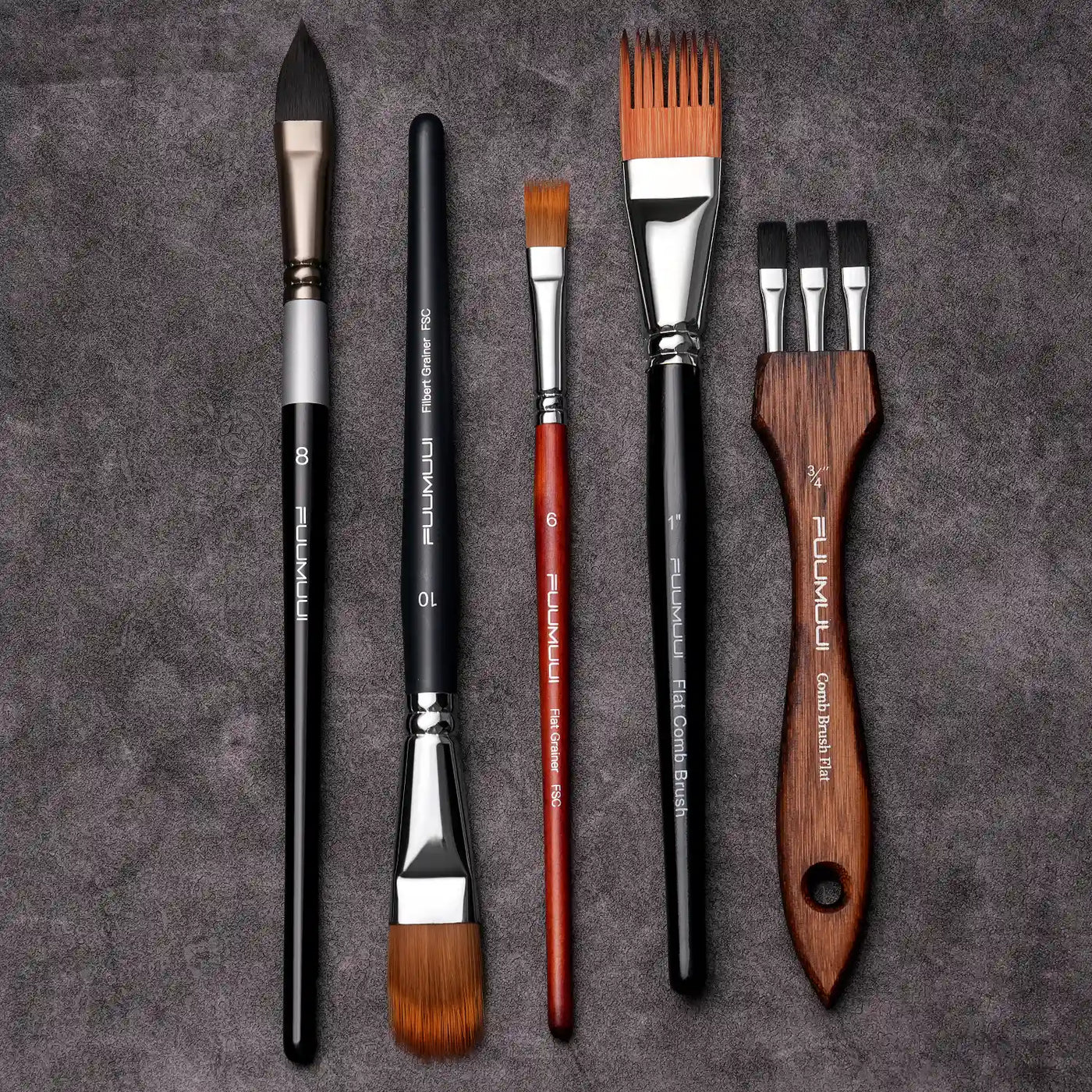
- Comb Brush: This is a dedicated texture brush featuring staggered, "toothed" bristles. It is incredibly effective for painting trees and grass or animal fur, offering high repeatability and efficiency.
- Stippler: Designed with stiff, blunt bristles, this brush is used to quickly draw shrubs and bushes. The result is more vivid and natural because the texture it leaves behind is irregular.
- Mop Brush: A massive, round brush usually made of soft natural or synthetic squirrel hair. Because it holds a staggering amount of water, it is the ultimate tool for broad atmospheric washes and wet-on-wet techniques.
These unconventional shapes might look a little strange at first, but they are the secret weapons that add a professional layer of depth to your paintings.
By adding a few of these to your collection, you can spend less time worrying about every single blade of grass and more time enjoying the creative process.
How to Choose the Right Brush Shape for Your Project
So, how do you decide how to choose watercolor brushes without going bankrupt? The answer depends entirely on what you like to paint.
Choosing Brushes Based on Subject Matter
Your subject matter should dictate your brush selection. Different genres require different levels of water control and texture.
- If you are a landscape lover, your kit should be heavy on wash brushes and texture tools like the fan or comb. You need tools that can handle big skies and messy forests.
- For those choosing watercolor brushes for portraits, you’ll want high-quality rounds and perhaps an oval wash for smooth skin transitions. Precision and softness are your best friends here.
Practical Brush Choices: Quality, Sets & Materials
Once you know your subject, you have to decide on the quality and quantity of your tools.
- A common question is whether to buy a watercolor brush set vs. individual brushes. Sets are a great way to save money when you're starting out, but individual brushes let you pick the "stars" of each brand.
- You also have to choose between synthetic vs. natural hair brushes. Natural hair (like sable) is the gold standard for water retention, but modern synthetics are much more durable and animal-friendly.
How to Build a Watercolor Brush Kit
- The Starter Trio: If you're unsure where to begin, start with a size 8 round, a 1/2-inch flat, and a small liner. This combination can handle nearly any beginner-to-intermediate project.
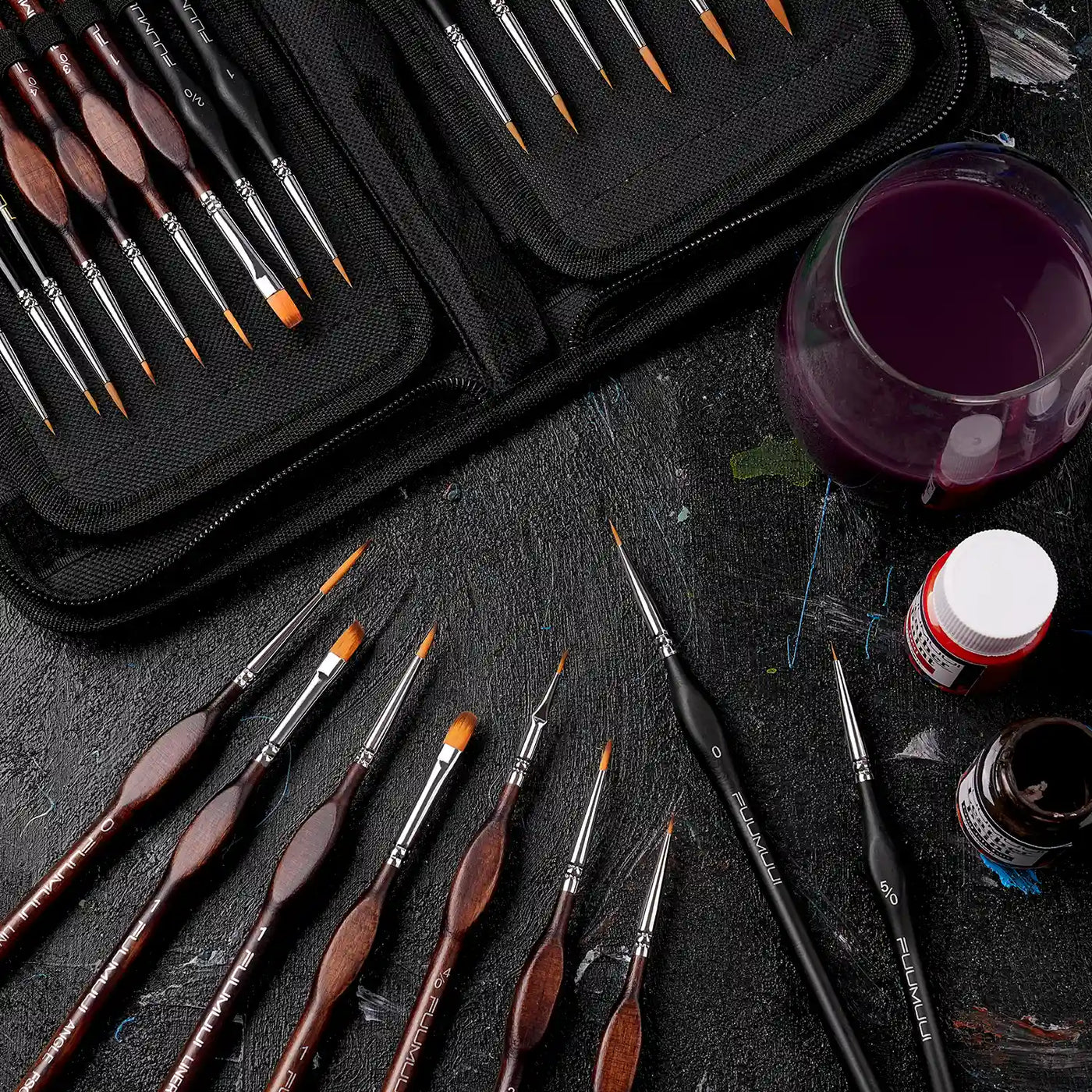
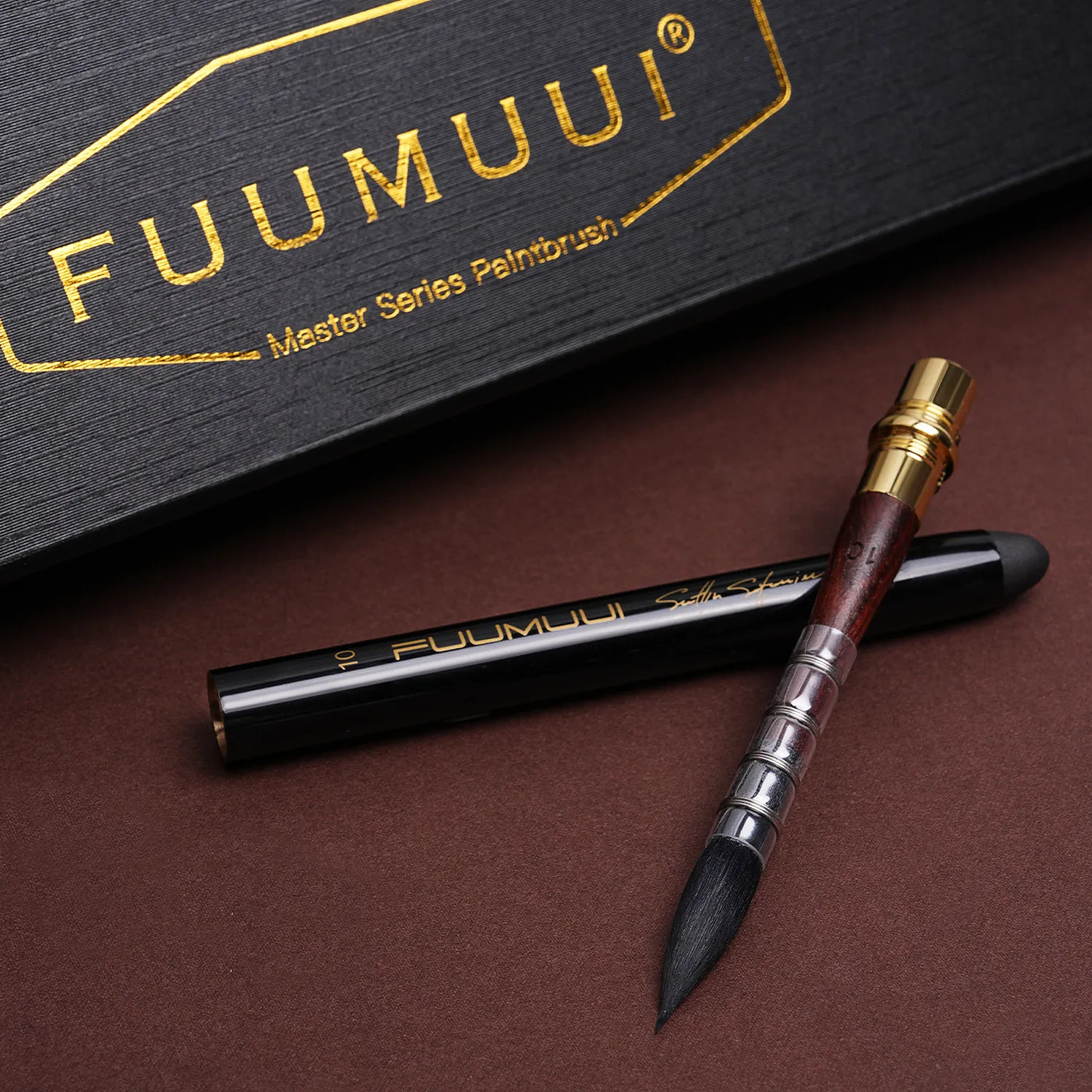
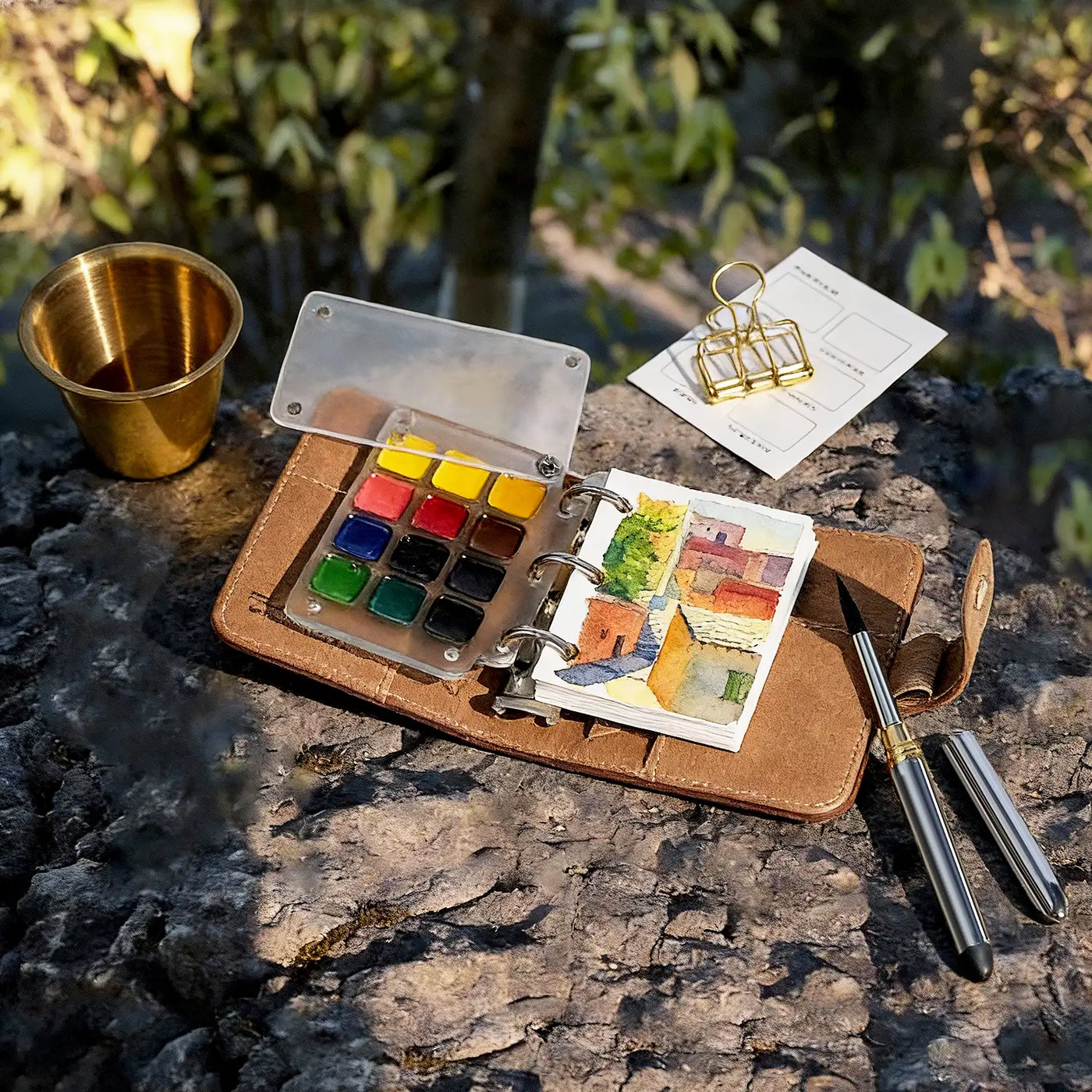
- On-the-Go Painting: If you enjoy painting outdoors (en plein air), look for a travel set. Having a protective cap to keep your brush tips from fraying in your bag is an absolute lifesaver.
Ultimately, knowing how to build a watercolor brush kit is a personal journey. You can grow your collection from there as you find your style.
How to Clean and Care for Your Watercolor Brushes
Your brushes are an investment in your art, and proper watercolor brush care is essential for their longevity and performance. Good brush maintenance habits are simple but crucial.
- Deep Cleaning: Rinse brushes frequently during use. After each session, deep clean with water and mild soap (brush cleaner) until all pigment is removed and water runs clear.
- Reshape & Dry: Gently squeeze excess water, then reshape bristles to their original point/edge. Always dry brushes flat or hanging bristles-down; never bristles-up, to prevent ferrule damage.
- Proper Storage: Once completely dry, store brushes horizontally in a roll, case, or box to protect delicate tips. Keep them away from direct sunlight or extreme temperatures.
With proper care, your favorite watercolor brush shapes will serve you well for years, helping you create beautiful artwork consistently.
Unlock Your Artistic Potential with the Right Tools
Finding the perfect watercolor brush shapes is really about discovering your own creative voice. The right tool shouldn't be a struggle; it should feel like a natural extension of your hand that does half the work for you.
Ready to build a kit that actually inspires you? Explore our professional brush collection and find the perfect shapes to bring your next masterpiece to life!

Pronto para criar? Veja os nossos pincéis de aguarela de alta qualidade e o conjunto de pincéis profissionais para aguarela....


