





Table of Contents
Key Takeaways
Verdict: The FUUMUUI Magnetic Solid Watercolor Travel Set combines solid paints, mixing space, and essential tools in one portable system. Available in 25-color and 50-color options, its magnetic layers can be separated and arranged to suit different painting spaces.
- Two Color Options: Choose 25 colors for lighter travel or 50 colors for greater variety.
- Magnetic Layered Design: Separate, stack, and reposition the palette sections.
- Lightweight Plastic Case: Keeps paints and tools organized while traveling.
- Practical Painting Tools: Includes three mixing wells, a double-ended travel brush, and an absorbent sponge.
Watercolor begins with a partnership between water and pigment. Water creates movement, while color gives that movement mood and memory.
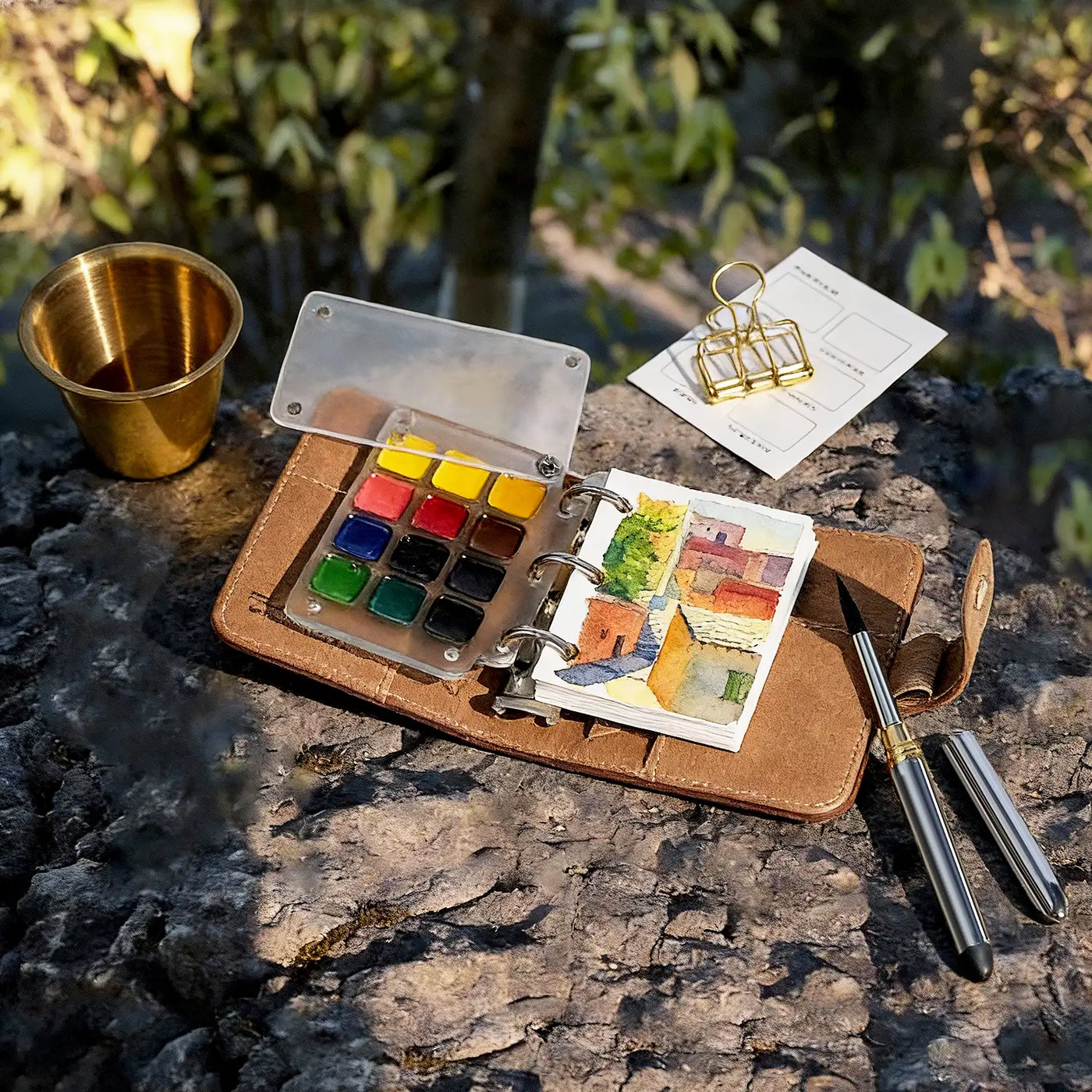
The FUUMUUI Dual-Layer Solid Watercolor Set brings paints, mixing wells, a travel brush, and a sponge together in a lightweight plastic case. It is designed for anyone who wants to leave the studio and rediscover the world through color.
Choose 25 Colors or Expand to 50

The set is available in two versions:
-
25 Colors: A focused selection for sketches, limited palettes, and lighter travel.
-
50 Colors: A broader collection for detailed subjects, colorful illustrations, and greater variety.
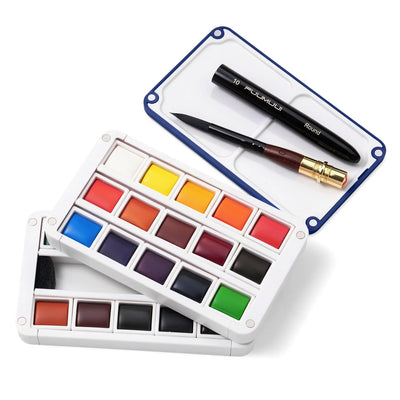
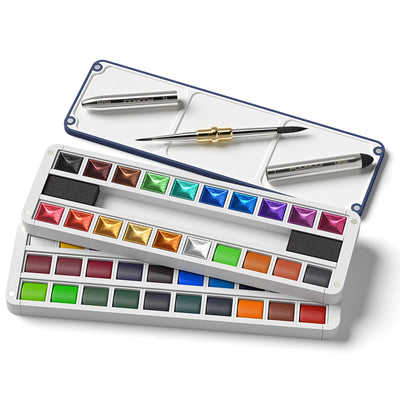
Both versions include warm colors, cool colors, earth tones, and neutrals. The 50-color set adds more intermediate shades and shimmering accents.
A Versatile Color Range
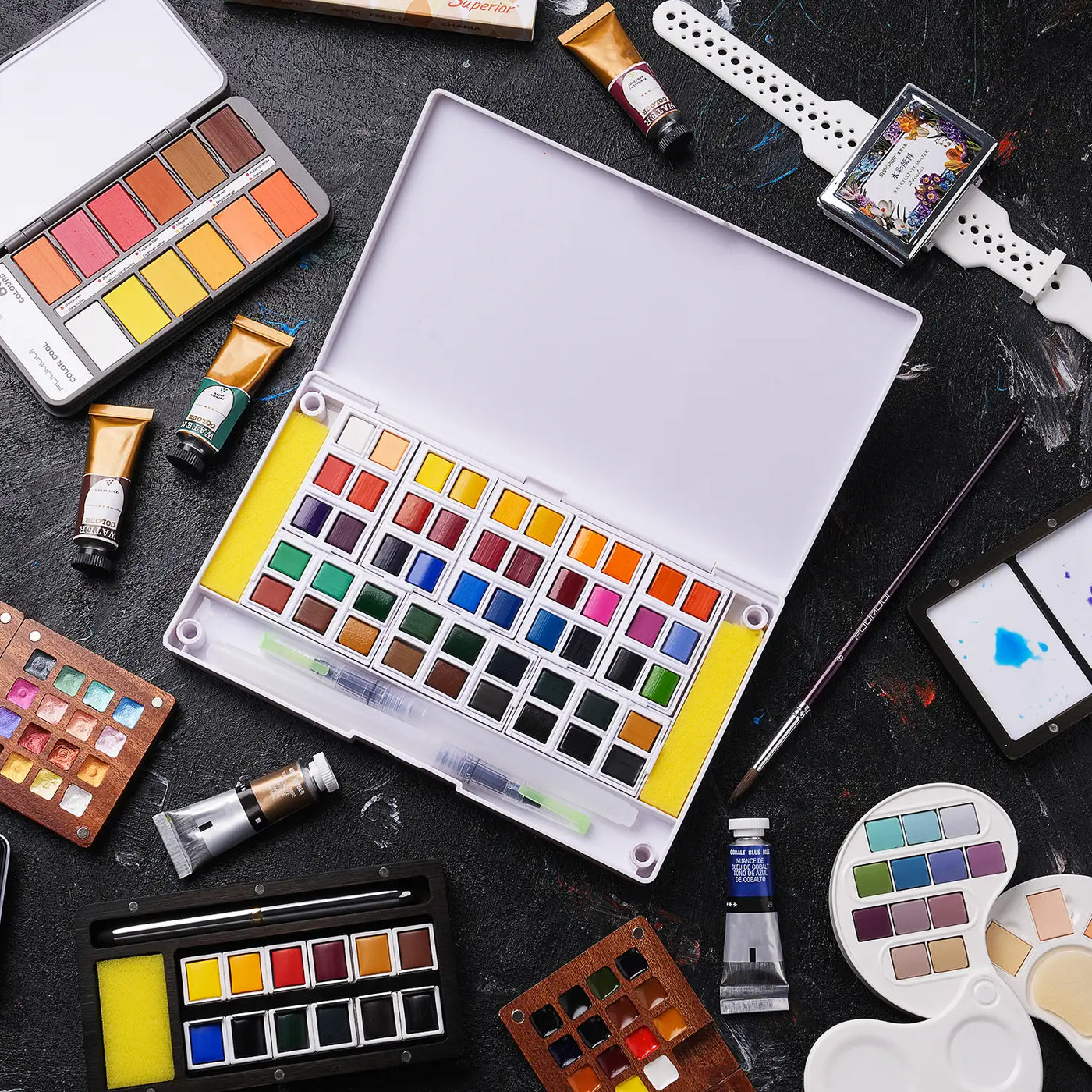
Depending on the selected version, the palette includes yellows, oranges, reds, pinks, purples, berry tones, blues, turquoise, greens, olives, browns, grays, black, and white. Pastel and shimmering shades add even more creative possibilities.
Use the colors directly or combine them in the mixing wells to create new variations.
A Magnetic Palette That Adapts to You
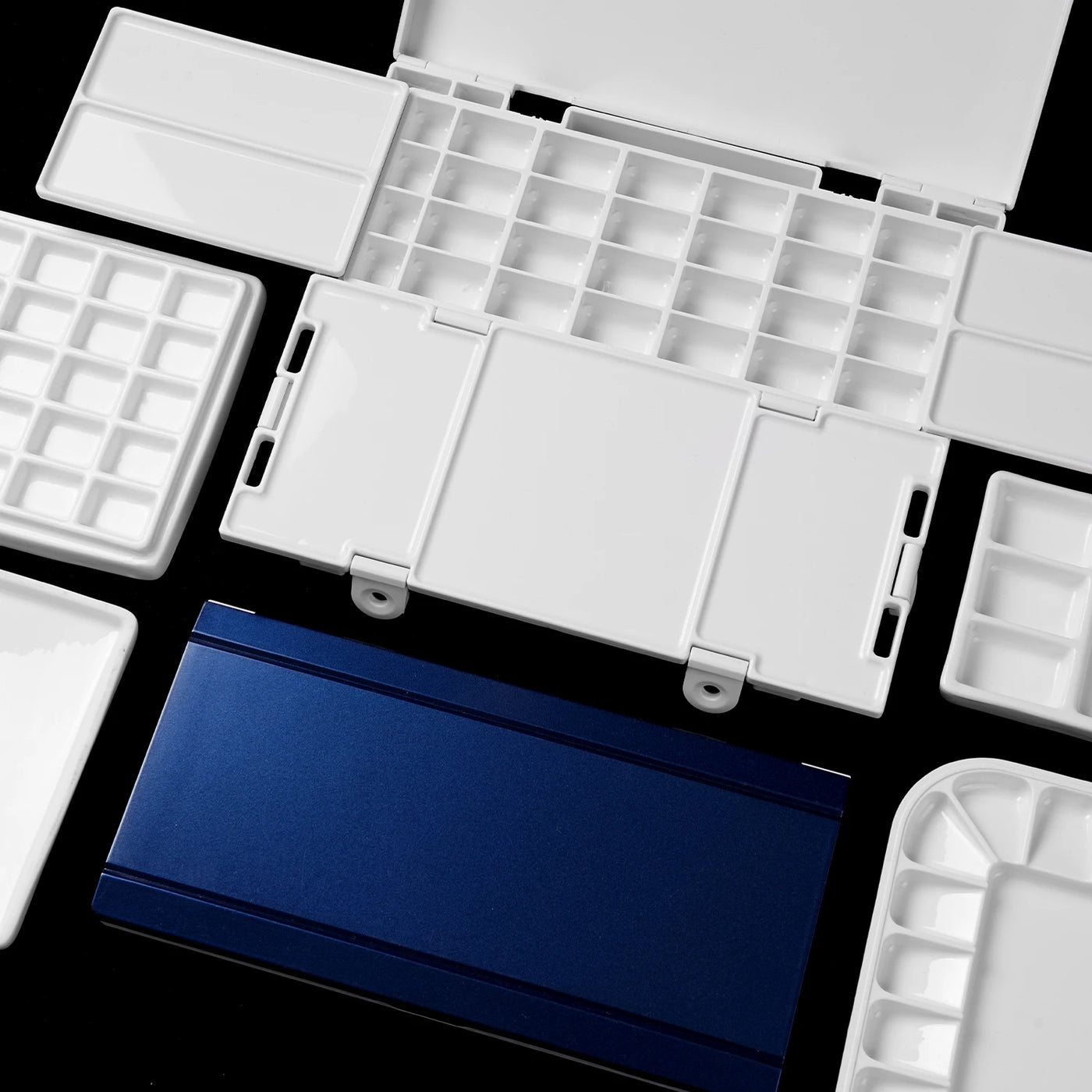
The magnetic sections can be stacked, separated, and repositioned.
Keep everything together for the complete color collection, or place only the sections you need beside your sketchbook.
This modular design works well on small café tables, park benches, and other limited painting spaces. It also allows you to organize colors by family, create limited-color studies, or move the mixing area closer while you work.
The palette adapts to your working space instead of limiting you to one fixed arrangement.
Lightweight Plastic Construction

The plastic case keeps the set lightweight and easy to carry.
Its slim shape organizes the paints and tools, while different exterior colors give the set a clean, recognizable appearance.
It is practical for travel sketching, outdoor painting, art classes, daily practice, and small creative spaces.
Practical Tools in One Portable System

The set contains the main tools needed for a watercolor session:
- Solid watercolor paints
- Three mixing wells
- A double-ended travel brush
- Protective brush caps
- A small absorbent sponge
- Magnetic palette sections
Each element supports a different stage of the painting process.
Three Wells for Mixing Color

The three white wells provide space to dilute paint without muddying the individual pans.
You can prepare a transparent background wash, a stronger main color, a darker shadow mixture, or a custom mixed shade. Separating warm, cool, and neutral mixtures can also help keep your colors cleaner.
One Brush, Two Kinds of Control
The double-ended travel brush offers two useful painting tips.
The larger pointed tip holds more water for washes, broad color areas, and organic shapes.
The smaller tip offers greater control for outlines, thin edges, feathers, branches, textures, and final details.
Protective caps cover the brush tips when the set is packed away.
The Sponge: Watercolor’s Subtraction Tool
Watercolor is not only about adding paint. Removing water or pigment can also improve the composition.
When an area becomes too wet or dark, gently press the sponge against the paper. It can absorb excess water, lighten an area, soften hard edges, recover small highlights, and create clouds or texture.
The sponge makes it easier to adjust unexpected watercolor effects.
Discover the Palette Through Swatching

Create a color chart before beginning a finished painting.
The photographs show how the paints change with water. Some remain vivid and saturated, while others become soft, transparent, or atmospheric.
A swatch chart helps you see the true appearance of each color, compare similar shades, identify warm and cool colors, and find useful light and dark values. It also makes shimmering colors easier to test and helps you remember where each shade is stored.
Over time, it becomes a personal map of the palette.
Change the Color with Water
Water controls the strength and transparency of the paint.
Use more water for transparent washes, soft backgrounds, gentle transitions, and atmospheric light. Use less water for richer color, defined shapes, darker shadows, and final details.
Testing these variations helps you understand what each color can do.
From Color Tests to a Finished Painting
The colorful rooster shows how the palette can move from simple swatches to a complete painting.

Warm reds and oranges contrast with cool blues and greens. Darker lines define the feathers, face, legs, and expression.
Try this simple process:
- Sketch the largest shapes.
- Add the main color areas.
- Let neighboring shades blend.
- Allow the first layer to dry.
- Finish with darker lines and textures.
Leave space for water and pigment to create natural variation.
Why Take Watercolor Outside?
Portable watercolor encourages you to observe more closely.
You begin to notice color hidden inside shadows, reflections moving across water, light changing on a wall, variations in distant greens, and small details in everyday places.
A garden, café table, nearby park, quiet street, or hotel window can become the subject of a watercolor study.
Water, Color, and the Freedom to Go
The FUUMUUI Dual-Layer Magnetic Watercolor Travel Set turns paints, mixing space, and practical tools into one adaptable system.
Choose 25 colors for a lighter setup or 50 colors for a broader range. Arrange the magnetic layers, mix your colors, and paint wherever curiosity leads.
Pack the palette. Follow the moment. Paint the world as you see it.


