

Table of Contents
Key Takeaways
Verdict: Paper is your foundation. Matching the right format to your technique ensures professional water control and a successful creative breakthrough.
- Size Standards: Full Imperial sheet (22"x30") is ideal for traditional landscapes, while the ISO 'A' Series simplifies scanning and framing.
- Format Utility: Use watercolour blocks for pre-stretched wet-on-wet work and loose sheets with tape for complex masterpieces.
- Quality Essential: Opt for 100% cotton and 300 gsm (140 lb) to prevent buckling and enable easy colour lifting.
While the novice is concerned with paint, the real "silent partner" is your watercolor paper format. The watercolor paper sizes and delivery systems, such as watercolor blocks, pads, or sheets, are what define your creative freedom and professional equipment needs.
Good watercolor paper is more important than paint. The cheaper paint may look great on good-quality 100% cotton paper, but good paint will look terrible on bad paper. This paper format guide is designed to transform your watercolor painting experience from a struggle into a creative breakthrough.
The 4 Horsemen of Paper Formats
The way watercolor paper is packaged isn't just about storage; it's about the mechanics of water control. Here are the four primary formats you’ll encounter in any art supply shop.
Loose Sheets: The Professional Standard
Available in Full Imperial (22" x 30"), these sheets provide the ultimate creative freedom for the purist.
- Sheets can be readily torn into halves, quarters, and any other dimension you require for your unique creative vision.
- The soaking and gummed paper tape process for stretching the paper guarantees a drum-tight finish, eliminating any buckling that would compromise your ability to apply multiple layers of wash.
- If your plan is to create a masterpiece requiring layer upon layer of washes, loose sheets are the only option.
Watercolor Blocks: The Modern Shortcut
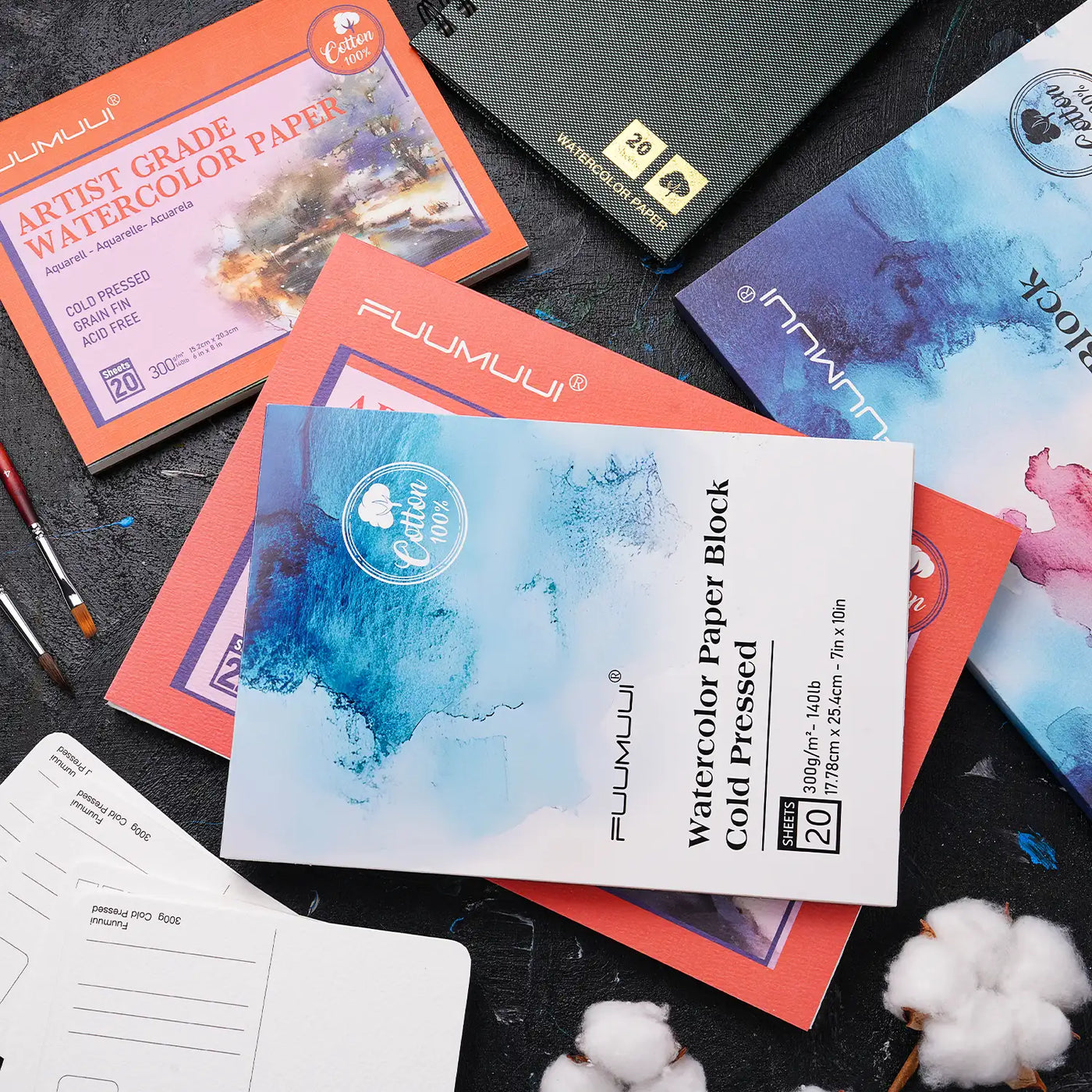
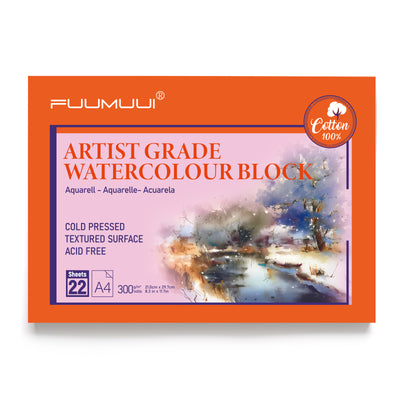
A watercolor block consists of four glued sides that function as a built-in stretching device to ensure that the paper lies flat.

- This is a brilliant design that prevents the paper from curling or rolling, which is essential in water management.
- A palette knife is then inserted into the space that is not glued to "pop" the artwork off the stack once it is completely dry.
- It is the best shortcut for the wet-on-wet technique because it comes with a pre-stretched block to enable an artist to avoid the tedious task of taping the board.
Pads & Art Journals: For the Artist on the Move
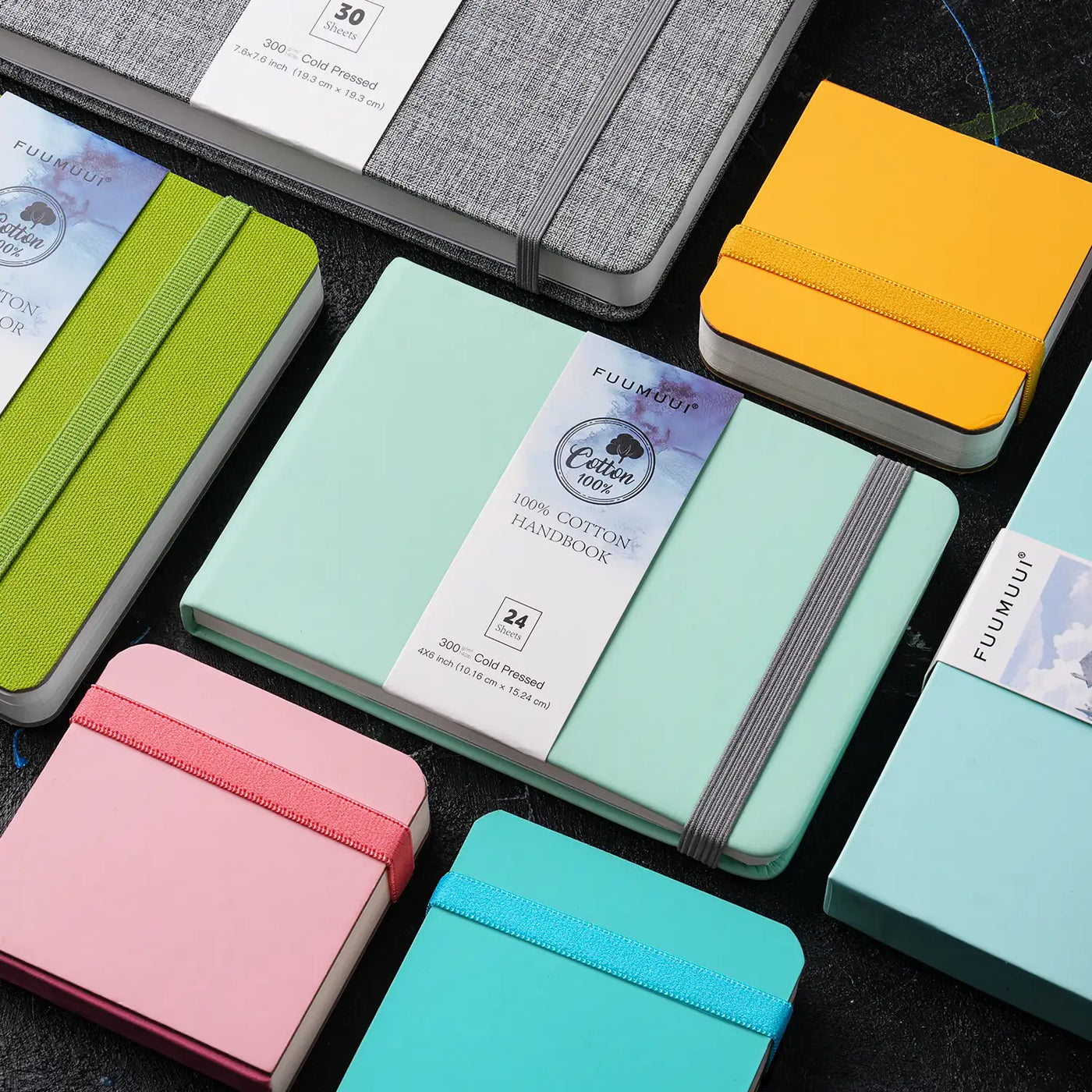
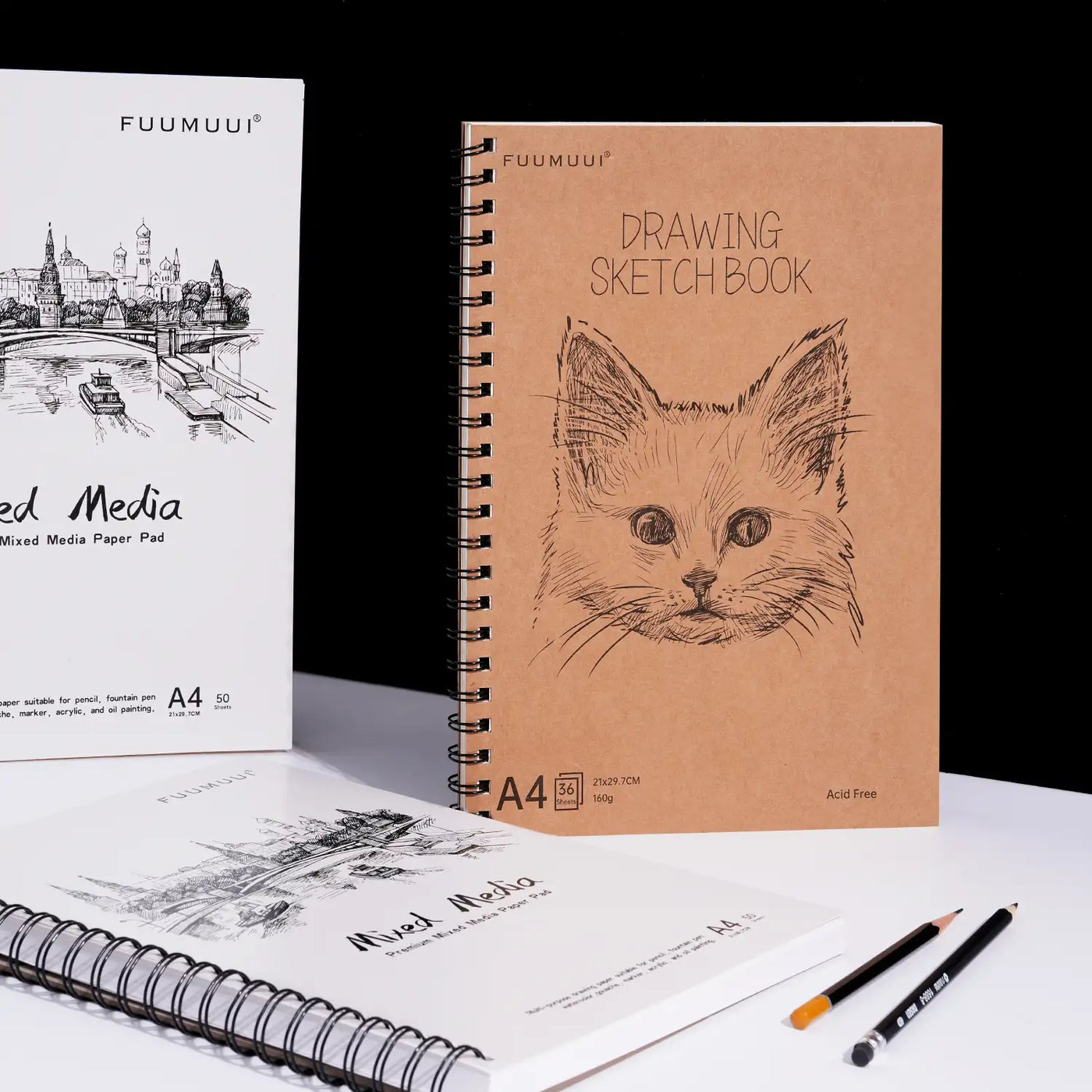
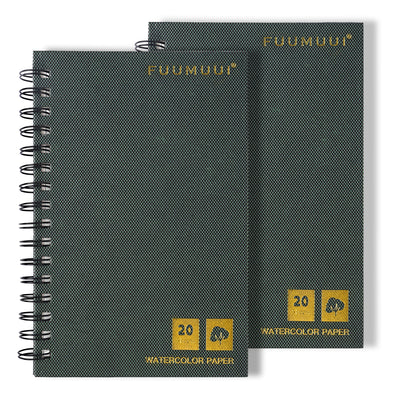
These are available in glue-bound and spiral-bound versions, both of which are designed for maximum portability.
- Spiral-bound pads are perfect for location work, as they fold back 360 degrees, offering a solid work surface that can be used on the lap.
- They are not suitable for heavy water work, as the paper buckles, and are best suited to dry brush techniques.
- They are perfect for plein air work, offering an artist an opportunity to work in an open-air setting without the need for a studio.
Rolls: For the Grand Vision
If the standard 30 inches is not sufficient, then watercolor rolls provide a canvas that is offered in increments of 10 yards.
- This is useful for the creation of mural-sized watercolor artworks, which is the ultimate canvas for avant-garde artists who think big and bold.
- Despite the difficulty of handling this type of paper, the cost is significantly lower compared to buying individual professional sheets.
- To prepare the paper into a workable canvas, it is simply necessary to flatten the paper, weigh it down, or soak it before creating your grand masterpiece.
Decoding the Mystery of Size: Imperial vs. ISO
Standard watercolor paper sizes are based on either of the following systems:
The Imperial System
- This system is used in many historical watercolor mills, such as Arches or Saunders Waterford.
- The Imperial System is based on the "Full Imperial" size of 22 x 30 inches. It is the gold standard of the industry.
- It is timeless and has a slightly elongated shape, making it suitable for use with landscape paintings.
| Dimensions | Folding Method | Best Use Case | |
|---|---|---|---|
|
Full Imperial |
22" x 30" (559 x 762 mm) |
Original Base Unit |
Large-scale studio masterpieces |
|
Half Imperial |
15" x 22" (381 x 559 mm) |
Folded Once |
Modular medium-sized works |
|
Quarter Imperial |
11" x 15" (279 x 381 mm) |
Folded Twice |
Pro "Sweet Spot" for daily sessions |
The ISO 'A' Series
- In the ISO system, the aspect ratio for all pages will be √2. The system is often used for student-grade watercolor pads and art journals. A4 and A3 are the most commonly encountered paper sizes.
- This is a very practical format for the scanning of artwork, as the standard sizes will perfectly correspond with the imaging process.
- As they are standard sizes, they make a very useful option for anyone wishing to purchase pre-made frames without the expense of custom mats.
| INCH | MM | |
|---|---|---|
|
A1 |
23.4" x 33.1" |
594 x 841 mm |
|
A2 |
16.5" x 23.4" |
420 x 594 mm |
|
A3 |
11.7" x 16.5" |
297 x 420 mm |
|
A4 |
8.3" x 11.7" |
210 x 297 mm |
Bloque de acuarela Fuumuui 100% algodón
$29.99$25.99
The Sweet Spot
- For the average hobbyist, a 9" x 12" pad or block is the "Goldilocks" size, providing an ideal balance for the average user.
- This size is quite large enough to allow for the free expression of arm movements and yet small enough to be completed in one session.
- This size is ideal for focusing on the big picture without getting bogged down in the details, making it an extremely useful and popular watercolor paper size.
The Weight Factor: Why 300gsm is the Magic Number
When browsing watercolor paper weights, you'll notice that each one has a measurement in grams per square meter (gsm) and a measurement in pounds (lb). The standard that everyone recommends is 300 gsm (140 lb).

- The lighter-weight papers become saturated quickly and buckle or warp immediately. These papers are not recommended for professional work with wet media.
- The recommended weight is the universal industry standard of 300 gsm (140 lb) for its excellent performance in terms of price and water-holding ability.
- For large, juicy washes, the heavy-duty weight of 640 gsm (300 lb) is like using a stone slab, remaining flat and unwrinkled regardless of the amount of water.
| Weight (gsm) | Weight (lb) | Comparison | Performance |
|---|---|---|---|
|
190 gsm |
90 lb |
Thin Paper Towel |
Buckles immediately when wet |
|
300 gsm |
140 lb |
Thick Sponge |
The universal industry standard |
|
640 gsm |
300 lb |
Heavy Stone Slab |
Zero buckling; handles extreme water |
Watercolor Paper Texture: Mastering the Grain
These paper textures, whether Hot Press, Cold Press, or Rough, are essential in the management of pigment flow, which is important for achieving professional-quality artworks.

| Surface Profile | Absorbency & Drying | Best Use Case | |
|---|---|---|---|
|
Hot Press (HP) |
Smooth & Flat |
Low absorbency; Slow drying |
Botanical illustration & Fine detail |
|
Cold Press (CP/NOT) |
Medium "Tooth" |
Balanced; Most versatile |
Landscapes, florals & Beginners |
|
Rough |
Deep & Gritty |
High absorbency; Fast drying |
Atmospheric & Expressive works |
For beginners, Cold Press is the best paper to use, while Hot Press is the best paper to use if scanning is required, as it does not have any grain shadows. Choosing your best watercolor paper texture is a crucial step.
Finding Your Fit
The "right" choice among the many sizes and formats available for watercolor paper depends only and exclusively upon your personality as an artist.
- Are you a traveler? Then your 9" x 12" watercolor block is your best friend. Of course, a dedicated travel set would be ideal.
- Are you a studio artist who likes to experiment and try new things? Then buying a bulk pack of Full Imperial watercolor paper will save you money and give you the greatest flexibility for your artistic endeavors.
- Regardless of the paper's size, make sure that it bears the important designation: "100% Cotton." While wood pulp paper, sold as "Student Grade," might be less expensive, it will deny you the opportunity to lift colors and layer washes. In watercolor, your paper is your partner.
Once you've found your favorite paper, your paper is no longer an obstacle but the foundation upon which your style is built. Happy painting!

Consigue resultados impresionantes con nuestro papel de acuarela. Contamos con el mejor papel para acuarela: 100% algodón, prensado en frío...


