

Table of Contents
Key Takeaways
Verdict: Watercolor paper weight is the absolute foundation of your painting. Upgrading to 140lb (300gsm) paper—ideally 100% cotton—is the single most effective way to improve water control, prevent warping, and achieve seamless color blending.
- The Industry Standard: 140lb (300gsm) is the "Goldilocks" weight, offering the ideal balance of price and performance, while keeping paper flat and giving you more "open time" to blend paint.
- Cotton vs. Pulp: Fiber content matters as much as weight; 100% cotton paper absorbs pigment deeply and tolerates "scrubbing" and corrections without pilling or tearing.
- Warping Control: Prevent buckling on 140lb sheets by using watercolor blocks, taping down your paper, or using the "reverse mist" trick to flatten finished artwork.
In the world of professional art, watercolor paper 140lb (or 300gsm) is considered the gold standard. Let’s look at why this specific thickness is the industry's "Goldilocks" choice and how it changes the way your paint behaves.
What Does "Weight" Actually Mean?
When we talk about watercolor paper weight, we aren't talking about how much a single sheet weighs on a kitchen scale. It’s actually a bit more technical (and slightly confusing).
In the United States, the "lb" (pound) rating refers to the weight of a full ream (500 sheets) of that paper in its uncut "Imperial" size. If 500 sheets weigh 140 pounds, that’s your 140lb paper.
For the rest of the world, the metric system uses grams per square meter (gsm). This is much more logical because it measures the density of a single square meter of paper regardless of the sheet size.
- 140lb is equivalent to 300gsm.
- 90lb is equivalent to 190gsm.
- 300lb is equivalent to 640gsm.
According to the American Institute for Conservation, the physical composition and density of paper fibers play a massive role in the longevity and "breathability" of the artwork. Heavier paper simply has more "real estate" to absorb water.
Why Watercolor Paper 140lb (300gsm) is the Industry Favorite
If you walk into any pro studio in 2026, you’ll likely find stacks of watercolor paper 300gsm. It’s the sweet spot for a few very specific reasons.
1. Resistance to Buckling
Water is heavy. When you apply a wash to a sheet of watercolor paper, the cotton or wood-pulp fibers expand. If the paper is too thin (like 90lb student grade), it has nowhere to go but up, causing that dreaded warping.
While 140lb can still buckle if you absolutely soak it, it has enough structural integrity to stay relatively flat, especially if you use a "block" where the edges are glued down.
2. Forgiveness and "Scrubbing"
As artists, we make mistakes. We need to "lift" color or scrub a highlight back into a cloud. Watercolor paper 140lb is thick enough to withstand a fair amount of abuse.
Thin paper will "pill" or tear if you graze it too hard with a stiff brush. The 300gsm variety provides a durable surface that allows you to rework areas without destroying the texture of the sheet.
3. Absorbency Control
Weight affects the "open time" of your paint. On a thin sheet, the water evaporates quickly or sinks through to the back. On watercolor paper 300gsm, the internal fibers hold moisture longer. This gives you those extra few seconds to blend a smooth transition before the paint dries and leaves a hard edge.
Comparing the 3 Tiers of Paper Weight

The Lightweight: 90lb (190gsm)
This is generally reserved for sketching or "dry" techniques.
- Pros: Cheap, great for practice.
- Cons: Warps almost instantly with wet washes.
- Verdict: Avoid for finished paintings; use it for color swatching or value studies.
The Workhorse: 140lb (300gsm)
The universal choice for illustrators and fine artists alike.
- Pros: Excellent balance of price and performance. Handles heavy washes well.
- Cons: May require "stretching" (taping down) for very wet techniques.
- Verdict: This should be your "everyday" paper.
The Heavyweight: 300lb (640gsm)
This is essentially a piece of cardboard made of high-quality cotton.
- Pros: Absolutely will not warp. You can literally paint in a puddle.
- Cons: Very expensive and takes a long time to dry.
- Verdict: Save this for your masterpiece or "Best in Show" competition entries.
The Library of Congress notes that heavier, high-alpha cellulose or cotton papers are far more resistant to environmental changes, making them the better choice for archival work.
Does Fiber Content Matter More Than Weight?

Here is a professional secret: a 140lb paper made of 100% cotton will always outperform a 140lb paper made of wood pulp (cellulose).
Cotton fibers are longer and more flexible. They can "breathe" better as they wet and dry. If you are shopping for watercolor paper, always look for the "100% Cotton" label alongside the 300gsm mark. A wood-pulp paper might be the right weight, but it will often feel "slippery" and won't absorb the pigment as deeply.
Technique Spotlight: When Weight Changes Everything
Wet-on-Wet Landscapes: If you love painting misty forests or soft skies, you need the moisture-holding capacity of watercolor paper 140lb. It allows the pigments to bloom and travel across the surface in a way that thin paper simply can't handle.
Dry Brush and Texture: When you use a dry brush to catch the "tooth" (texture) of the paper, you need a stable base. If the paper is moving or warping under the brush, you’ll lose that crisp, sparkling effect.
Maintenance: Keeping Your Paper Flat

Even the best watercolor paper needs a little help. To ensure your 140lb sheet stays as flat as a pancake:
- Use a Watercolor Block: These are pads glued on all four sides. You paint on the top sheet, let it dry completely, and then "slice" it off with a palette knife.
- Tape it Down: Use a high-quality artist's tape (or even masking tape if you're careful) to secure all four edges to a Gatorboard or plywood.
- The "Reverse Mist" Trick: If your finished painting has a slight curve, flip it over and lightly mist the back with clean water. Place it between two clean sheets of blotting paper and put a heavy book on top overnight.
Common Pitfalls: What to Avoid
Buying "Mixed Media" Paper for Watercolors: Even if it says 140lb, mixed media paper is often sized differently. It usually lacks the "internal sizing" that allows watercolor to sit on the surface correctly.
Storing Paper in Humid Areas: High-quality watercolor paper is like a sponge. If it lives in a damp basement, it will absorb ambient moisture and may develop "sizing failure," where the paint sinks in like it's hitting a paper towel.
FAQs About Watercolor Paper Weight
Q1: Is 140lb Watercolor Paper Good for Beginners?
A: Yes, it is the best place to start. It is durable enough to handle mistakes but affordable enough that you won't feel "scared" to use it.
Q2: Do I Need to Stretch 140lb (300gsm) Paper?
A: If you are doing very wet-on-wet work, yes. If you are doing controlled, drier illustrations, you can often get away with just taping the edges.
Q3: What is the Difference Between 300gsm and 140lb?
A: They are the same thickness. 300gsm is the metric measurement (grams per square meter), and 140lb is the Imperial measurement (weight of a ream).
Q4: Can I Paint on Both Sides of 140lb Paper?
A: Generally, only one side is "sized" for the best results, though many high-end cotton papers are usable on both sides. Check the texture; the smoother side is usually the back.
Q5: Why is 300lb Paper So Much More Expensive?
A: It requires significantly more raw cotton material and a slower drying process during manufacturing. It is essentially a luxury product for specific heavy-wash techniques.
Elevate Your Art Today
Your paper is the foundation of your house. You wouldn't build a mansion on a swamp, and you shouldn't try to paint a masterpiece on thin, flimsy paper. Moving to watercolor paper 140lb is the single fastest way to see an immediate improvement in your color blending and edge control.
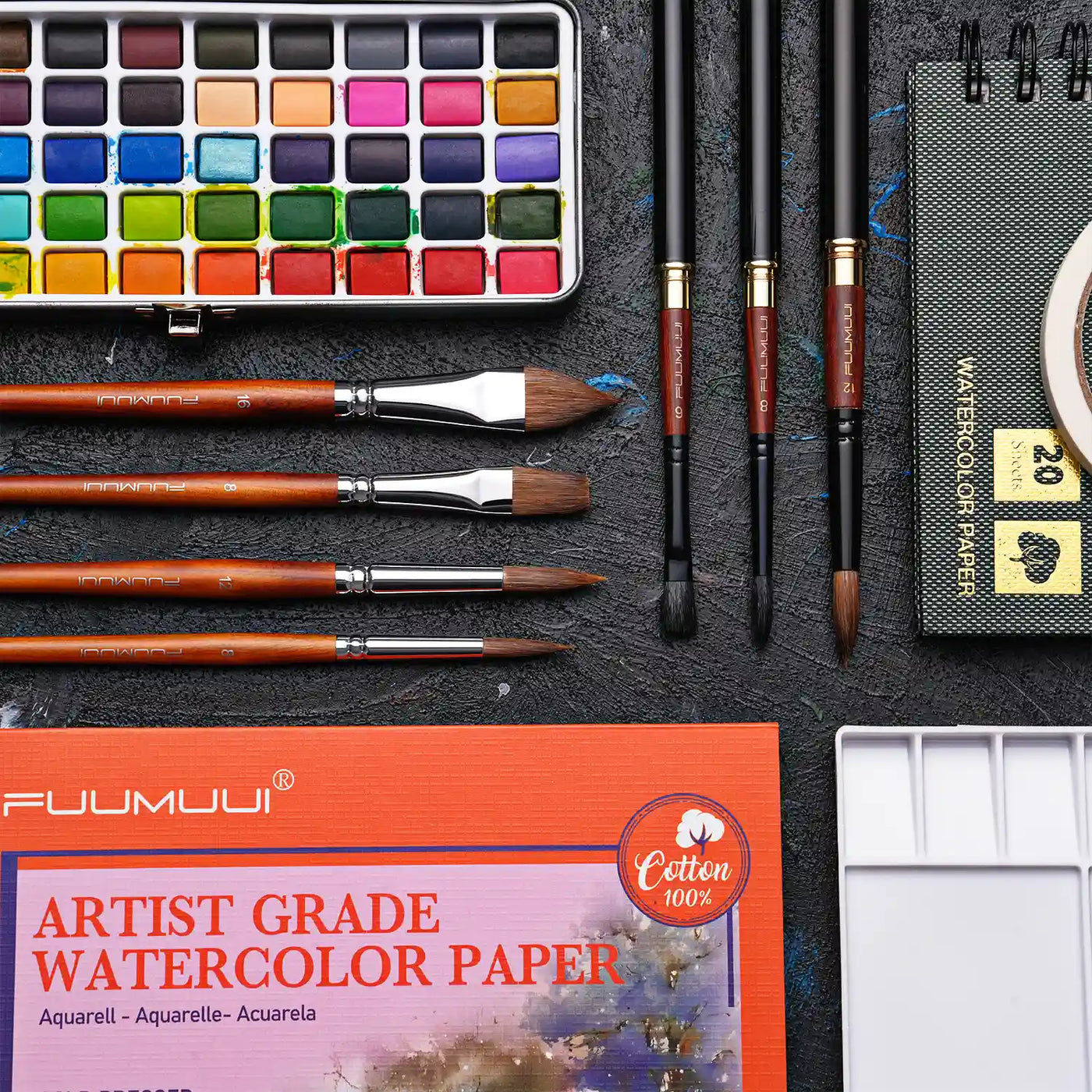
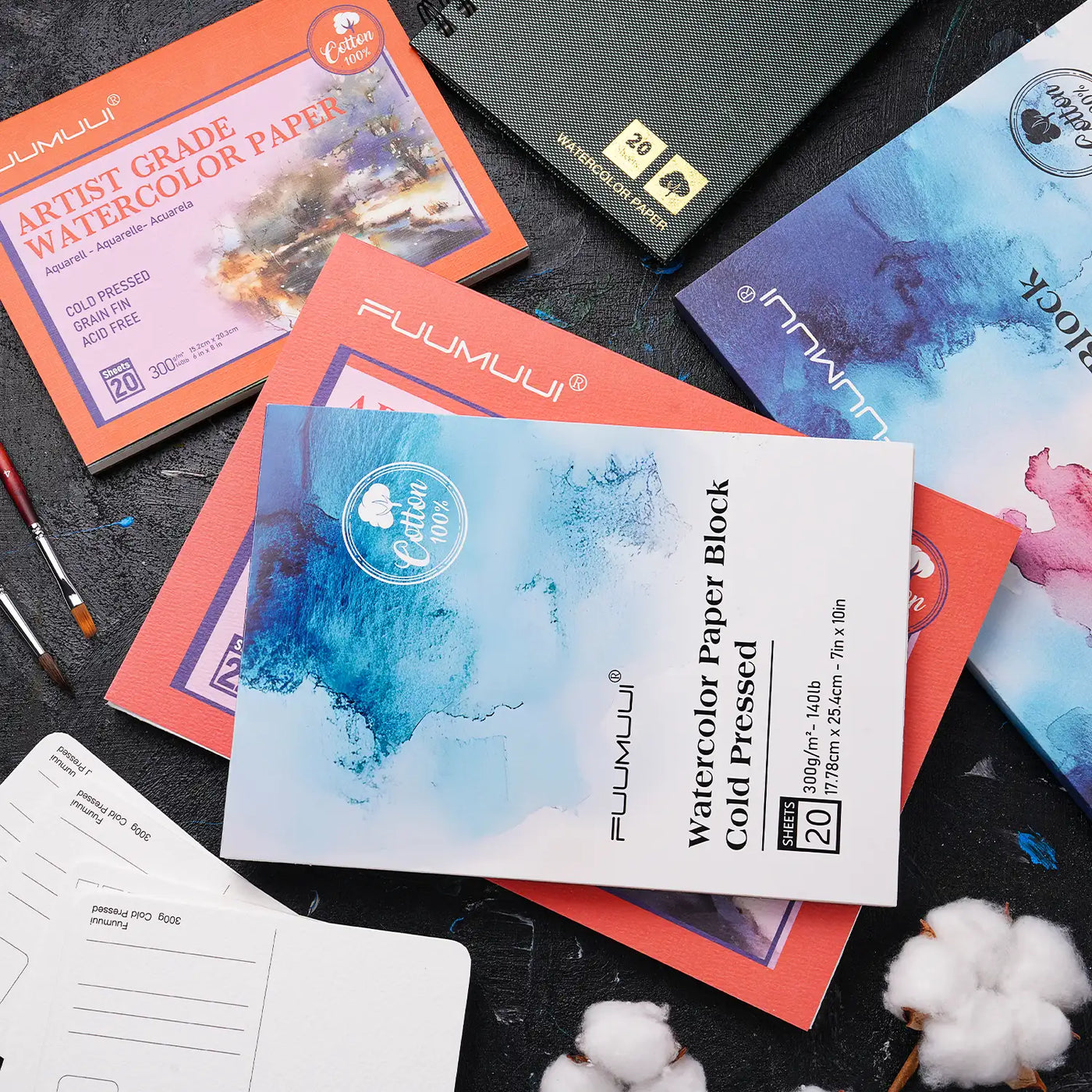
At Fuumuui, we’ve designed our artist kits to work in harmony with these professional standards. Whether you're using our brushes on a 300gsm watercolor block or an outdoor travel paper, having that extra weight beneath your bristles makes every stroke more predictable—and a lot more fun.

Achieve stunning results with our watercolor paper. We carry the best watercolor painting paper: 100 cotton, cold press, and sturdy...


%20is%20the%20Industry%20Standard)