
Table of Contents
Key Takeaways
Verdict: Choosing the right paper is often more critical than the paint itself for preventing pilling and buckling. For professional results, 100% cotton is the gold standard for absorbency and long-term vibrancy.
- Universal Standard: Use 300g (140lb) weight paper for 90% of artistic needs to ensure structural stability.
- Texture Choice: Cold Press is the versatile all-rounder; Hot Press excels in fine details, and Rough is best for expressive landscapes.
- Archival Quality: Always ensure paper is acid-free to prevent your artwork from yellowing and becoming brittle over time.
- Trusted Brands: Fuumuui provides excellent value for beginners. Professionals should look for Arches, Winsor & Newton, or Fabriano.
I still remember the frustration of my first year painting. I bought professional-grade paint, but my washes looked muddy, my colors faded into a dull grey, and my landscapes warped like a potato chip. It wasn't until I bought high-quality watercolor paper that I realized a crucial fact: the paper is more important than the paint.
If you are struggling with pilling, buckling, or colors that just don't "pop," you aren't a bad artist—you're likely using the wrong paper. Let's break down the three cores of watercolor paper—Material, Weight, and Texture—so you can stop fighting your supplies and start creating.
1. Watercolor Paper Material: The Soul of the Paper
The biggest difference between watercolor paper and standard sketchbook paper is its ability to hold water and pigment without falling apart. The material you choose dictates everything from absorbency to how long your art will last.
Cotton (100% Cotton): The Professional Standard

Made from cotton fibers, this is the "gold standard" for a reason.
- Performance: It absorbs water evenly and deeply. This allows you to layer glazes without lifting the color underneath. It dries with a transparent, vibrant finish and captures the subtle texture of your brushstrokes (like dry brush or wet-in-wet effects).
-
Longevity: Cotton is naturally durable and acid-free. It won't yellow or become brittle over time, making it essential for commissions or gallery work.
-
The Trade-off: It is more expensive and dries slower than wood pulp.
-
Note for beginners: You might find cotton harder to control at first because it stays wet longer, but once you master it, it offers the absolute best results.
Wood Pulp: The Beginner's Friend
Made from wood fibers (cellulose), this is what you'll find in most student-grade pads.
- Performance: It has lower absorbency, meaning the water sits on top and dries very quickly.
- The Look: Colors can dry looking slightly "grey" or less saturated compared to cotton.
- Best Use: Because it is cheap, it is perfect for daily sketches, testing color mix techniques, or quick studies. However, be careful—if you try to layer too much or scrub the paper, it will pill (tear and ball up) easily. It is designed for "fast effects," not complex layering.
Cotton & Wood Blend: The Balanced Choice
Usually containing 30% to 70% cotton, this is the hybrid option.
- It balances the high absorbency of cotton with the easy handling (and lower price) of wood pulp.
- The color payoff and stability sit right in the middle. It's an excellent choice for dedicated students who have a limited budget but want to practice techniques that feel "close to professional."
2. Watercolor Paper Weight: Preventing the "Buckle"
Weight is measured in grams per square meter (gsm). This number tells you how thick the paper is and, crucially, how much water it can take before it warps.
140g / 90lb (Thin Paper)
- Characteristics: Thin with weak water absorption. It dries almost instantly.
- Best For: "Dry" techniques like line and wash, pen sketching, or very light washes. Great for small items like postcards.
- Warning: It buckles (wrinkles) severeley when wet. If you use this, you must tape it down securely to a board. It cannot handle heavy washes or pouring.
300g / 140lb (The Universal Standard)

- Characteristics: Medium thickness and strong absorbency. It is the most popular weight for a reason.
- Best For: 90% of your artistic needs—landscapes, portraits, still life, and illustration.
- Why we love it: It can handle wet-on-wet techniques, multiple layers, and even some scrubbing or lifting of color without needing to be obsessively stretched or fixed every time.
600g+ / 300lb (The Heavyweight)
- Characteristics: Super thick, board-like stability. You can practically "paint in a puddle" with this.
- Best For: Large-scale works, complex heavy textures, or aggressive techniques like pouring and accumulation (pooling water).
- The Reality: It is heavy and expensive. While incredible, it is overkill for daily practice and is usually reserved for professional masterpieces.
3. Watercolor Paper Texture: Defining Your Style
The surface finish, or "tooth," changes how the paint settles and reflects light.
Rough: Deep & Expressive
- The Surface: Strong bumps and pits. When you drag a brush across it, pigment settles in the hollows, creating a natural "mottled" or speckled look.
- Best For: Textural scenes like rocks, old weathered buildings, tree bark, or starry skies. Techniques like dry-brushing and palette knife work look spectacular here.
- Avoid: Fine details. The texture will "break" your lines, making it poor for delicate features like faces or small flowers.
Medium (Cold Press): The "All-Rounder"

- The Surface: Sits right between Rough and Smooth. It has enough texture to hold a wash but is smooth enough for detail.
- Best For: Almost everything—daily illustration, still life, half-body portraits, and landscapes.
- Verdict: Whether you're a professional painter or a beginner in watercolor painting, you can't go wrong with choosing cold-press paper. It is the safest bet for a balanced painting.
Smooth (Hot Press): The Detail King
- The Surface: Extremely flat, almost like drawing paper.
- Best For: High-precision work like botanical illustration, detailed character faces, or pen and wash. Colors appear very clear and crisp.
- The Catch: It has weaker absorption. Large flat washes can easily form "watermarks" or blooms if you don't control your moisture perfectly.
The choice between hot-pressed or cold-pressed paper depends on your painting style.
Cheat Sheet: Matching Watercolor Paper to Project
Don't just buy the most expensive paper. Choose what fits your goal.
| Scenario | Material | Weight | Texture | Why? |
|---|---|---|---|---|
| Newbie / Daily Practice | Wood Pulp or Blend | 140g - 300g | Medium (Cold Press) | Cheap and easy to control. Medium texture is best for learning basics. |
| Detailed Illustration | Cotton or Blend | 300g | Fine (Hot Press) | Cotton gives vibrant color; smooth texture allows for precise details. |
| Landscapes / Layering | 100% Cotton | 300g - 600g | Medium or Rough | Cotton resists warping; rough texture adds natural "noise". |
| Special FX (Pouring) | 100% Cotton | 600g+ | Rough | Thickness handles massive water volume; rough texture holds pigment. |
| Museum / Collection | 100% Cotton | 300g+ | Any | Cotton is archival; 300g+ provides structural integrity for decades. |
4 Professional Tips to Judge Watercolor Paper Quality
You don't always need to rely on the label. Here is how to test paper like a pro using the "Look, Touch, Test, Check" method.
1. Look: Uniformity
- Good Paper: The surface is even. Cotton usually looks like a natural, soft off-white.
- Bad Paper: Look out for messy spots, impurities (black specks), or uneven thickness. Be wary of paper that is "Dead White"—this often means it has too many fluorescent whitening agents, which can cause colors to fade or shift over the years.

2. Touch: Resilience
- Run your fingers over the sheet.
- Cotton: Feels soft yet tough. If you press it, it has a slight "bounce" or resilience.
- Wood Pulp: Feels harder, stiffer, and less elastic.
- Uniformity: A good sheet feels consistent everywhere—you shouldn't feel patches that are suddenly thin or thick.
3. Test: Water & Color
- Absorption: Drop 1-2 drops of clean water on the paper. Good paper absorbs it evenly. Wood pulp might suck it in instantly (blotting paper effect) or let it sit on top like plastic.
- Vibrancy: Paint a stroke of red. Once dry, good paper keeps the color bright and the edges crisp. Bad paper will look dull, and if you paint over it a second time, the surface might start to fuzz up.

4. Check: Brand & Certification
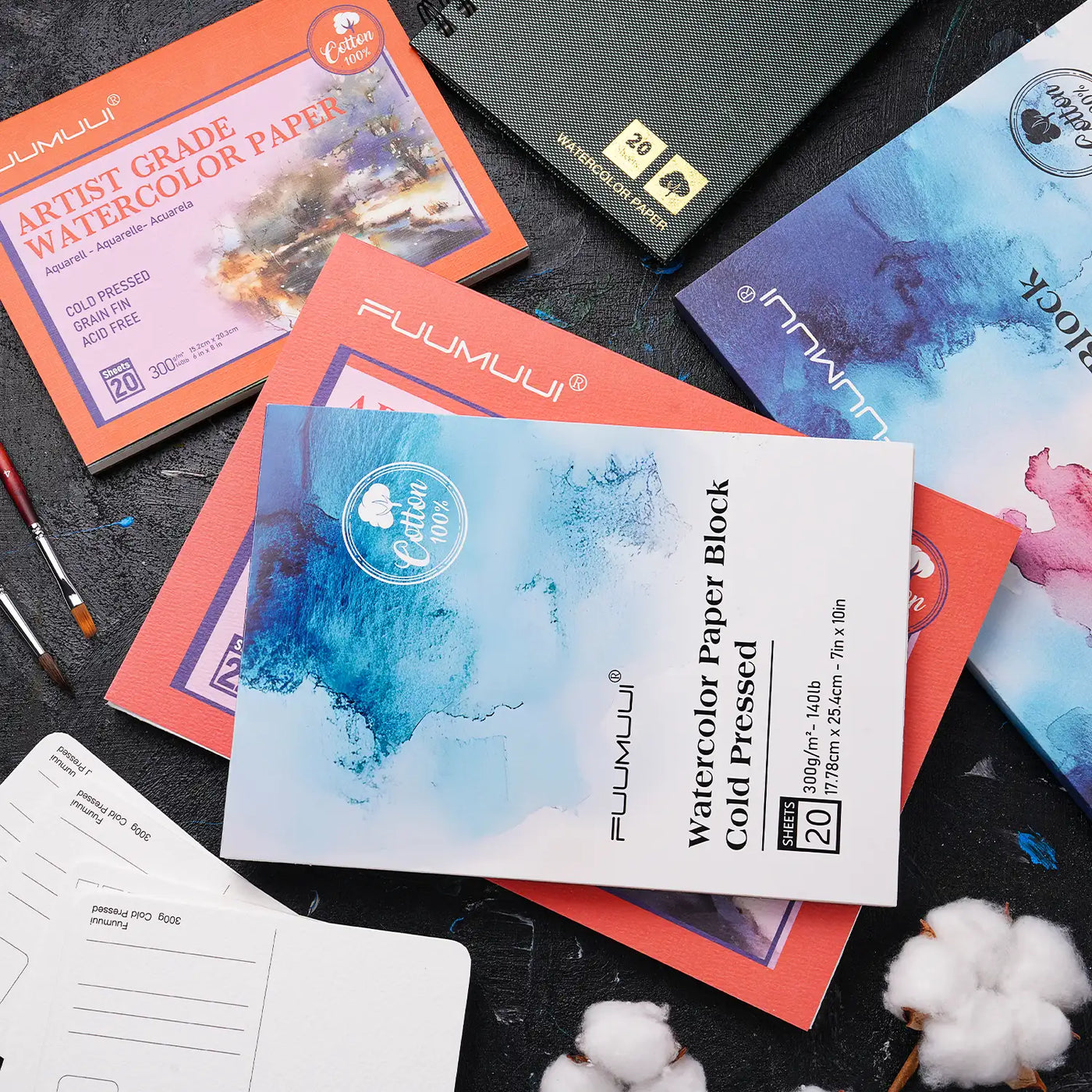
- Trusted Brands: For beginners, Fuumuui offers excellent value. For professional work, look for names like Arches, Winsor & Newton, or Fabriano. Their parameters are honest and consistent.
- The "Acid-Free" Label: This is non-negotiable for serious work. Acid-free paper prevents your masterpiece from turning yellow and brittle. Most cotton papers are naturally acid-free, but always check the label on wood pulp pads.
Avoid These 3 Rookie Mistakes for Paper
- "Thicker is Always Better": No, it isn't. While 600g paper is amazing, it is heavy and pricey. For learning and practice, 300g is perfectly adequate. Don't burn your budget on heavyweight paper you don't need.
- "Price First, Needs Second": Cotton is great, but don't waste it on doodles. Use wood pulp to learn brush control, then switch to cotton when you are ready to master wet-on-wet.
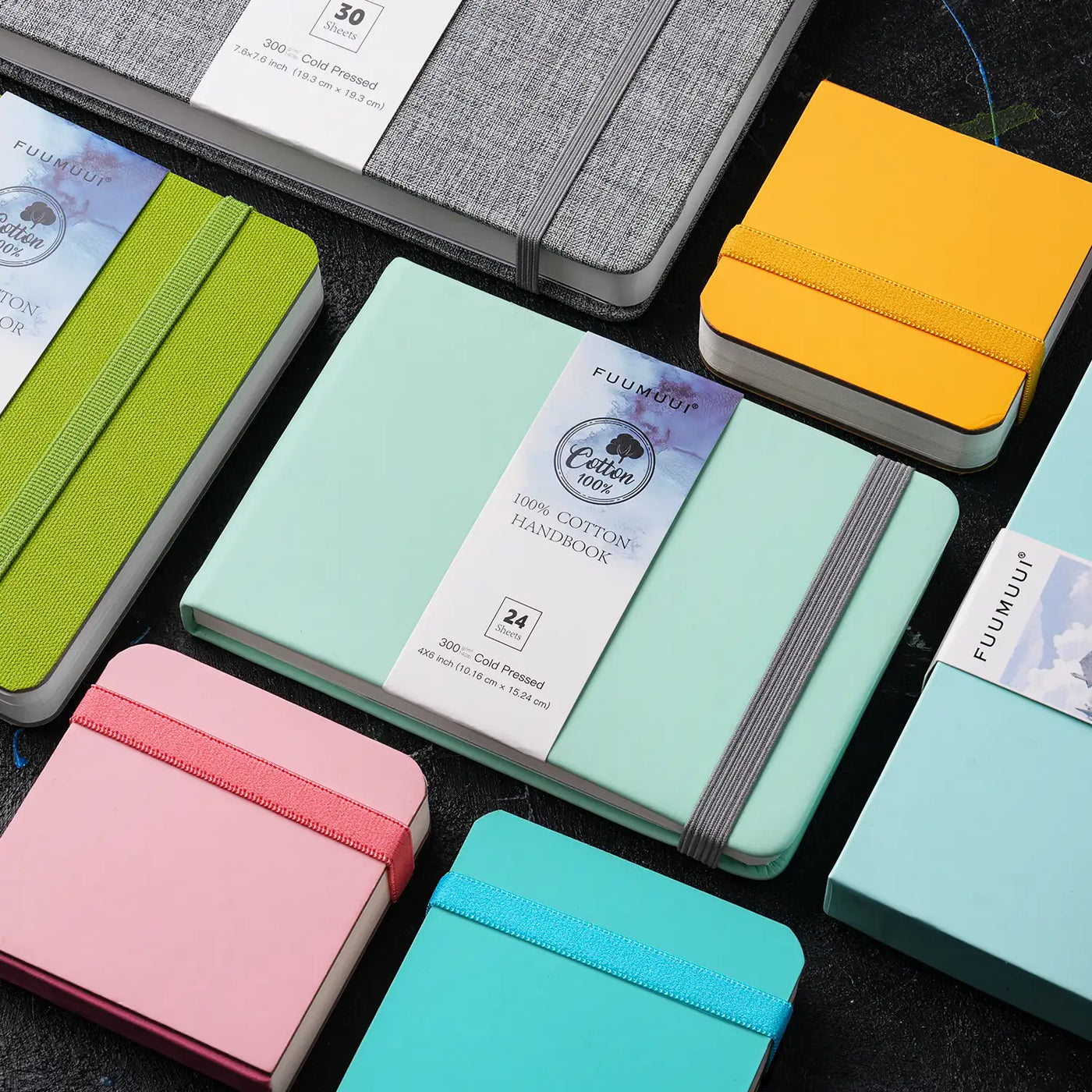
- Ignoring Size: If you paint small (like 4x6 inch postcards), don't buy full imperial sheets and struggle to cut them down. Buy "Travel Pads" or blocks pre-cut to size. It saves waste and is much easier to carry.

FAQs About Watercolor Paper
Q1: Why Does My Paper Start Peeling When I Try to Fix a Mistake?
A: This is a classic sign of wood pulp paper. Because the fibers are short, they can't handle the friction of a wet brush (scrubbing). If your style involves lifting color or reworking areas, you need the durability of 100% cotton paper.
Q2: What is the Difference Between a Block and a Pad?
A: A pad is glued on one side (like a notebook), meaning you might need to tape the other edges down to prevent wrinkling. A block is glued on all four sides. This keeps the paper drum-tight while you paint, preventing buckling without the need for tape. You simply slice the top sheet off with a palette knife when you are done.
Q3: Can I Use Hot Press Paper for Landscapes?
A: You can, but it is harder. Hot press is slippery, and water tends to pool, creating "blooms" or hard edges (cauliflowers) if you aren't careful. Most landscape artists prefer Cold Press or Rough because the texture helps physically hold the water in place, giving you more control.
Ready to Upgrade Your Art?
The right paper is the silent partner in your creative process. It turns a frustrating practice session into a flow state. At Fuumuui, we believe in providing tools that respect your skill level.
Check out our curated selection of high-quality 100% cotton watercolor paper. Don't let bad materials hold back your potential—grab the right gear and start painting today.

Achieve stunning results with our watercolor paper. We carry the best watercolor painting paper: 100 cotton, cold press, and sturdy...


love this. It explains so much that the teacher did not. I appreciate this immensely.